

Lee Elia: The Man Behind the Legendary Rant, Resting at 87
Lee Elia, remembered equally for his fiery temper and baseball mind, has passed—leaving behind a legacy that challenges how we view passion, accountability, and what it means to truly care.
 Chris MarksJuly 10, 20252 Mins read23

He didn’t just manage baseball teams—he challenged their soul. Lee Elia’s passing at 87 brings back memories of a man whose curse-laden rant in 1983 became legend, yet whose legacy stretches far deeper than expletives echoing through Wrigley’s clubhouse.
Elia played briefly in the majors, but it was behind the bench—guiding the Cubs, Phillies, and mentoring players across multiple teams—where he left his indelible mark. He was a baseball lifer, moving from shortstop in Philadelphia to a front-office voice right up through his 2025 role with the Braves .
The Rant That Captured a Culture
On April 29, 1983, after a demoralizing loss and some fans pelting players with trash, Elia erupted in a profanity-laced rebuke of hecklers—cursing them for not having “a f—— job” and “85 percent of the world… working.” It was raw, ugly, yet oddly urgent. That moment transformed him overnight—from manager to myth, the voice of exasperated care.
Les Grobstein recorded every word. That tape immortalized Elia not because he ranted—but because he cared too much about a team that carried Chicago’s hopes.
Beyond Fire and Fury
But reducing Elia to that 3-minute eruption would be to miss the breadth of his impact. He won minor league titles, nurtured enduring talent, and coached under luminaries in Baltimore, New York, Seattle, and Toronto—always the baseball lifer seeking one more teachable moment . His teams weren’t always top-tier, but his intent—to demand effort, integrity, accountability—never faltered.
He apologized for the rant, later framing it not as indiscriminate anger, but as loyalty bleeding over under pressure. “I guess I lost it,” he admitted—with bluntness rare for a public figure soaked in ego and expensive suits.
Elia’s death invites reflection: are fiery outbursts a mark of dysfunction—or of investment too fierce to contain? In modern sports, where controlled soundbites suffocate the messy truths, would today’s fans even recognize someone who blurred manager and man, authority and advocate?
He didn’t fit neatly into the sanitized narratives. His legacy is messy—peppered with love, fury, frustration—a reminder that passion, for better or worse, is elemental to the game we watch.
In the hush after the final rant, the records show a lifetime of devotion—not to PR, but to baseball’s beating heart. And when a man dies still speaking his truth, unfiltered and unbowed, the only real question left is: Who else carries that kind of courage now?





Barcelona’s Fragile Pursuit: When Injuries Threaten More Than Just a Season
A silence spreads over Camp Nou that no roar can drown out—two...
Chris Marks2 Mins read
William Saliba: Arsenal’s Silent Architect or Its Greatest Gamble?
The air inside the Emirates shifts with unspoken tension—William Saliba, once a...
 Joseph Bennett2 Mins read
Joel Embiid’s Quiet Confidence: Is the 76ers’ Giant Ready to Rewrite His Story?
Joel Embiid is rarely one to make noise without purpose, and now,...
 Kirsten Collins1 Mins read
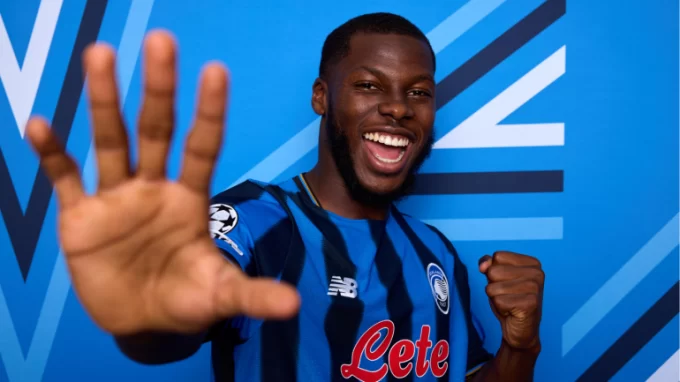
Juventus, Atalanta, and Arsenal’s Quiet Revolution: What’s Really Shaping This Week in Football?
The roar of Serie A stadiums masks a subtle shift, one that...
Kirsten Collins2 Mins read





Leave a comment