

Bertha Benz: The Woman Who Drove History, Now Coming to the Big Screen
Lesley Paterson is bringing the untold story of Bertha Benz—the woman who changed the future of transportation—to life on the silver screen. But why has this pivotal figure been erased from the narrative for so long?
 Krista FreelandMay 16, 20252 Mins read214

She drove the first long-distance road trip in history, proving a simple truth: the future of transportation was no longer tethered to the horse. Yet Bertha Benz’s name barely echoes through the corridors of history. As her story fades into the shadows, overshadowed by the name of her husband, Karl Benz, it seems almost too surreal—how could the woman who ignited the automotive revolution remain forgotten? Lesley Paterson, however, isn’t ready to let that legacy die. She’s penning a feature film about Bertha, but it’s more than just a biopic—it’s an unraveling of history itself.
History’s Hidden Trailblazer
Bertha Benz’s famous 1888 journey from Mannheim to Pforzheim should be a defining moment in the story of the automobile, yet for decades, it has been obscured. Her bravery—driving 106 kilometers in a car that had never been tested for such a long distance—was not just a personal triumph. It was the litmus test that proved the potential of the automobile. And yet, this daring journey has often been reduced to a footnote in the biography of Karl Benz, the inventor whose name became synonymous with the car. So why, for so long, has history minimized her role?
Paterson’s film comes at a time when the narratives of women—those who shape revolutions, not just bear witness to them—are finally finding their voices. It’s a narrative that has been lost, perhaps intentionally, in a world where men have claimed the spotlight of innovation for centuries. “The car, the very thing we depend on every day, wouldn’t be here if not for Bertha,” Paterson said in an exclusive interview. But how much of this historical oversight is a result of our collective amnesia, or perhaps, a reflection of our still deeply ingrained bias?
Rewriting History
Paterson’s project is not merely a recounting of events, but an act of reclamation. In retelling Bertha Benz’s story, Paterson is aiming to reshape our understanding of innovation itself. We’ve long accepted that history is told from the top down, with male figures standing tall in the frame. But what if the truth is more nuanced, more complex, more intertwined with the stories of those whose contributions have been swept under the rug?
While many of us still drive the very cars Bertha helped to make viable, it’s only recently that women like Paterson are gaining the opportunity to reshape the stories that have long been told through a male lens. The film is set to change that dynamic, offering a new layer to the ever-evolving conversation about women in history and in media.
“I’m drawn to stories where women aren’t just sidelined,” Paterson explains. “Where their power is evident, yet unrecognized.” And the power of Bertha’s journey is not just in her act of driving a car, but in the courage it took for a woman in the late 1800s to take such a daring step.
The Bigger Picture
As Paterson crafts a world around Bertha’s little-known voyage, the story unfolds like a breadcrumb trail through time—asking us to reconsider how we’ve been taught to view the past. History, after all, is written by those who hold the pen. And what happens when those pens finally slip from the hands of men into the hands of women, those who have long been relegated to the margins?
This is more than just a film about a woman driving across Germany. It’s about the hidden narratives of countless women who were not simply participants in history, but architects of it. This film asks a critical question: What else have we missed?
When the credits roll, will we be left with just another story about a forgotten figure, or will this be a beginning—of many untold histories rising to the surface? Only time will tell, but Bertha Benz may finally have her moment in the sun.




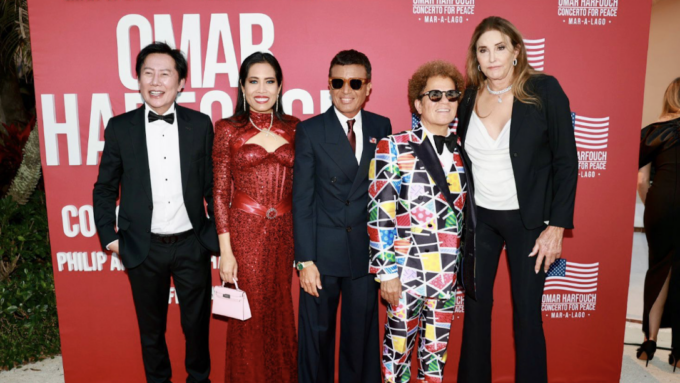
Pianist Omar Harfouch Brings Celebrated Figures Together for a Night of Cultural Exchange – Hollywood Life
Image Credit: Omar Harfouch On February 20, 2026, pianist and cultural figure...
 Kirsten Collins2 Mins read
How Much Money Does She Have Now? – Hollywood Life
Image Credit: WWD via Getty Images Rihanna may be known as one...
Kirsten Collins2 Mins read
Stars Who Slammed ‘Love Story: JFK Jr. & Carolyn Bessette’: Statements – Hollywood Life
Image Credit: Getty Images FX’s Love Story: John F. Kennedy Jr. and...
Kirsten Collins2 Mins read
Find Out Release Date, Cast, Plot Details & More – Hollywood Life
Image Credit: Courtesy of Amazon Freevee After its breakout first season, Jury...
Kirsten Collins2 Mins read





Leave a comment