

When a Founding Father Meets a Talk Show Host
Lin-Manuel Miranda and Jimmy Fallon just brought Hamilton back to the stage—or something like it. But was it homage, nostalgia, or a carefully disguised cry for cultural relevance?
 Kirsten CollinsAugust 6, 20252 Mins read16
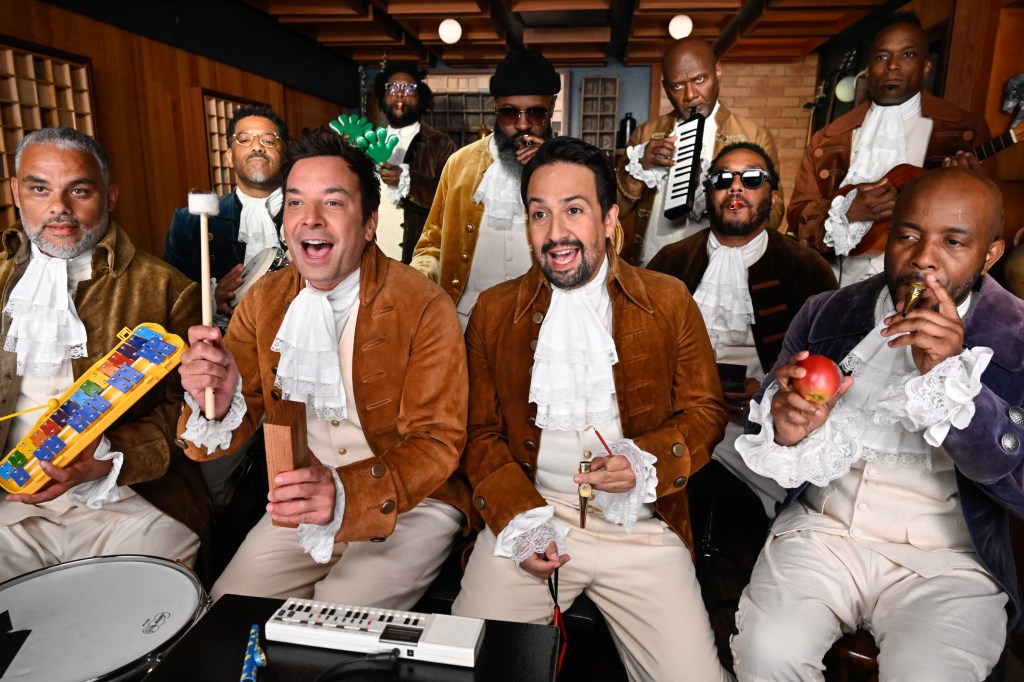
The curtain didn’t rise—it flickered to life through a studio set and a primetime grin. Lin-Manuel Miranda, cultural architect of a generation, and Jimmy Fallon, America’s favorite class clown turned cultural DJ, didn’t just perform a Hamilton medley. They performed the idea of Hamilton. The illusion of return. A Broadway mirage, shrunk to a soundstage and shot through a nostalgic filter so powerful you could almost smell the playbills.
And yet, watching it unfold was like revisiting the party that defined your twenties—only to find everyone quoting lines they no longer fully understand. Miranda rapped with that familiar cadence, like a memory played back too fast. Fallon, ever the elastic-faced accomplice, mirrored the lyrics with gusto, but you could feel the air change: this wasn’t just theater. It was theater remembering itself.
Revolution on Autoplay
Let’s be clear: Hamilton was never just a musical. It was a movement. A mixtape weaponized as a history lesson. A cast of brown and Black actors reclaiming America’s origin myth with swagger, verse, and vision. But what happens when revolution becomes routine? When the once-disruptive beat now plays in grocery stores, wedding receptions, and algorithmic playlists curated for suburban joggers?
The Fallon performance flirts with parody—but never quite lands. It’s too polished for irony, too reverent for satire. “We wanted to bring the magic back,” Miranda reportedly said, and maybe that’s the point. But does magic age well on camera, especially when it’s been Disneyfied, Spotify’d, and classroom-ed into ubiquity? At what point does the revolution start sounding… like reruns?
Watching the medley, one couldn’t help but feel both admiration and mild unease. The rhythms were perfect. The lines still cut. But the context—oh, the context—has changed. The Founding Fathers have been meme’d. The monarchy, mocked. And yet here we are, rewatching the war.
The Elegy Hidden in the Hook
Miranda remains a national treasure, to be sure—but like all icons, he now carries the weight of his own legacy. And Fallon, in his chameleonic comfort, has become a mirror held up to culture: funhouse, flattering, faintly absurd. Together, they perform a duet not just of music, but of memory. It’s less about what Hamilton is and more about what it was—before it was dissected, commodified, curriculum’d.
There’s a sense that Miranda knows this too. His delivery, sharp as ever, now feels like it’s speaking to ghosts—ghosts of an era when Hamilton felt urgent, political, dangerous. Now, it’s a greatest hit. Still beloved. Still brilliant. But is brilliance enough?
Maybe this was always the endgame of cultural phenomena: to be replayed until they lose their edge, then brought back under warmer lighting, to make us feel something close to the first time—even if it isn’t quite the same.
The medley ends with applause, the kind that feels obligatory, like clapping for a magician who’s just performed a trick you’ve seen a hundred times—but still want to believe in. And maybe that’s the real performance: not the lyrics or the melody, but our collective willingness to pretend it still surprises us.
Because the real revolution? It might be happening offstage.


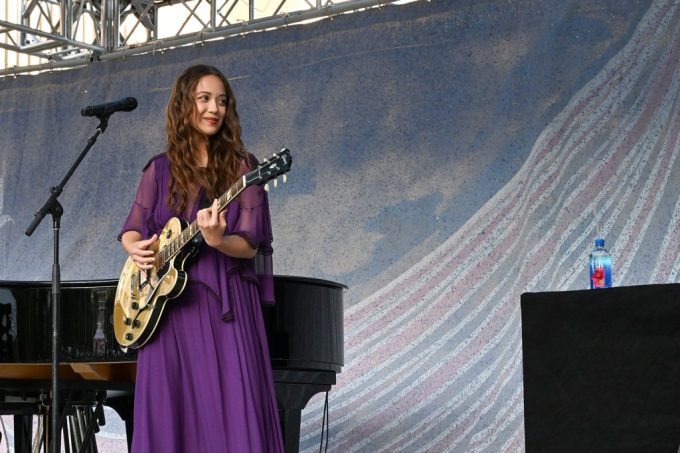
Laufey’s Opening Night Show at LA’s Crypto.com Arena: Best Moments
Laufey opened a two-night stand at Crypto.com Arena in downtown Los Angeles...
 Chris Marks6 Mins read
Julie Adam Is Billboard Canada Women in Music’s 2025 Exec of the Year
Julie Adam is having a milestone year — and it’s getting even...
Chris Marks4 Mins read
Spinal Tap Tribute Album with Foo Fighters,Tool for Teen Cancer America
Spinal Tap may be a fake band, but its music is very...
Chris Marks2 Mins read
AxMxP Is K-Pop Rookie of the Month for September: Exclusive Photos
Ha Yoo Joon Image Credit: Chin Soyeon You debuted on Sept. 10....
Chris Marks2 Mins read




Leave a comment