

When Duty Becomes Desire
An undercover cop ensnared by the very man he targets—Plainclothes lures us into a collision of repression, longing, and betrayal.
 Chris MarksAugust 12, 20251 Mins read20
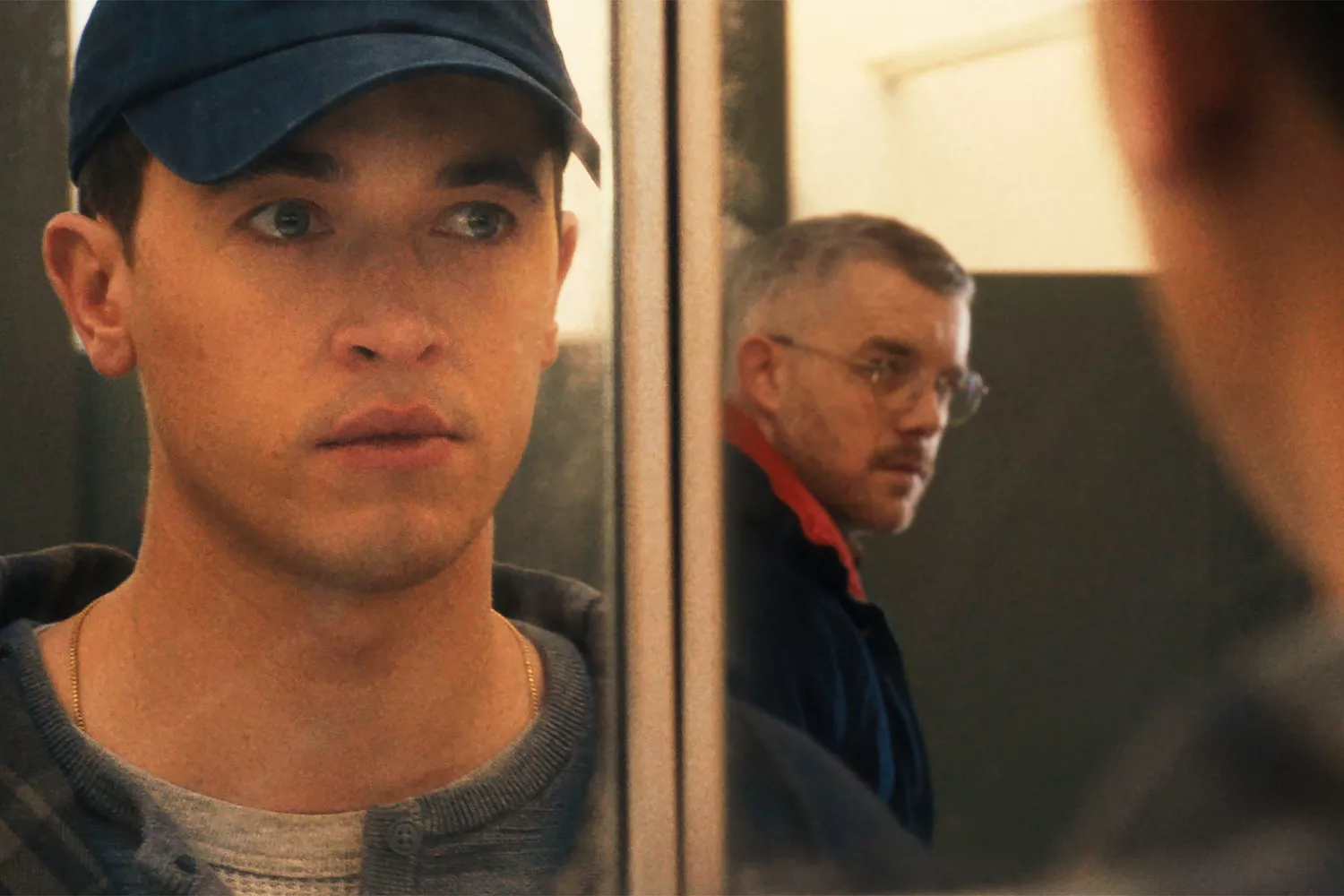
He staggers through mall corridors like a man chasing ghosts—duty draped over his shoulders heavier than his uniform. That’s Lucas, the plainclothes cop who should be closing in on suspects, not unraveling in their arms. The trailer for Plainclothes throws us into this ticking chaos—because what happens when the sirens of justice start echoing in your own blood?
In one pulse-slowing moment, Andrew whispers, “Can I touch you?” and Lucas blinks twice—yes, no, yes—and your skin tightens: is this seduction, salvation, or sabotage? The film distorts itself in the mind, flickering between grainy Hi8 footage and glossy dread, mirroring a soul split between repression and revelation.
Suddenly, everything’s upside down
Lucas is so practiced at policing other men that he barely notices the lie forming in the mirror. We learn that his New Year’s Eve—the one where a lost letter surfaces—could shatter more than just holiday pleasantries. It’s a reckoning that feels deeply structural, almost inevitable—what’s the distance between being seen and seeing yourself?
“Plainclothes” premiered at Sundance earlier this year, snagging the U.S. Dramatic Special Jury Award for Ensemble Cast—a nod to the simmering tension between Blyth and Tovey, whose chemistry is less spark, more slow-burning fuse. Behind the camera is Carmen Emmi, whose own conflicted memories—his brother entering law enforcement, the societal whip that teaches boys to punch instead of hug—seeded this story of emotional surveillance and self-policing.
Far from a tidy coming-out story, Plainclothes feels like a trap: for Lucas, for us, for societal masks that crack just when you lean in to love someone. It’s not tenderness. It’s terror. It’s a crush that could kill—or set you free.
The trailer ends not with closure, but a confession: “I can’t hide anymore.” But is that liberation or the beginning of something far darker? And what happens to the man who falls when his own gaze is the noose?







Pianist Omar Harfouch Brings Celebrated Figures Together for a Night of Cultural Exchange – Hollywood Life
Image Credit: Omar Harfouch On February 20, 2026, pianist and cultural figure...
 Kirsten Collins2 Mins read

Who Is Ivana Lisette Ortiz? About the Rihanna Home Shooting Suspect – Hollywood Life
Image Credit: WWD via Getty Images The suspect in the March 8,...
Kirsten Collins1 Mins read

What Channel Are the Academy Awards On? – Hollywood Life
Image Credit: AFP via Getty Images The 2026 Academy Awards will bring...
Kirsten Collins1 Mins read
How Much Money Does She Have Now? – Hollywood Life
Image Credit: WWD via Getty Images Rihanna may be known as one...
Kirsten Collins2 Mins read





Leave a comment