

Lost Americana or Found Reinvention? The Enigma of Machine Gun Kelly’s New Chapter
Machine Gun Kelly’s Lost Americana arrives like a ghost story for modern rock—a reckoning, a reinvention, or just another moment caught between past and present? The question is less about the album itself and more about what it reveals beneath the surface.
 Joseph BennettAugust 8, 20252 Mins read19

The first note hits with a sense of unmoored nostalgia—as if Machine Gun Kelly is peeling back the veneer of contemporary rock only to find something raw, jagged, and stubbornly alive beneath. Lost Americana is not merely an album; it’s a theatrical act of identity, a question posed to a genre that has long since fractured into pieces. But what exactly is lost here? And is the Americana that MGK chases truly vanished—or merely misunderstood?
There is an unmistakable tension in MGK’s latest offering, one that sways between earnest vulnerability and sharp, theatrical bravado. The punk energy that propelled him into the spotlight now mingles uneasily with a quieter, more introspective Americana mood. It’s as though he’s both chasing ghosts of a musical past and trying to exorcise the demons of his own artistic restlessness. Somewhere in this sonic crossroads, the listener is left suspended—drawn into a narrative that refuses to sit still.
When Punk Meets Heartland: The Collision of Genres
The record’s collision of pop-punk brashness with country-tinged storytelling suggests a deliberate blurring of boundaries, but it also unsettles. Is this a genuine homage or a calculated reinvention designed to capture a fragmented audience? Machine Gun Kelly himself admits, “I wanted to make something that felt like it was buried in the dirt but still alive enough to breathe.” That breath, however, sometimes feels like a struggle between authenticity and performance, a dialectic of what the genre once meant and what it might become.
Yet the album’s greatest strength is in that very tension—its refusal to commit fully to one identity, reflecting a larger cultural uncertainty. In an era when genre is fluid, and authenticity is endlessly debated, Lost Americana demands a reckoning with the idea that musical categories might be as lost as the stories they tell.
Americana’s Twilight or Dawn?
There is something poetic, even prophetic, in MGK’s invocation of Americana—a genre often romanticized as the sound of the American soul but, in reality, a complex tapestry of contradiction and displacement. The album asks: Has Americana truly lost its way, or are we simply hearing it through a new generation’s fractured lens? For MGK, the answer may lie in embracing the cracks rather than hiding them, finding beauty not in perfection but in raw, messy honesty.
It’s easy to dismiss Lost Americana as another celebrity pivot, but that would miss its quiet ambition. It is less a statement of arrival and more a work-in-progress—an artist wrestling publicly with identity, history, and the ghosts of genres past. And maybe that’s exactly what Americana, in all its forms, has always been about: stories in flux, lost and found anew with every telling.
The album fades out leaving the listener with more questions than answers—a soundscape that feels at once familiar and elusive. What does it mean to be lost in Americana today? Is it a disappearance, a reinvention, or something more elusive still? Perhaps the real music is not in what MGK sings but in the space between his notes, where the past and future quietly collide—and where we, the listeners, are invited to wander without a map.








Laufey’s Opening Night Show at LA’s Crypto.com Arena: Best Moments
Laufey opened a two-night stand at Crypto.com Arena in downtown Los Angeles...
 Chris Marks6 Mins read

Julie Adam Is Billboard Canada Women in Music’s 2025 Exec of the Year
Julie Adam is having a milestone year — and it’s getting even...
Chris Marks4 Mins read

Spinal Tap Tribute Album with Foo Fighters,Tool for Teen Cancer America
Spinal Tap may be a fake band, but its music is very...
Chris Marks2 Mins read
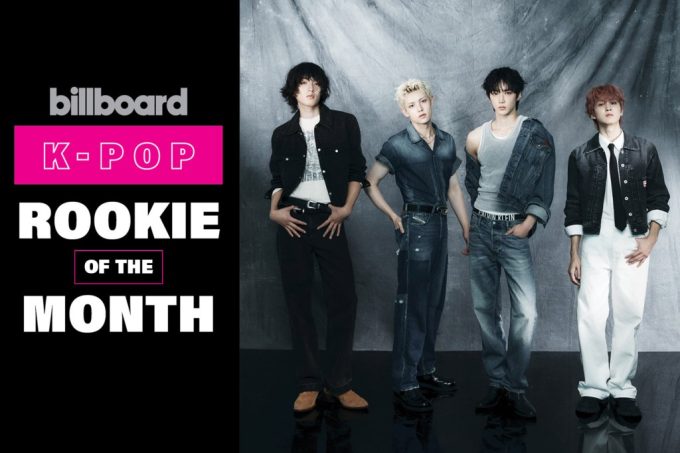
AxMxP Is K-Pop Rookie of the Month for September: Exclusive Photos
Ha Yoo Joon Image Credit: Chin Soyeon You debuted on Sept. 10....
Chris Marks2 Mins read




Leave a comment