

The Fourth Best Lie: Madden’s Mahomes Rating and the Illusion of Algorithmic Truth
Madden NFL 26 quietly dropped a cultural grenade by ranking Patrick Mahomes—the game’s most magnetic quarterback—as only the fourth best. But is this about stats, or a symptom of something deeper in how we now edit greatness?
 Chris MarksJuly 31, 20252 Mins read22

They didn’t boo in the streets, but they may as well have. In the dim, humming quiet of a million screens, the reveal felt like heresy: Patrick Mahomes—Super Bowl magician, face of a franchise, commercial darling, gridiron Gatsby—ranked fourth in Madden NFL 26. Fourth. Behind a pantheon that looked more like polite arithmetic than prophecy.
No one thinks Mahomes is perfect. He plays like jazz: improvisational, breathtaking, occasionally chaotic. But that’s exactly what’s made him electric. What’s made him myth. To demote him beneath three quarterbacks in a digital realm governed by stats, formulas, and—ironically—perfection, is to mistake calculation for charisma. And perhaps to fear that charisma can’t be coded at all.
When the Algorithm Decides Who You Are
It’s tempting to write this off as marketing theatre—EA Sports knows outrage is currency. But this particular decision touches a rawer nerve. Because Madden doesn’t just simulate football; it scripts legacy. For a generation raised more on controllers than cleats, the ratings are the reality. Mahomes at fourth doesn’t say “he’s slipped.” It whispers: maybe you imagined the magic.
“He’s changed the way the game is played,” one former NFL scout muttered to me over a glass of brown liquor and disbelief. “You don’t bury that under analytics. You build statues for it.” But Madden isn’t in the business of mythology—it’s in the business of clean lines, sortable tables, and risk management.
What we’re watching, then, isn’t just a numerical snub. It’s a recalibration of power. When the digital scoreboard starts outweighing the on-field highlight reel, who decides greatness? The fans? The code? The brand?
The Glitch in the Gospel
There’s an eerie cleanliness to Mahomes’ drop in rank—as if it were a bloodless edit in a Wikipedia page. No scandal, no slump. Just… reclassified. Fourth. As though the myth had quietly expired, not with a fumble, but a recalculation. What is sport, when it can be resized like an avatar?
The unsettling beauty of Mahomes is that he doesn’t fit the spreadsheet. He slithers past predictability. He throws sideways. He defies the very structure Madden relies on. And maybe that’s the problem. Maybe the algorithm has finally rebelled against the artist. Maybe greatness that can’t be measured can’t be allowed to exist—at least not in the polished mirror of a digital empire.
So we return to the screen. We scroll the ratings, argue in comment threads, and search for logic in a place that never promised any. But somewhere, behind the blinding interface, the question lingers like static:
What happens when even the video game starts forgetting how to dream?




Barcelona’s Fragile Pursuit: When Injuries Threaten More Than Just a Season
A silence spreads over Camp Nou that no roar can drown out—two...
Chris Marks2 Mins read

William Saliba: Arsenal’s Silent Architect or Its Greatest Gamble?
The air inside the Emirates shifts with unspoken tension—William Saliba, once a...
 Joseph Bennett2 Mins read
Joel Embiid’s Quiet Confidence: Is the 76ers’ Giant Ready to Rewrite His Story?
Joel Embiid is rarely one to make noise without purpose, and now,...
 Kirsten Collins1 Mins read
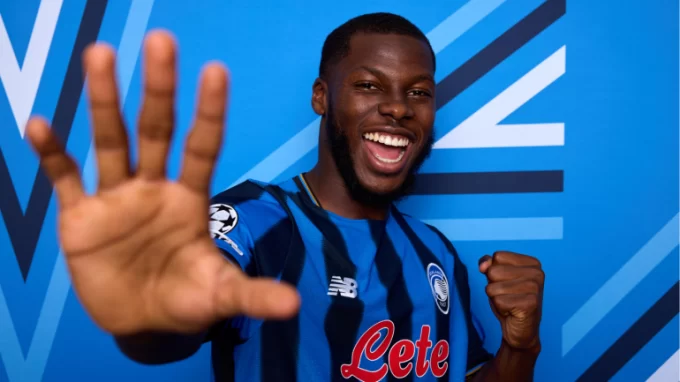
Juventus, Atalanta, and Arsenal’s Quiet Revolution: What’s Really Shaping This Week in Football?
The roar of Serie A stadiums masks a subtle shift, one that...
Kirsten Collins2 Mins read





Leave a comment