

Miley Cyrus: The Flowers of Reinvention, Sobriety, and a Grammy Win
Miley Cyrus' journey from controversy to serenity isn’t just about her sobriety—it’s a story of reinvention, healing, and a moment of reckoning in the spotlight. With a Grammy in hand for Flowers, how did she truly transform?
 Chris MarksMay 21, 20252 Mins read59

Miley Cyrus didn’t just win a Grammy; she rewrote the rules of survival in a world that had tried to consume her. The golden statuette in her hand for Flowers wasn’t a simple acknowledgment of chart-topping success. It was a declaration. A quiet rebellion against the world that expected her to burn out and fade into the background.
The sound of her voice on Flowers isn’t just the voice of a pop star; it’s the sound of a woman learning to breathe again. In an industry known for chewing up its brightest stars, Cyrus emerged not as a casualty of fame but as an architect of her own salvation. Her sobriety, which has long been a subject of whispers, isn’t just a victory over addiction—it’s a personal revolution. And it’s the music that gave her the strength to face it head-on.
Behind the Curtain: The Price of Sobriety
Miley’s path to sobriety wasn’t paved with headlines and glossy interviews. It was forged in private moments of reckoning, a necessary retreat from the world that had both adored and vilified her. “I had to take a step back,” she admitted in a rare moment of openness. “I had to let go of the noise in order to hear myself.” It’s the kind of honesty most artists fear, but Cyrus, ever the provocateur, found clarity in it. Her journey wasn’t just a public spectacle—it was a personal excavation.
There’s something distinctly raw in Flowers, something that goes beyond the breakup anthem many assumed it to be. It’s an anthem of survival, of healing, and ultimately, of learning to love oneself after the world tries to tell you who to be. The track became an instant hit not because it resonated with heartbreak but because it whispered a truth we’re all afraid to admit: we can’t always count on others to heal us. Sometimes, we have to do it ourselves.
The Woman Behind the Image
It’s easy to forget that the Miley Cyrus we see today didn’t arrive by accident. Every tattoo, every reinvention, every step towards sobriety has been a deliberate choice. She’s no longer the Hannah Montana star we all once knew, nor the rebel who lived on the edge of controversy. She’s something far more complicated and, perhaps, far more profound. Miley, with her Grammy win, isn’t just a pop star—she’s a force of nature, a woman reimagining what it means to be both vulnerable and invincible.
And yet, there’s something haunting about her transformation. As she received the Grammy for Flowers, it wasn’t just a victory over her critics. It was a quiet acknowledgment of how far she’s come—and how much further she still has to go.
Miley’s sobriety story is not about perfection; it’s about the messy, painful, and ultimately redemptive process of owning one’s life. She’s not merely seeking validation from the world; she’s choosing to validate herself. The question is: will we let her?
As the applause faded and the lights dimmed, one thing became clear: Miley Cyrus’ journey is far from over. With every new song, every new chapter, she peels back another layer, revealing something deeper, something truer than we’ve ever known. But as she steps into this new phase of her career, we have to ask—how long can she sustain this version of herself? Will the world allow her to redefine who she is on her own terms, or will it continue to demand that she fit into a mold she no longer belongs to?
Perhaps the real story is not about Miley Cyrus the celebrity—but Miley Cyrus the survivor. The one who has yet to reveal what’s truly next.







Laufey’s Opening Night Show at LA’s Crypto.com Arena: Best Moments
Laufey opened a two-night stand at Crypto.com Arena in downtown Los Angeles...
Chris Marks6 Mins read

Julie Adam Is Billboard Canada Women in Music’s 2025 Exec of the Year
Julie Adam is having a milestone year — and it’s getting even...
Chris Marks4 Mins read

Spinal Tap Tribute Album with Foo Fighters,Tool for Teen Cancer America
Spinal Tap may be a fake band, but its music is very...
Chris Marks2 Mins read
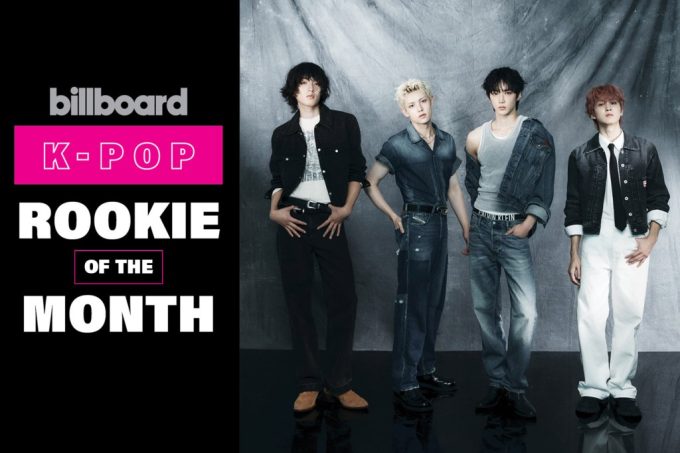
AxMxP Is K-Pop Rookie of the Month for September: Exclusive Photos
Ha Yoo Joon Image Credit: Chin Soyeon You debuted on Sept. 10....
Chris Marks2 Mins read





Leave a comment