

The MVP Nobody Asked For—But Can’t Ignore
Kyle Schwarber isn’t supposed to be in this conversation. But what if the most misunderstood man in baseball is exactly what the game—and the MVP race—needs?
 Kirsten CollinsAugust 6, 20252 Mins read25
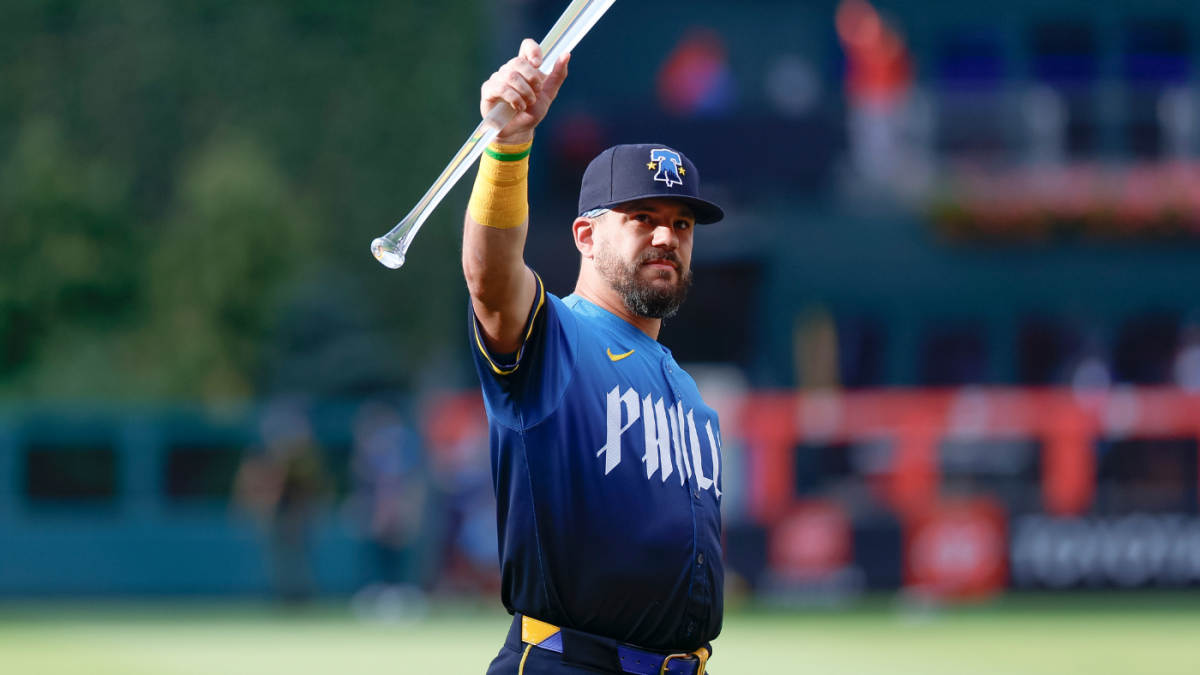
He’s batting under .200, he strikes out like it’s a lifestyle, and still—he terrifies pitchers like he’s carved from myth. Kyle Schwarber is baseball’s most confounding paradox: a man whose numbers betray him, and yet whose presence, bat in hand, sends entire dugouts into panic. He isn’t a statistical darling. He doesn’t steal bases, smile for cameras, or seem remotely interested in MVP narratives. But here we are—squinting at his stat line like it’s written in code, wondering if baseball’s most chaotic slugger has somehow elbowed his way into the tightest race of the year.
There’s something artful about Schwarber’s defiance. In a league obsessed with sleek efficiency, he’s all bludgeon and brute. Shohei Ohtani is an elegant force of nature—Greek god in cleats. Schwarber is… well, he’s what happens when brute power learns patience. He walks like a monk and swings like a wrecking ball. And that contrast—between chaos and control—might be what’s dragging him, stubbornly, into the MVP conversation.
Power Isn’t Polite
What Schwarber represents isn’t just raw numbers—though his home runs are tectonic events. It’s philosophy. It’s defiance against the polished, algorithmic sheen that modern baseball has become. He’s messy, human, almost stubbornly analog. And that, in a sport allergic to imperfection, might be his most valuable quality.
“He just changes the entire feel of the lineup,” a Phillies teammate said. Not leads the lineup. Not paces the team. He changes the feeling—a strange, poetic power rarely accounted for in MVP voting formulas. Every at-bat feels like a dare, a short story with the ending already spoiled. When Schwarber connects, the sound alone is worth the ticket price. When he misses, it still feels biblical. He plays not for the box score but for the moment.
In a season where Ohtani continues to redefine what’s possible, Schwarber reasserts something just as radical: that presence—flawed, moody, majestic—still matters.
The Cult of the Outlier
MVP debates usually boil down to math. WAR, OPS+, VORP. Acronyms that scrub the blood out of the game. But what happens when the numbers lag behind the narrative? Schwarber’s candidacy isn’t a statistical climb—it’s a cultural reckoning. He’s not chasing Ohtani in numbers; he’s haunting him in myth.
There’s something illicit about even whispering Schwarber’s name in this race, like inviting a bar brawler to a Met Gala. But perhaps that’s the seduction: he doesn’t belong here, and yet here he is. No spin, no spectacle, no Shohei-sized aura—just a man, a bat, and a body built like middle America. And maybe that’s what’s so irresistible. He reminds us that not every MVP needs to be a miracle. Sometimes he can be a menace.
Schwarber won’t ask for your vote, and maybe he doesn’t deserve it. But he’ll keep hitting like a man possessed, keep walking through fire with a grin, and keep making us ask the question no one thought we’d consider: What if the most flawed man in baseball is the one we need most?
The beauty of this race isn’t who wins—it’s who dares to make it messy.





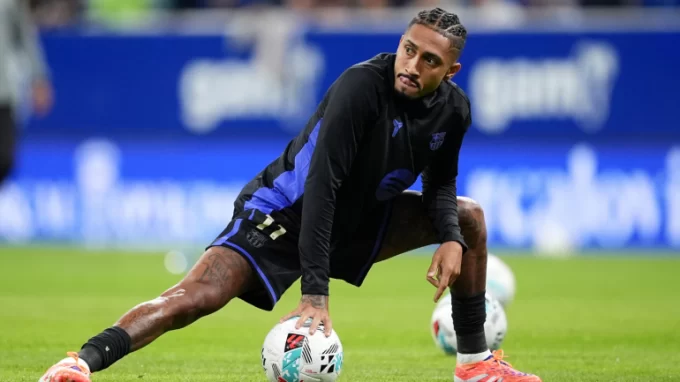
Barcelona’s Fragile Pursuit: When Injuries Threaten More Than Just a Season
A silence spreads over Camp Nou that no roar can drown out—two...
 Chris Marks2 Mins read
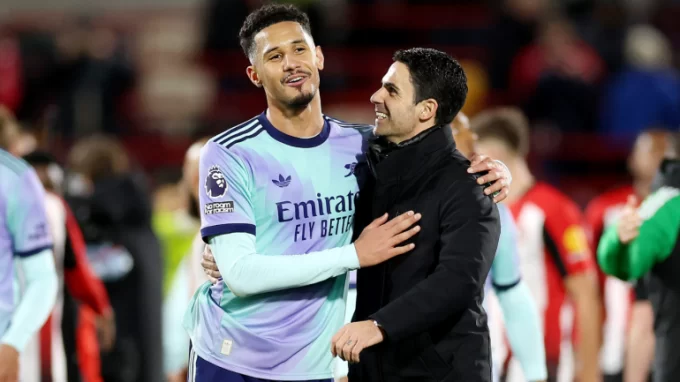
William Saliba: Arsenal’s Silent Architect or Its Greatest Gamble?
The air inside the Emirates shifts with unspoken tension—William Saliba, once a...
 Joseph Bennett2 Mins read
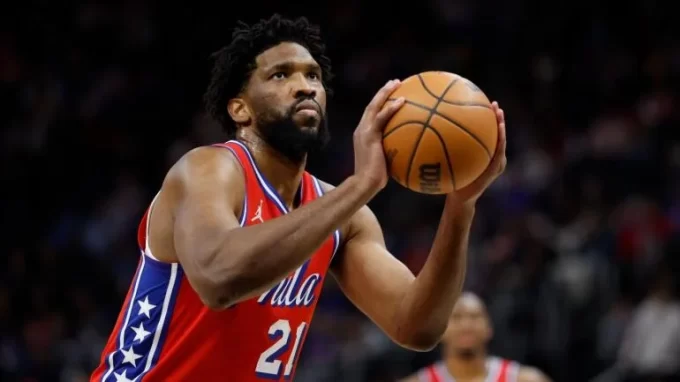
Joel Embiid’s Quiet Confidence: Is the 76ers’ Giant Ready to Rewrite His Story?
Joel Embiid is rarely one to make noise without purpose, and now,...
Kirsten Collins1 Mins read
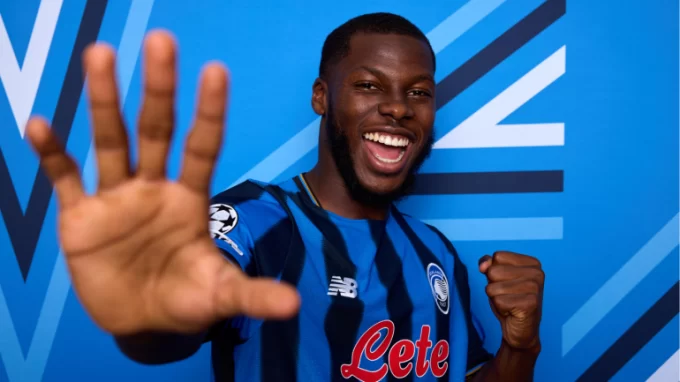
Juventus, Atalanta, and Arsenal’s Quiet Revolution: What’s Really Shaping This Week in Football?
The roar of Serie A stadiums masks a subtle shift, one that...
Kirsten Collins2 Mins read





Leave a comment