

The Fantasy of the Game Behind the Game
Daily Fantasy Baseball isn’t just about stats and lineups—it’s a fever dream stitched together by algorithms, instincts, and the seductive illusion of control. But what are we really chasing when we draft?
 Kirsten CollinsAugust 4, 20252 Mins read17

You don’t smell the grass.
You don’t hear the bat crack or feel the tension build between pitcher and plate. Instead, you’re staring into a matrix of decimal points and projected ownership percentages, pretending—just for a moment—that you are the architect of fate. Daily Fantasy Baseball on August 4th is no different from any other date on the calendar, except that somewhere, between a struggling starter and a hot-hitting utility man, you believe you’ve seen a pattern. A glitch in the system. An angle.
And in that flicker of belief, you hit submit. A lineup born of logic, guesswork, and blind faith. Because what DFS truly sells isn’t money. It’s narrative. And we are nothing if not desperate to tell ourselves stories where we get to win.
The Oracle Wears a Spreadsheet
Today’s top picks whisper their way through the internet in digital scripture. Luis Robert Jr., perhaps—raw power, low ownership, a ceiling as high as your rent. Or maybe you fade him, seduced instead by a matchup that promises but rarely delivers. The experts talk in probability, but the subtext is always the same: you still might lose, but you’ll feel clever doing it.
The truth is, fantasy sports are less about foresight and more about performance—your performance. A fantasy within a fantasy. You’re not managing players; you’re managing your need for control in a world that rarely offers it. And when it pays off, even briefly, even poorly, the illusion deepens. One analyst on Monday said it best: “You’re not playing against baseball. You’re playing against people who think they’ve figured out baseball.”
But no one has. That’s why it works.
Numbers Don’t Lie, But They Rarely Tell the Truth
DFS seduces with data, then betrays with context. A player trending upward can disappear under stadium lights. A pitcher with stellar metrics implodes after two batters. Yet we go back, night after night, like gamblers who think they’re scientists. And maybe they are. But what kind of science leaves you this wrecked and euphoric?
The games begin, the scores update, and the dopamine hits in quiet pulses. You don’t cheer for teams anymore—you cheer for moments: a stolen base here, a bloop single there. You’re not a fan. You’re a strategist. Or at least, you want to be seen as one.
So what happens when you win? Or worse, what happens when you almost do? You come back. You always come back. Because this isn’t baseball—it’s something more intimate and more delusional. It’s the private religion of people who think they can read chaos.
And maybe, just maybe, they’re right. But only until the next pitch.







Barcelona’s Fragile Pursuit: When Injuries Threaten More Than Just a Season
A silence spreads over Camp Nou that no roar can drown out—two...
 Chris Marks2 Mins read

William Saliba: Arsenal’s Silent Architect or Its Greatest Gamble?
The air inside the Emirates shifts with unspoken tension—William Saliba, once a...
 Joseph Bennett2 Mins read

Joel Embiid’s Quiet Confidence: Is the 76ers’ Giant Ready to Rewrite His Story?
Joel Embiid is rarely one to make noise without purpose, and now,...
Kirsten Collins1 Mins read
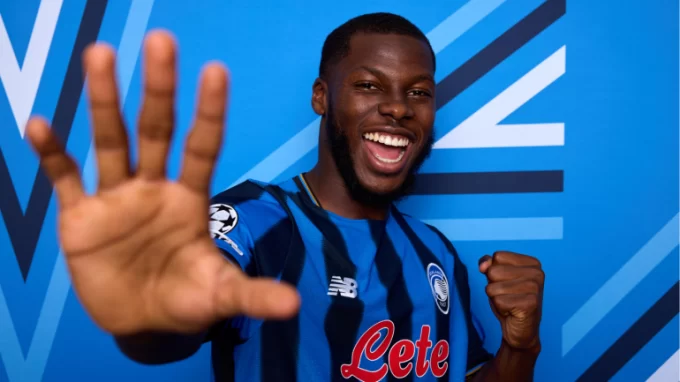
Juventus, Atalanta, and Arsenal’s Quiet Revolution: What’s Really Shaping This Week in Football?
The roar of Serie A stadiums masks a subtle shift, one that...
Kirsten Collins2 Mins read





Leave a comment