

“Ultraman and ‘Superwoke’: Gunn’s Superman Isn’t Just Flying—He’s Punching Back”
James Gunn’s Superman rewrites the hero’s moral code—Ultraman’s origin, pocket‑universe twists, and “superwoke” backlash hint at a DCU that’s unafraid to fight in and out of frame.
 Joseph BennettJuly 18, 20252 Mins read15
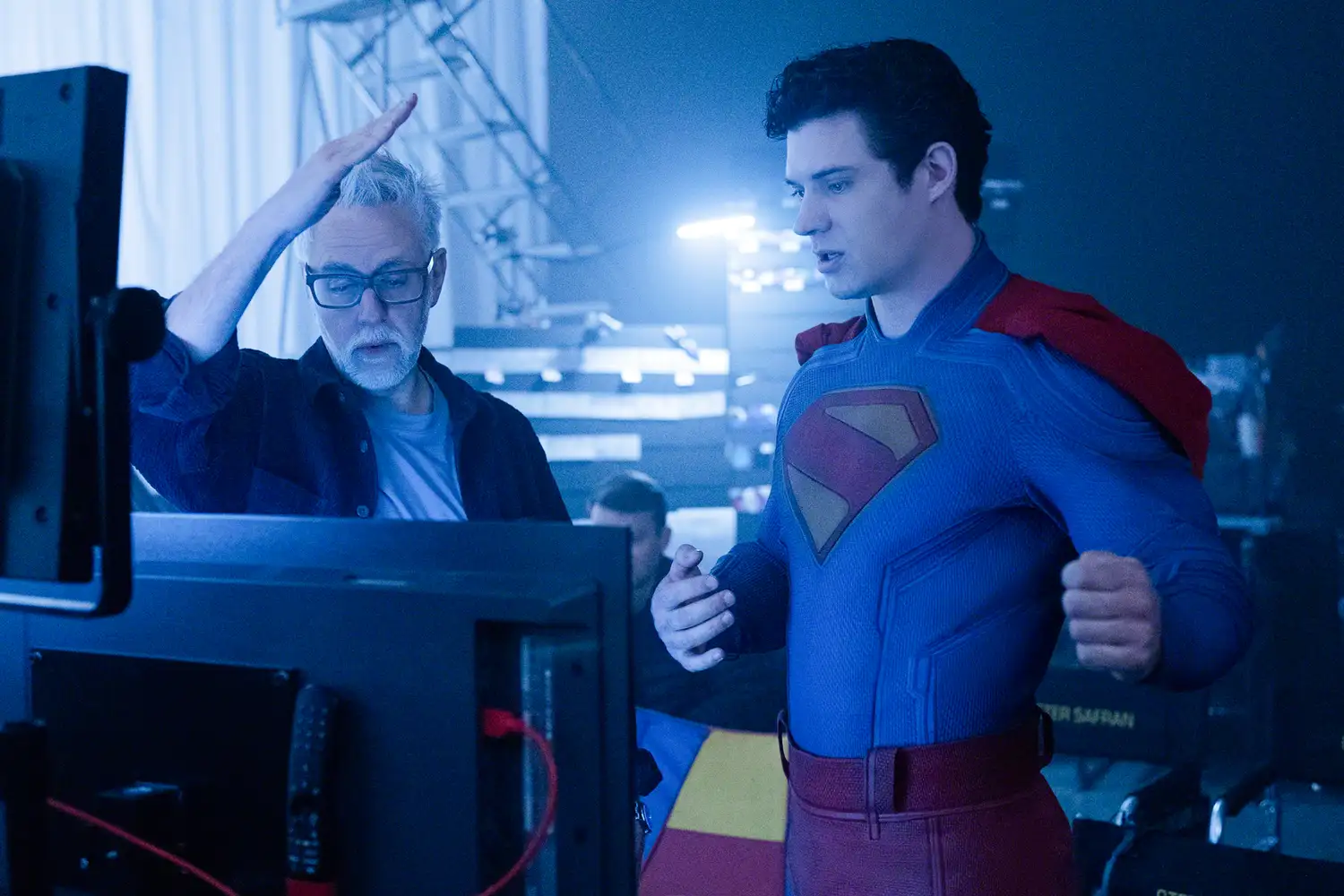
When David Corenswet’s Superman steps into Lex Luthor’s staged war, the screen doesn’t just ripple—it trembles with intention.
Except, it’s not just a battle royale. It’s a chess match across realities. Luthor’s creation, Ultraman, is birthed from Superman’s own DNA, a “f‑ked‑up version of Clark” born in haste, eyes askew, a prosthetic indictment of hubris. Gunn mingles homage—Bizarro, Nuclear Man—with fresh dystopian DNA. And with one flick, Ultraman tumbles into a collapsing pocket universe, echoing Zod’s fate while asking: do villains end or evolve?
But while Superman snaps Ultraman’s neck with cinematic cool, critics erupt: is this “the Superwoke agenda”? Gunn rolls it into a metaphor—his Kryptonian outsider is an immigrant, a parable of kindness, not politics. “Basic human kindness is a value,” he says, and for him, “that was always the center of the movie”Vanity Fair+6. Maybe so—but perhaps this is less virtue than strategy: a superhero reborn as the arbiter of ethics in a town square of ideological brigades.
Pocket‑Universe Poetry
The pocket universe emerges not just as sci-fi flair, but Gunnian commentary on control—online trolls, global influence, digital bots masquerading as voices. That scene with monkey‑monitors? A nudge at foreign interference, yes—but also an inside joke at Gunn’s own Twitter trials. He’s saying superheroes, like storytellers, are no strangers to unfriendly algorithms .
Superman doesn’t stand alone anymore. He’s shepherding a Justice League in whispers—Guy Gardner, Metamorpho, even Supergirl under Milly Alcock’s poised debut. Yet it’s Luthor’s subtle grand design—a proxy war between Boravia & Jarhanpur—that underpins what may be the most cerebral League launch: villains who weaponize chaos, heroes who must restore it. Gunn’s DCU is less smash‑bang and more web‑work—an ensemble woven through moral cunning.
So where does this leave us? Superman’s arc is now geopolitical, philosophical, and shockingly personal—a hero undermined by clones, resuscitated by kindness, and burdened by ideological critique. When Ultraman dies with so little fanfare, the real question surfaces: is DC shedding its blockbuster skin to reveal a conscience-clad core?
We began with a tremble in Lex’s warzone. Now, we end with a tremor in the collective cultural pulse. The final image isn’t rubble—it’s reflection. So let me ask: when villains fracture realities, will heroes stitch them back—or forge new ones? Whisper your answer—but watch that space.




Does Marcello Hernández Have a Girlfriend? His Dating History – Hollywood Life
Image Credit: Getty Images for W Magazine Marcello Hernández worked his way...
 Kirsten Collins2 Mins read

Refreshed Jim Stoppani Workout App Raises the Training Bar – Hollywood Life
Image Credit: Pexels A science-based update brings celebrity structure to everyday training...
Kirsten Collins2 Mins read
Update After He Was Placed on Life Support – Hollywood Life
Image Credit: Vivien Killilea The Blind Side actor Quinton Aaron was fighting...
Kirsten Collins2 Mins read
Who Is Tom Homan? About Trump’s Border Czar Amid U.S. Deportations – Hollywood Life
Image Credit: Getty Images Thomas “Tom” Homan has emerged as one of...
Kirsten Collins2 Mins read




Leave a comment