

The Gamble of Self-Belief: Jonathan Kuminga’s Quiet Rebellion in NBA Restricted Free Agency
When the brightest young talent in the NBA faces a crossroads, choosing the safety net or betting on himself becomes a high-stakes game far beyond the court. Jonathan Kuminga’s looming qualifying offer decision reveals the subtle power plays that define today’s NBA futures.
 Joseph BennettAugust 11, 20252 Mins read15

The arena is quiet, the buzz of adoring fans momentarily hushed by the deafening uncertainty swirling around a young athlete’s future. Jonathan Kuminga, once the golden prospect hailed for raw athleticism and a tantalizing ceiling, now finds himself in a contract chess match that is as much psychological as it is financial. The qualifying offer—an old NBA relic resurrected in the 2020s—beckons like a double-edged sword, offering both security and constraint in equal measure.
In a league obsessed with the next big contract, Kuminga’s choice to accept or decline this one-year qualifying offer is far from a routine business decision. It is a declaration of confidence or a quiet admission of the unknown. The qualifying offer allows his current team to retain control, shackling a player’s immediate freedom while tempting him with a guaranteed paycheck. But for Kuminga, who has already shown flashes of brilliance, the offer also symbolizes a wager — a bet on himself, on growth, and on the intangible promise of future glory.
When Control Feels Like Cage
Restricted free agency is one of the NBA’s most curious paradoxes. The league’s young stars are hailed as autonomous icons, yet many remain tethered to their current franchises by the invisible hand of qualifying offers. For Kuminga, this means walking a tightrope between agency and allegiance. Accepting the offer keeps him under the wing of his team, ensuring financial stability but also limiting the negotiating power that unrestricted free agency would afford.
His camp, some say, is quietly intrigued by the idea of “betting on himself” — a phrase that’s gained currency as a shorthand for young players willing to accept short-term risk for long-term gain. But in this gamble lies a deeper question: Is the qualifying offer truly a form of empowerment, or is it the league’s clever way of curbing the rising tide of player autonomy?
As one NBA executive confided off the record, “It’s a chess game — you don’t just move pieces, you manipulate perceptions. Kuminga’s decision will reverberate beyond his own future.”
The Quiet Revolution of Self-Determination
The NBA’s history of player empowerment is punctuated by moments of rebellion — from the Big Three era to today’s superstars pushing boundaries. Yet, beneath the spectacle lies a subtler revolution in contract strategy. Kuminga’s possible acceptance of the qualifying offer isn’t a concession but a nuanced move in a larger game.
This is about patience, growth, and timing. The young forward might be signaling that true freedom isn’t just about immediate contract dollars but about positioning himself for the perfect moment when his value peaks — not just as a player, but as a brand, a cultural icon, and a bargaining force. It’s a strategic pause in a world that demands immediacy.
In this light, the qualifying offer becomes less a cage and more a calculated platform, a springboard for the next leap. It’s a quiet statement, a refusal to be rushed, a claim to control in a system that often feels engineered to limit it.
“Sometimes, you have to play the long game,” Kuminga’s advisor mused recently. “The question is whether the league’s old rules will adapt as fast as these young stars’ ambitions.”
As the clock ticks down, and the offer looms, one thing is clear: Kuminga’s choice is more than a contract decision — it’s a cultural signal, a silent code in the evolving language of player power.
The whispers around this qualifying offer ripple beyond the hardwood — what will it mean for the next generation, and will the league finally reckon with the shifting tides? Perhaps the true story isn’t about a single contract, but about the quiet, persistent revolt of self-belief in a game that prizes control above all.







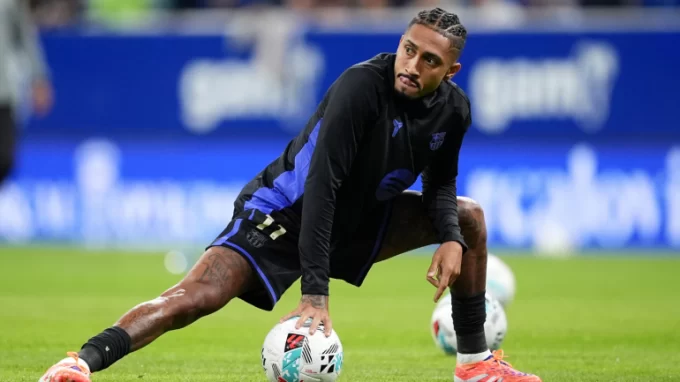
Barcelona’s Fragile Pursuit: When Injuries Threaten More Than Just a Season
A silence spreads over Camp Nou that no roar can drown out—two...
 Chris Marks2 Mins read
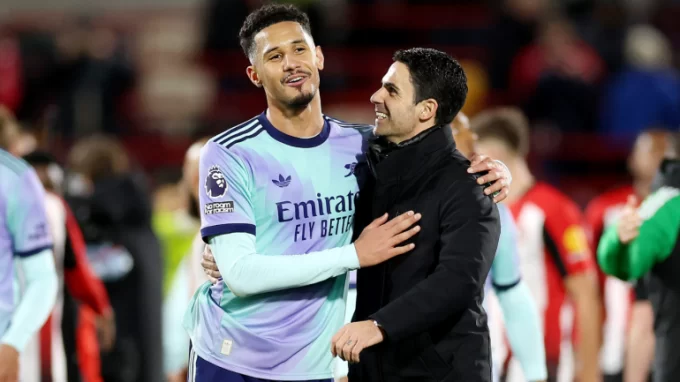
William Saliba: Arsenal’s Silent Architect or Its Greatest Gamble?
The air inside the Emirates shifts with unspoken tension—William Saliba, once a...
Joseph Bennett2 Mins read
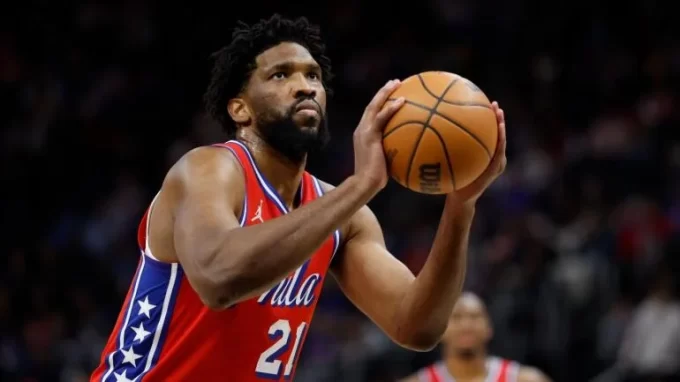
Joel Embiid’s Quiet Confidence: Is the 76ers’ Giant Ready to Rewrite His Story?
Joel Embiid is rarely one to make noise without purpose, and now,...
 Kirsten Collins1 Mins read
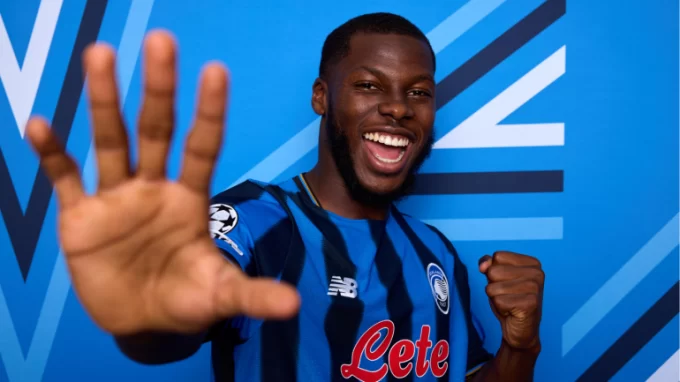
Juventus, Atalanta, and Arsenal’s Quiet Revolution: What’s Really Shaping This Week in Football?
The roar of Serie A stadiums masks a subtle shift, one that...
Kirsten Collins2 Mins read





Leave a comment