

The Court Is Gone, but the Camera Is Rolling: Why NBA Legends Are Taking Over Media
Michael Jordan and Carmelo Anthony are stepping into the spotlight again—but not on the hardwood. With a seismic shift in TV deals and media ownership, are we watching a revolution or a rerun?
 Kirsten CollinsJuly 24, 20251 Mins read19
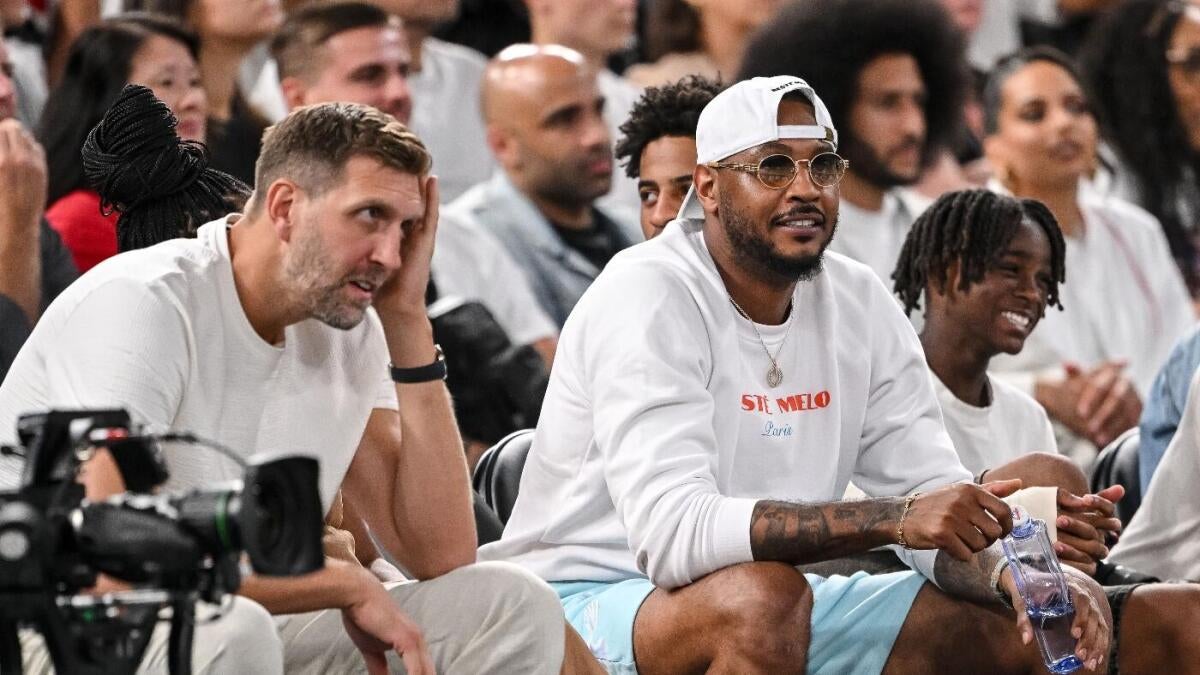
The lights are colder now, less sweat, more spotlight. Michael Jordan isn’t returning to the court—but somehow, it still feels like a comeback. This time, the legend isn’t launching from the free-throw line, but from the front office of media empires that whisper in our ears nightly. And he’s not alone. Carmelo Anthony, ever the storyteller in motion, is trading playbooks for production notes.
Something bigger is unfolding—a recalibration of power. Former players aren’t just appearing in documentaries and halftime segments. They’re authoring the narratives, buying the studios, calling the shots. Not to preserve their legacies—but to reshape the game behind the game.
The New Arena Is the Studio
This isn’t about nostalgia. It’s about influence—commercial, cultural, and psychological. What happens when the faces of a sport become the architects of how we remember it?
Jordan has reportedly entered deeper conversations about future broadcast stakes, and Anthony is launching ventures with Amazon’s SpringHill-styled ethos. It’s telling that as billion-dollar media rights deals shift hands, so do the curators of those stories. “There’s a freedom to owning your voice,” Anthony said in a recent interview, “and now we get to design how it echoes.”
But is this freedom or the beginning of a curated monopoly?
Not Just Commentary—Control
The seductive danger here isn’t bad analysis—it’s narrative concentration. These aren’t just talking heads; they’re icons rewriting legacy in real time. They decide what matters and what fades. They repackage triumphs, sanitize tensions, and, subtly, sell you yesterday’s myth under the shimmer of future-forward storytelling.
It’s chic, it’s polished—and it’s powerful. But does this democratize media, or narrow it further into the hands of those already adored? Is legacy, when self-managed, still honest—or simply more beautiful?
Jordan once defied gravity; now he’s defying the old guard of sports journalism. Anthony isn’t chasing another title; he’s writing the ending to his own. And somewhere between the box score and the broadcast rights, we’re left to wonder: who tells the truth when the storytellers are also the legends?
Or maybe—was the truth always about who owned the camera, not who made the shot?




Barcelona’s Fragile Pursuit: When Injuries Threaten More Than Just a Season
A silence spreads over Camp Nou that no roar can drown out—two...
 Chris Marks2 Mins read
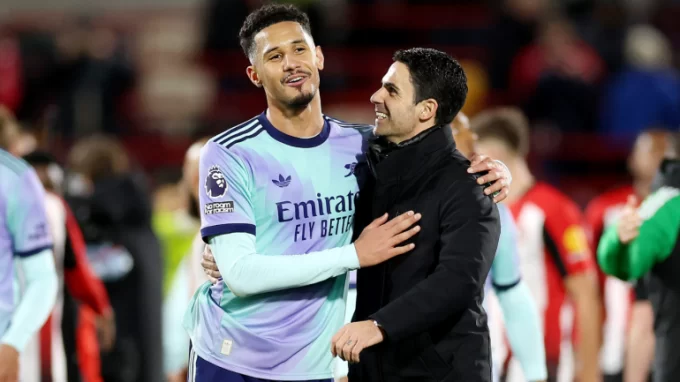
William Saliba: Arsenal’s Silent Architect or Its Greatest Gamble?
The air inside the Emirates shifts with unspoken tension—William Saliba, once a...
 Joseph Bennett2 Mins read
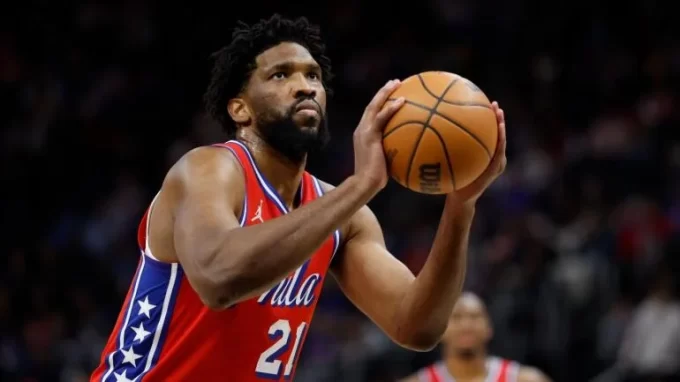
Joel Embiid’s Quiet Confidence: Is the 76ers’ Giant Ready to Rewrite His Story?
Joel Embiid is rarely one to make noise without purpose, and now,...
Kirsten Collins1 Mins read
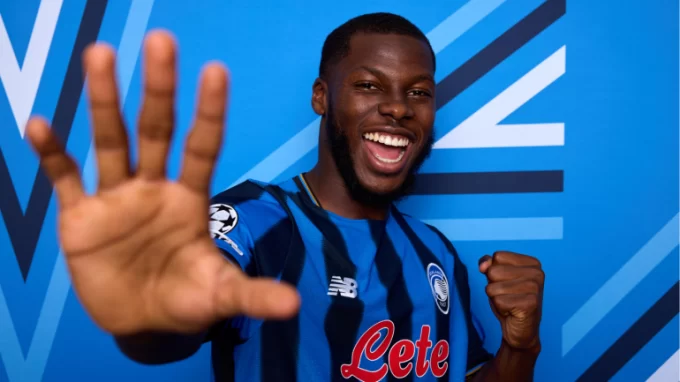
Juventus, Atalanta, and Arsenal’s Quiet Revolution: What’s Really Shaping This Week in Football?
The roar of Serie A stadiums masks a subtle shift, one that...
Kirsten Collins2 Mins read





Leave a comment