

Simons in Limbo: Boston’s Cost-Cutting Gambit or Strategic Mirage?
Anfernee Simons becomes Boston’s possible casualty in a salary purge—but is he collateral damage or a carefully placed chess piece? The trade whispers are louder than ever.
 Krista FreelandJuly 9, 20252 Mins read11

A jet of red ink appears next to Anfernee Simons’s name in Boston’s ledger—$27.7 million that might vanish before he ever laces up in green and white. A year ago, Simons was a scoring dynamo; today, he’s a salary number the Celtics hope to shed. But is this just crisis accounting—or a chess move cloaked as chaos?
Boston’s front office, led by Brad Stevens, declares this a necessary reset—shedding Jrue Holiday, Kristaps Porzingis, now Simons—to rebuild around injured star Jayson Tatum and preserve cap breathing room. Yet beneath every cut lies a question: at what point does cost cut clarity—or erodes confidence?
The Calculus of Contention
Reports now confirm that, less than a week after acquiring Simons in the Holiday trade, Boston is “actively exploring” rerouting his contract to trim luxury tax liability and save space to re-sign Luke Kornet and Al Horford. He is both a scorer in exile and a lever of control—his scoring still potent (19.3 PPG), but his fit in Boston—fragile and fungible.
A source close to the team told The Athletic: “We’ve talked to other teams who are actively trying to trade Anfernee Simons… whether they can or not is another thing”. Is his market interest genuine—or is Boston betting that simulation creates reality?
Collateral Damage or Strategic Asset?
Simons’s value isn’t in question—he’s an elite shooter, lethal off-ball, and capable of burst-offence. But his $27.7M expiring deal now seems designed more for currency than chemistry. As Mike Zarren put it: “It goes back to prioritizing our flexibility” . The question: can a high-octane talent survive as merely a fiscal ploy?
In the art of roster design, Simons is solvent in offense but insolvent in allocation. If Boston flips him successfully, they maintain depth, free cap, and retain veteran glue. If not—they risk erasing a shooter whose strengths may be going undervalued.
This unfolding drama is more than a salary saga. It’s a narrative about agency—how players become variables in a larger financial matrix. Will Simons land on a team that values his jump-shot singularity, or vanish into tax-avoidance limbo? And for Boston—did they just find flexibility, or trade away future functionality?
Between the color charts and cap sheets, the real question lingers: is Simons a sacrifice—or the next move in a larger strategic symphony?
A whisper on the trade wind says his story is far from over.







Barcelona’s Fragile Pursuit: When Injuries Threaten More Than Just a Season
A silence spreads over Camp Nou that no roar can drown out—two...
 Chris Marks2 Mins read
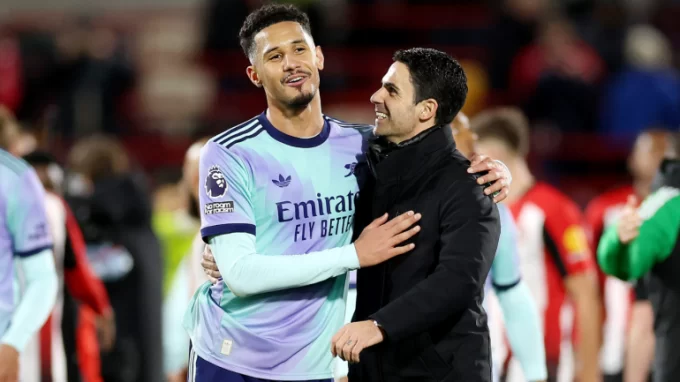
William Saliba: Arsenal’s Silent Architect or Its Greatest Gamble?
The air inside the Emirates shifts with unspoken tension—William Saliba, once a...
 Joseph Bennett2 Mins read
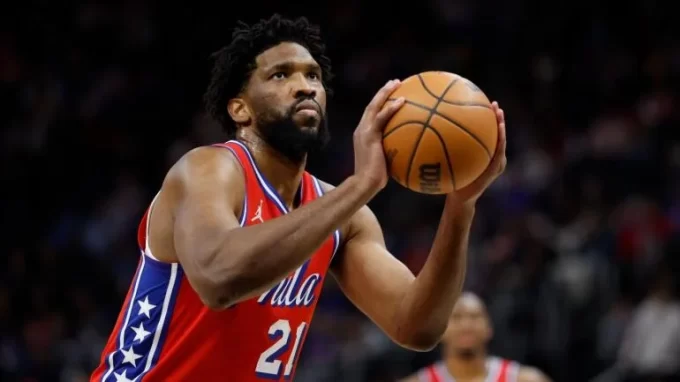
Joel Embiid’s Quiet Confidence: Is the 76ers’ Giant Ready to Rewrite His Story?
Joel Embiid is rarely one to make noise without purpose, and now,...
 Kirsten Collins1 Mins read
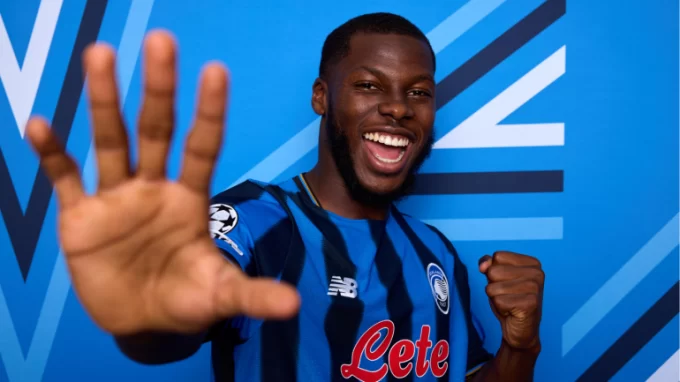
Juventus, Atalanta, and Arsenal’s Quiet Revolution: What’s Really Shaping This Week in Football?
The roar of Serie A stadiums masks a subtle shift, one that...
Kirsten Collins2 Mins read




Leave a comment