

The Serbian King and the Rookie’s Quiet Gamble
Nikola Jokić, the NBA’s most elusive superstar, granted a rookie’s request—but only on one cryptic condition. Behind the moment is something more intimate, and far stranger, than basketball.
 Joseph BennettJuly 23, 20252 Mins read20
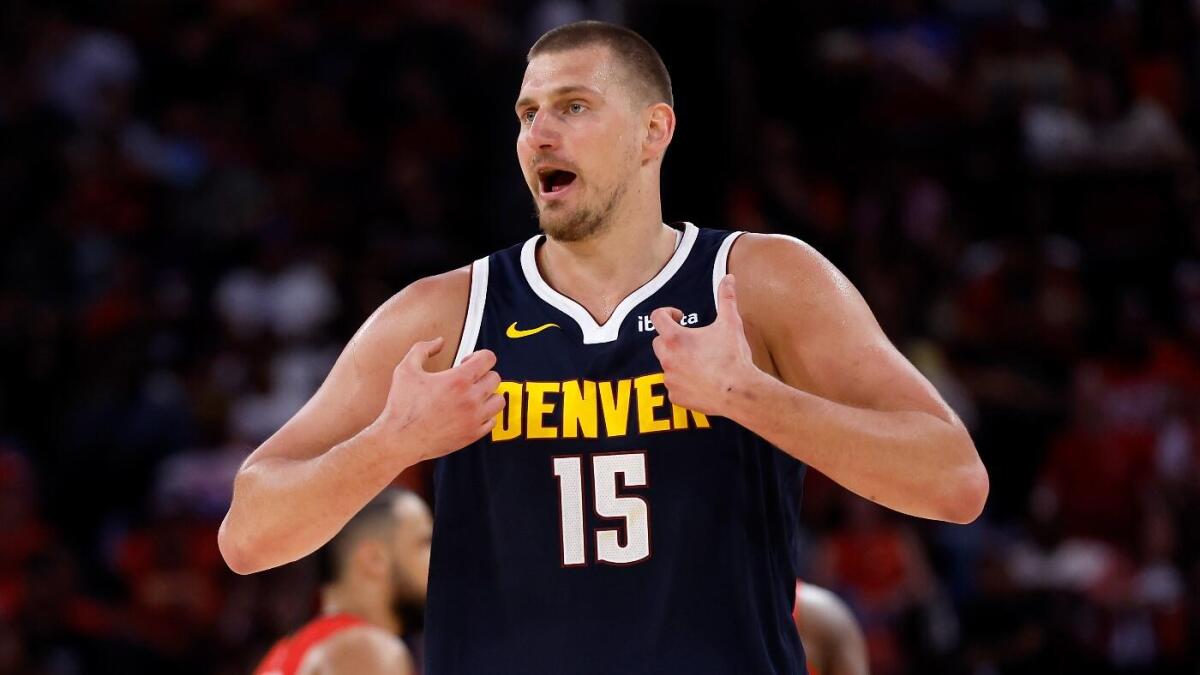
It wasn’t a press conference or a courtside spectacle. It wasn’t even caught live. Just a rookie, Yang Hansen, walking up to Nikola Jokić with a request too small for the spotlight—but large enough to make the reigning MVP pause. What he asked for remains surprisingly tender. What Jokić said in return is even more telling.
“I’ll do it,” he reportedly told Hansen, “if you beat me in one-on-one.” Not a challenge. A condition. A softly barbed invitation into the odd, disciplined, and oddly mythic world of Jokić, where nothing is given, and everything is earned—in silence.
It was the kind of moment that would slip unnoticed in another arena. But this is Jokić. And nothing around him is ever quite what it seems.
The Hum of Genius Has No PR Team
Nikola Jokić moves through the NBA like a phantom—present, dominating, but somehow ungraspable. He doesn’t live online. He doesn’t curate his image. He rides horses in the Serbian countryside and shrugs off stardom like it’s lint on a wool suit. So when a rookie asks for anything—attention, mentorship, a glimpse behind the curtain—it feels more like approaching a shrine than a locker.
Yang Hansen knew this. So when he made the request, he also made a gamble: that the person behind the genius might see something worth investing in. What’s more fascinating is that Jokić answered not with indifference, but with a test. Not “No,” not “Maybe,” but “Beat me.” It was the most Jokić response imaginable—competitive, dry, laced with humor, and completely unreadable.
This is how kings stay human. They make you chase them—not because they enjoy it, but because they need to know who you are when you arrive.
Behind Every Deadpan Is a Philosophy
What happens when the NBA’s most reluctant superstar becomes the gatekeeper of its future? You get parables instead of pep talks. You get riddles instead of rah-rah.
One Nuggets staffer, half-joking, once said, “Jokić doesn’t teach. He lets you stumble until you find it yourself.” But maybe that’s the point. There’s something monastic about his approach—a resistance to spectacle, a reverence for the quiet craft of becoming. And when he does speak, it’s with a kind of cool detachment that feels more deliberate than aloof.
Yang Hansen isn’t just asking for a scrimmage. He’s asking for inclusion. For legitimacy. And Jokić—ever the anti-celebrity—is giving it to him in the most intimate language he knows: competition.
To be seen by Jokić is not to be embraced, but to be tested. Brutally, wordlessly, beautifully.
There are no updates yet on whether Hansen won the one-on-one—or even if it happened. But the story is already doing its quiet work. It asks something of us, the way Jokić does: What does it mean to deserve something in a world obsessed with access? What if legacy isn’t loud?
And maybe that’s why this brief, nearly invisible exchange matters. Because somewhere beneath the surface of that rookie’s question and the MVP’s condition lives a truth about greatness.
The kind that doesn’t announce itself—it waits for you to find it.




Barcelona’s Fragile Pursuit: When Injuries Threaten More Than Just a Season
A silence spreads over Camp Nou that no roar can drown out—two...
 Chris Marks2 Mins read
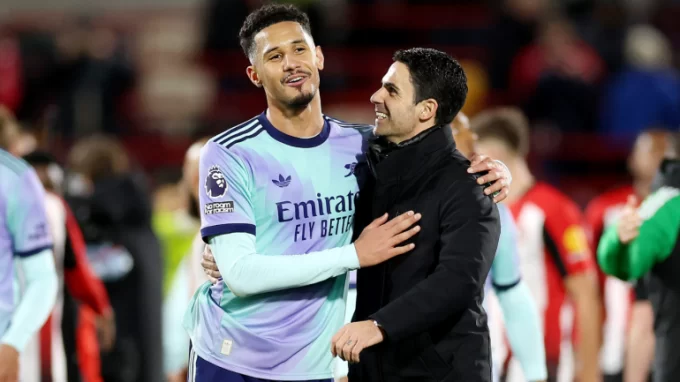
William Saliba: Arsenal’s Silent Architect or Its Greatest Gamble?
The air inside the Emirates shifts with unspoken tension—William Saliba, once a...
Joseph Bennett2 Mins read
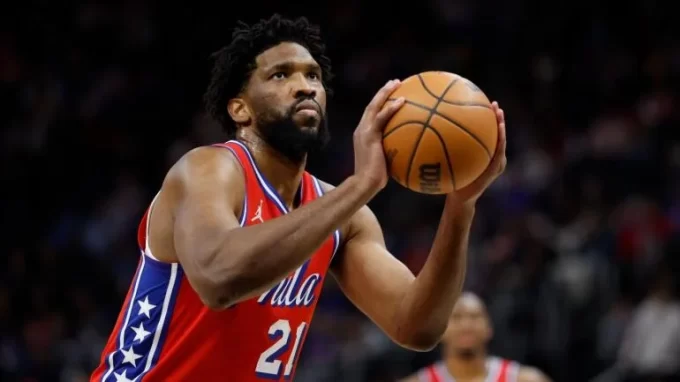
Joel Embiid’s Quiet Confidence: Is the 76ers’ Giant Ready to Rewrite His Story?
Joel Embiid is rarely one to make noise without purpose, and now,...
 Kirsten Collins1 Mins read
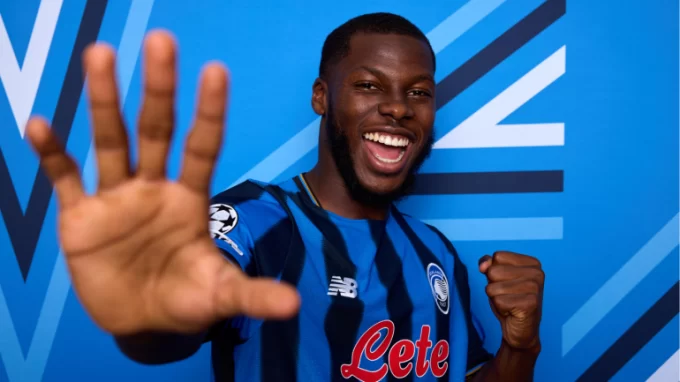
Juventus, Atalanta, and Arsenal’s Quiet Revolution: What’s Really Shaping This Week in Football?
The roar of Serie A stadiums masks a subtle shift, one that...
Kirsten Collins2 Mins read





Leave a comment