

AI Revives a Lost Welles: The Magnificent Ambersons Resurrected—or Reimagined?
Decades after RKO chopped and burned Orson Welles’s The Magnificent Ambersons, an AI-driven restoration project hopes to breathe life into the 43 vanished minutes—raising urgent questions about authenticity, memory, and the power of technology to rewrite cinematic history.
 Krista FreelandSeptember 5, 20251 Mins read17
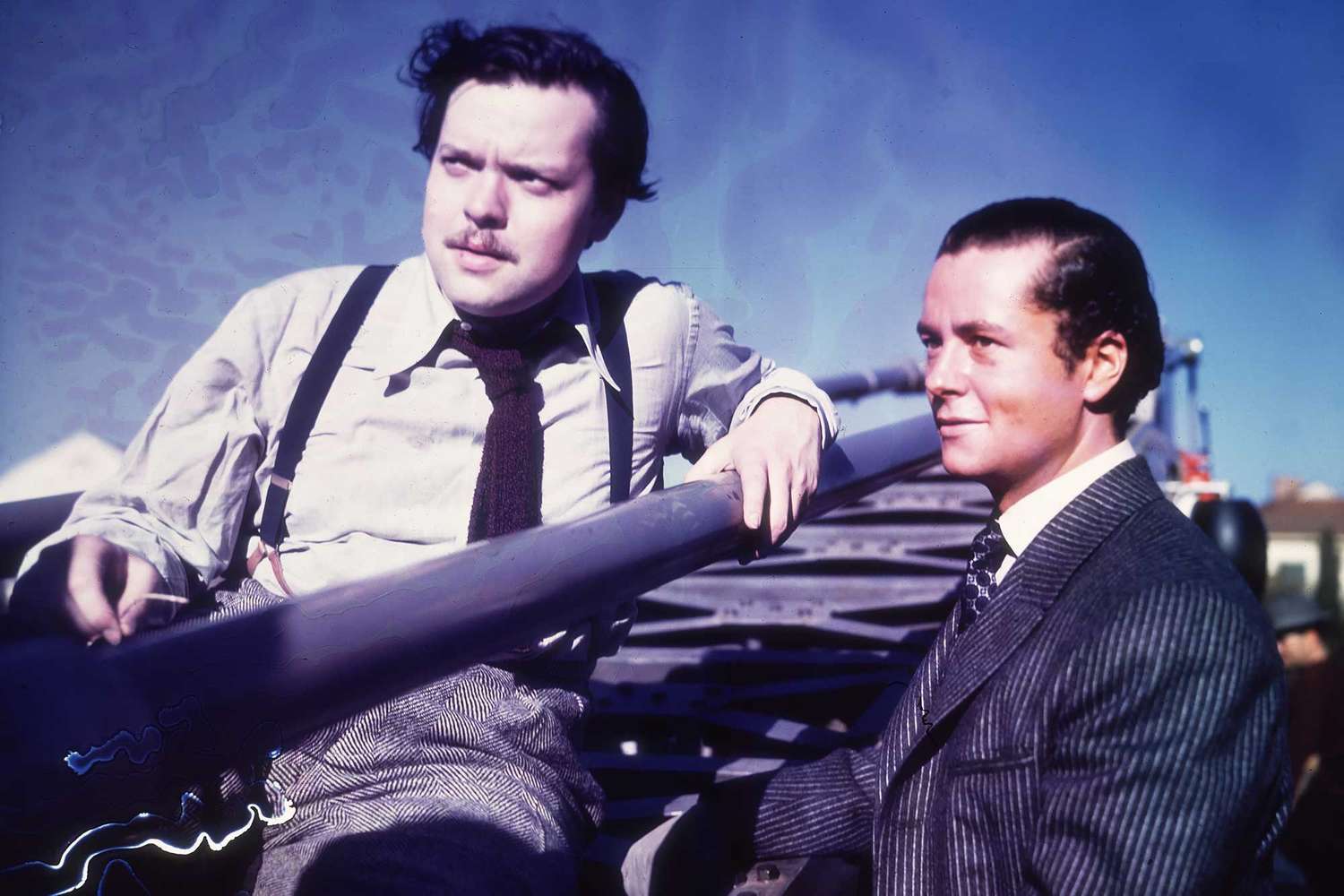
Hulton Archive/Getty
You sit before the screen, waiting for a trace of what once was—camera glides, character glances, story breaths—only to discover they were never there. That emptiness has haunted cinephiles for 83 years since RKO gutted Orson Welles’s masterpiece. Now, AI promises to fill those voids—not with the director’s hand, but with algorithms following his spirit.
The question isn’t just whether the lost Ambersons can be seen again—but whether seeing it will mean understanding, or simply believing.
When Reconstruction Becomes Resurrection
Fable’s AI platform, Showrunner, is attempting a cinematic resurrection: recreating the 43 minutes destroyed in 1942 by animating missing scenes using Welles’s notes, set photographs, and draft scripts. Filmmaker Brian Rose has, at this point, animated 30,000 missing frames—to such precision that a four-minute tracking shot, once considered a myth, now breathes again in digital frames. CEO Edward Saatchi frames it not as commerce, but as reclamation: “The goal isn’t to commercialize the 43 minutes… but to see them exist in the world.” Yet existence without Welles’s body becomes its own dilemma.
Originality in the Age of AI
Just as unsettling is a philosophical riddle: can an AI conjure what’s gone? Showrunner plans to blend filmed recreations, AI-crafted faces, and 3D-set reconstructions into a seamless illusion. Film historian skeptics fear the uncanny valley, while others see “kintsugi” restoration—embracing the cracks—as worthy tribute. Brian Rose himself likens his work to that delicate Japanese art: repairing so the fractures tell the story too. But does the reconstruction become a new film—rather than a recovered one?
Welles famously said, “They destroyed Ambersons and it destroyed me.” Now, AI offers a second chance—perhaps not at the man, but his vision. Still, when the digital frames fade, one must ask: if we build what was lost, is it a restoration—or a reimagination?






Pianist Omar Harfouch Brings Celebrated Figures Together for a Night of Cultural Exchange – Hollywood Life
Image Credit: Omar Harfouch On February 20, 2026, pianist and cultural figure...
 Kirsten Collins2 Mins read

Who Is Ivana Lisette Ortiz? About the Rihanna Home Shooting Suspect – Hollywood Life
Image Credit: WWD via Getty Images The suspect in the March 8,...
Kirsten Collins1 Mins read

How Much Money Does She Have Now? – Hollywood Life
Image Credit: WWD via Getty Images Rihanna may be known as one...
Kirsten Collins2 Mins read
Stars Who Slammed ‘Love Story: JFK Jr. & Carolyn Bessette’: Statements – Hollywood Life
Image Credit: Getty Images FX’s Love Story: John F. Kennedy Jr. and...
Kirsten Collins2 Mins read





Leave a comment