

Ozzy Was Never Just the Prince of Darkness—He Was the Flame Itself
In a rare and haunting tribute, Black Sabbath bassist Geezer Butler pens an elegy that does more than mourn Ozzy Osbourne—it reframes him. The voice of metal becomes myth, memory, and something dangerously close to poetry.
 Kirsten CollinsJuly 28, 20252 Mins read17
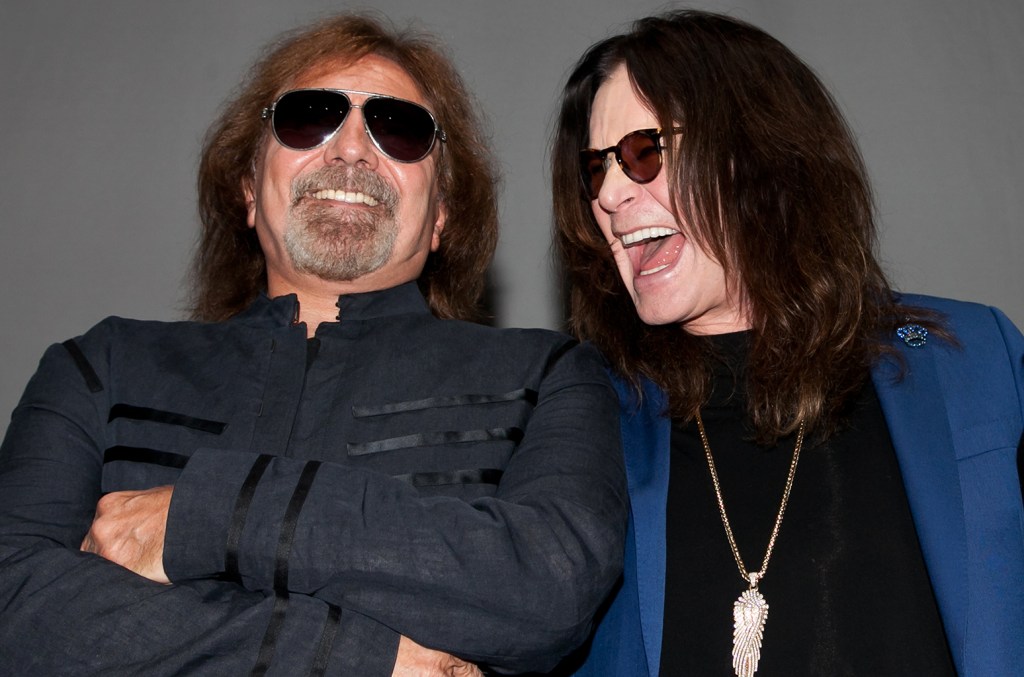
He was laughing. That’s what Geezer Butler remembers. Not the drugs, not the headlines, not the endless haze of hotel-room nihilism—but the way Ozzy Osbourne laughed like he was already in on the joke we hadn’t caught yet. There’s a strange cruelty to time when it dares to soften a figure like Ozzy. But in Butler’s new tribute, that softness isn’t erasure—it’s reverence with an edge.
You could call it a eulogy without a coffin. Though Ozzy still breathes, the shadows around him have grown long, almost reverent. And in Butler’s hands, this isn’t just a nod to a friend. It’s the start of a reckoning. What happens when the gods of metal finally go quiet? What remains when the loudest man in rock is reduced to memory?
The Man Who Screamed into the Void—and Made It Echo Back
Ozzy Osbourne was never built for the margins. He came roaring out of postwar Birmingham like a prophet looking for a mic—and when he found it, the world split open. It wasn’t just the howl. It was the theatricality of decay, the vulnerability wrapped in distortion. He didn’t want to scare you. He wanted you to admit you were already scared.
Geezer Butler, the architect of Black Sabbath’s lyrical underbelly, knew this better than anyone. “Ozzy had this way of making darkness feel like home,” Butler writes, in a piece that feels less like a tribute and more like a séance. Their dynamic was never sweet—it was sacred. An alchemy of chaos and genius that made metal not just a genre, but a theology.
And now, as age tightens its grip on the last icons of rebellion, Butler does what few have dared: he starts the obituary while the pulse still flickers. It’s not morbid. It’s honest. Because to truly understand Ozzy, you have to face what made him monstrous—and what made him magnetic.
When Legends Fade, What Do We Worship?
This is more than a farewell. It’s a challenge to the industry that once worshipped at Ozzy’s altar and now sells sanitized rebellion to the highest bidder. Today’s rock stars wear eyeliner but fear the dark. Ozzy swallowed it. Made it his brand. And in doing so, he gave a generation permission to be broken, loud, and unashamed.
The irony is brutal: the man once dismissed as a bat-biting caricature may go down as the last artist who meant it. Butler’s words sharpen that truth with every sentence. “Ozzy gave a voice to those who felt unseen—not by speaking, but by screaming,” he writes, and you can hear the distortion even in the ink.
It’s not just nostalgia. It’s longing. For a world where music wasn’t just background noise but an act of spiritual resistance. Ozzy didn’t just perform—he endured. And that’s what makes this tribute feel different. It’s not about what he was. It’s about what we lost the moment we stopped listening.
And maybe that’s the part we can’t forgive—ourselves.
Somewhere, maybe in a darkened hallway of his home, Ozzy is still laughing. The same manic, unkillable laugh that once rattled arenas. But now it echoes differently. As if even he knows: the stage lights are dimming, but the myth is only beginning to hum.






Laufey’s Opening Night Show at LA’s Crypto.com Arena: Best Moments
Laufey opened a two-night stand at Crypto.com Arena in downtown Los Angeles...
 Chris Marks6 Mins read

Julie Adam Is Billboard Canada Women in Music’s 2025 Exec of the Year
Julie Adam is having a milestone year — and it’s getting even...
Chris Marks4 Mins read

Spinal Tap Tribute Album with Foo Fighters,Tool for Teen Cancer America
Spinal Tap may be a fake band, but its music is very...
Chris Marks2 Mins read

AxMxP Is K-Pop Rookie of the Month for September: Exclusive Photos
Ha Yoo Joon Image Credit: Chin Soyeon You debuted on Sept. 10....
Chris Marks2 Mins read




Leave a comment