

Pedro Pascal Doesn’t Just Survive—He Haunts
He’s the internet’s reluctant daddy, the Mandalorian’s masked martyr, and the man who made pain seductive. But are we witnessing a career—or a mythology being forged in real time?
 Kirsten CollinsJuly 31, 20252 Mins read97
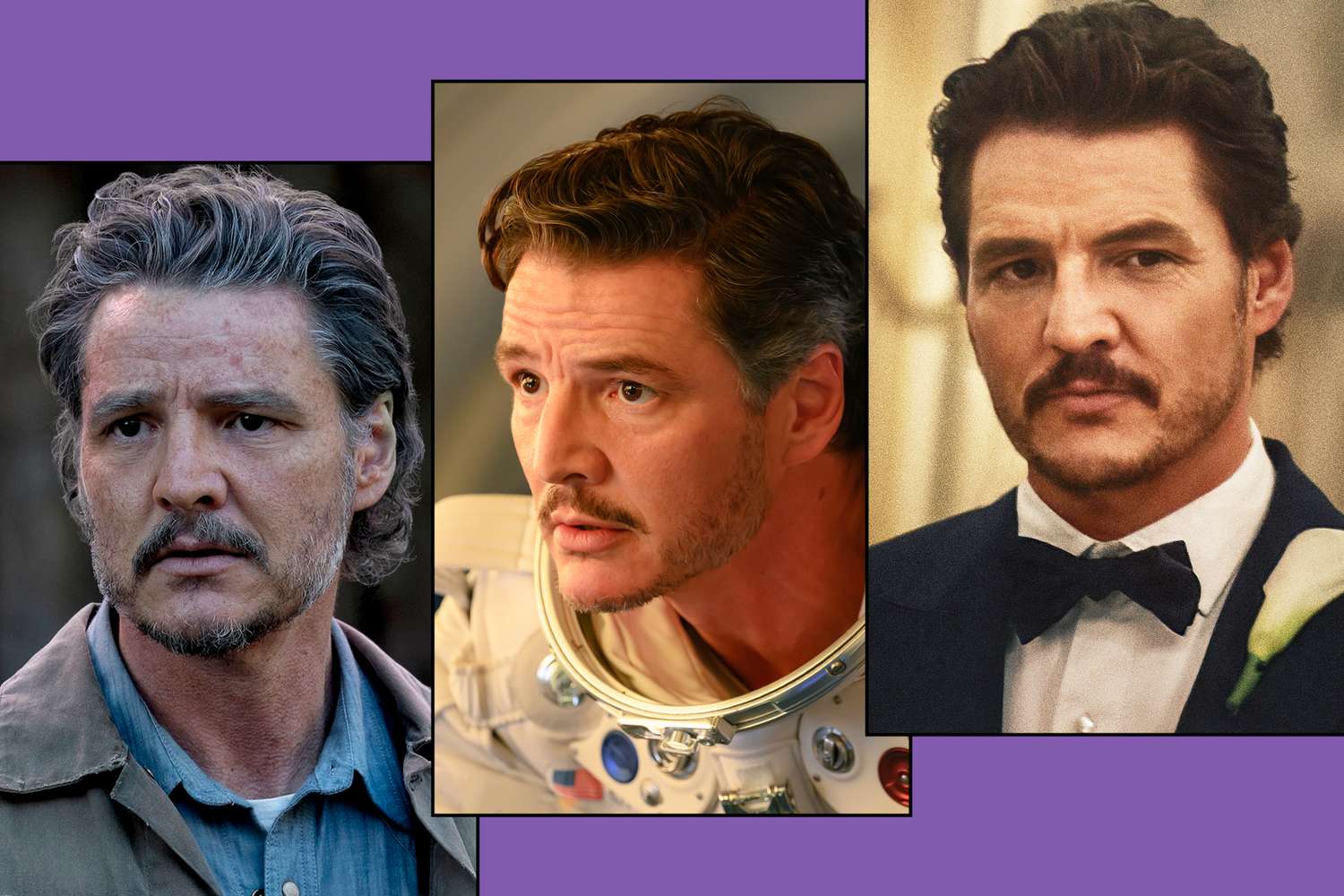
Liane Hentscher/HBO; Jay Maidment/Marvel; A24
He walks into every frame like he’s been walking for years. Dust on his boots, weariness behind the eyes, and a voice that seems to carry the ache of an entire continent. Pedro Pascal doesn’t act—he lingers. He’s there long after the credits roll, in the static of your screen, in the unsettled hush that follows a good episode. There’s something unnervingly permanent about the way he disappears into a role.
Hollywood has never had a shortage of leading men, but Pascal is something else entirely. He’s not aspirational. He’s devotional. You don’t want to be him—you want to follow him, even if it’s into ruin. From Oberyn Martell’s devastating arrogance to Joel’s quiet, crumbling grief, Pascal performs masculinity not as power, but as burden. It’s charisma through erosion. It’s tenderness wrapped in iron. He’s the hero you can’t trust with your life, only your heartbreak.
He Carries the Weight, So We Don’t Have To
It’s no coincidence that Pascal’s biggest roles have involved armor, masks, or emotional lockdowns. The Mandalorian is a role built on restraint—a faceless man defined by honor, trauma, and the sound of his voice. And yet, it’s that voice—low, deliberate, vaguely apologetic—that holds galaxies together. “Wherever I go, he goes,” he says of Grogu, and it sounds like a confession. A vow made not just to the child, but to us, the viewers, who’ve grown addicted to his quiet ruin.
In The Last of Us, Pascal takes Joel—a man shattered by grief—and plays him like a cracked vessel: leaking rage, memory, and something dangerously close to love. He doesn’t try to redeem the character. He doesn’t soften him. He lets Joel rot. And somehow, we lean in closer.
As one fan recently posted online, “Pedro Pascal looks like every bad decision I’d willingly make again.” It’s a joke, sure. But like most jokes about Pascal, it’s carved from truth.
The Myth Is Already Writing Itself
Pascal’s roles are bleeding into each other now—variations on the same wounded archetype, echoes in different timelines. Yet no one’s bored. Quite the opposite. There’s a strange reverence growing around him, as though watching his performances isn’t entertainment, but ritual. We’re not just witnessing a career. We’re watching a canon.
Is it nostalgia? A reaction to post-#MeToo casting fatigue? The return of the complicated man, not as antihero but as warning? Perhaps. Or maybe it’s simpler: Pascal gives us permission to feel sadness with style. He’s the face of weariness made beautiful.
And yet… is he too good at disappearing? How much of him is really there behind those roles? Will the man ever step out from behind the myth? Or will Pedro Pascal remain—like the characters he plays—not quite reachable, not quite whole?
The camera lingers on him, always. But what do we really see?







When Are the Oscars 2026? Date of the Academy Awards – Hollywood Life
Image Credit: AFP via Getty Images The Oscars are officially on the...
Kirsten Collins1 Mins read

Ticket Prices & Presale Details – Hollywood Life
View gallery Image Credit: Dave J. Hogan/Getty Images Harry Styles is embarking...
Kirsten Collins2 Mins read

See Release Date, Cast & Trailer – Hollywood Life
Image Credit: ©2026 Amazon MGM Studios Content Services LLC Masters of the...
Kirsten Collins1 Mins read

Where Is Lawrence Jones on ‘Fox & Friends’? Health Update Amid Hiatus – Hollywood Life
Image Credit: Getty Images Fans of Lawrence Jones, a Fox & Friends...
Kirsten Collins1 Mins read





Leave a comment