

When the Pope Meets Napoli: A Divine Encounter or a Tactical Play?
In a moment that blurred the lines between faith and football, Pope Leo XIV welcomed Serie A champions Napoli to the Vatican. But beneath the ceremonial gestures, what deeper currents were at play?
 Joseph BennettMay 27, 20252 Mins read29
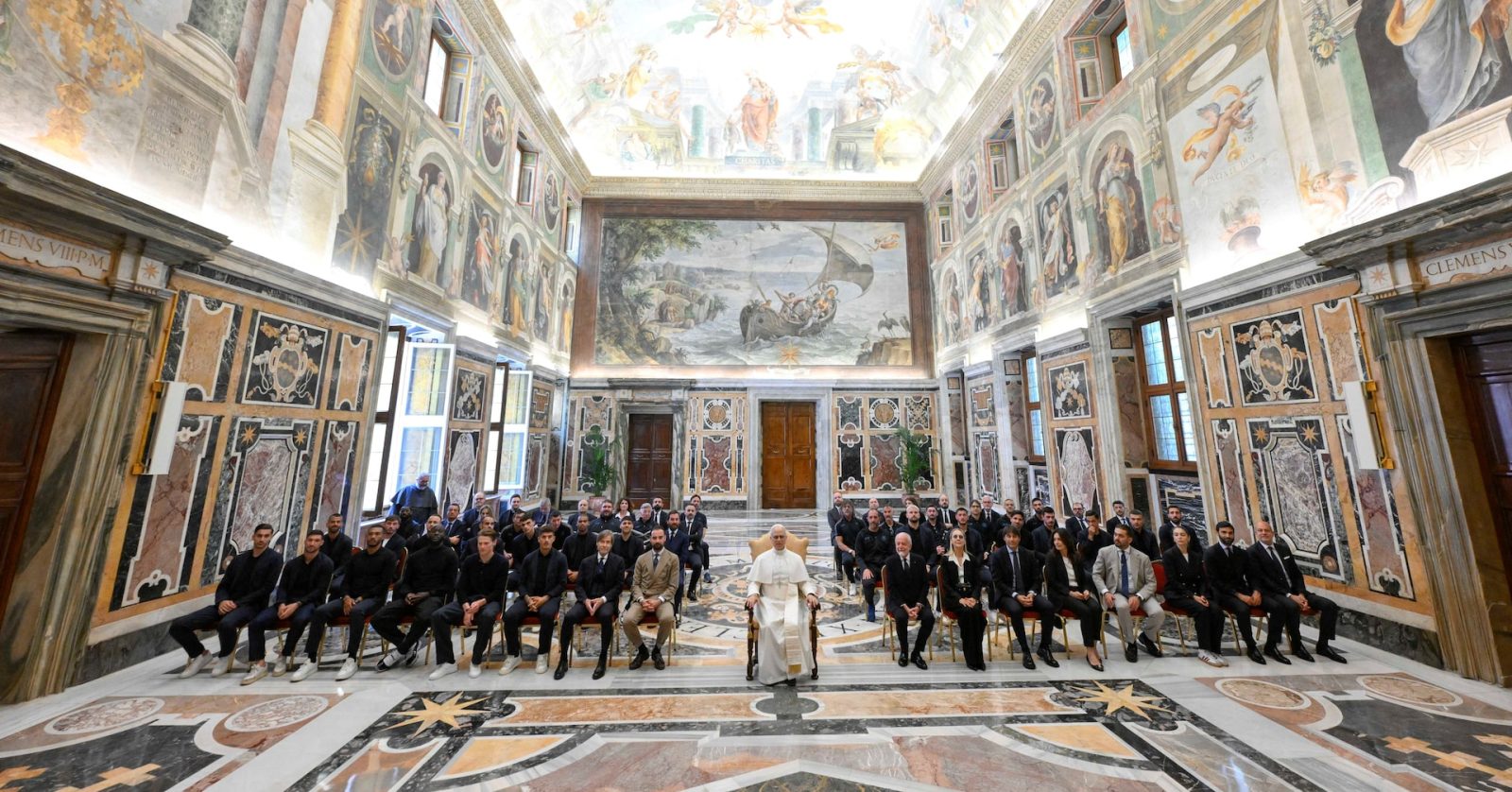
The Vatican’s hallowed halls, echoing with centuries of ecclesiastical history, recently resonated with the unexpected presence of Napoli’s footballing elite. On May 27, 2025, Pope Leo XIV, the first American pontiff, extended a rare invitation to the newly crowned Serie A champions, Napoli. The team, fresh from their narrow 2-0 victory over Cagliari—a win that clinched their fourth Scudetto by a single point over Inter Milan—stood before the Pope in a scene that felt both surreal and symbolic.
The meeting was more than a mere ceremonial gesture. Pope Leo, known for his thoughtful and occasionally provocative statements, addressed the gathering with a blend of humor and gravitas. He dismissed media speculations about his allegiance to AS Roma, Napoli’s fierce rival, suggesting a nuanced understanding of Italian football’s complex loyalties. This subtle deflection raised questions: Was the Pope merely playing the diplomat, or was there a deeper commentary on the nature of fan identities and the politics of sport?
The Pope’s remarks extended beyond personal affiliations. He emphasized the educational and unifying power of sports, highlighting how Napoli’s triumph exemplified collective effort over individual brilliance. In a world increasingly fragmented by divisions, his words served as a reminder of sports’ potential to bridge gaps and foster solidarity. Yet, his caution against the commercialization of sports introduced a layer of complexity: Was he critiquing the very system that elevates clubs like Napoli to global prominence?
The Vatican’s relationship with football is not new. Previous popes have acknowledged the sport’s role in promoting values such as honesty, solidarity, and fraternity. However, Pope Leo’s engagement with Napoli, coupled with his candid reflections, suggests a pontificate that views football not just as a pastime but as a mirror reflecting societal values and challenges.
As the meeting concluded, Napoli’s president, Aurelio De Laurentiis, presented the Pope with a personalized No. 10 jersey, honoring the legendary Diego Maradona. This gesture, rich in symbolism, prompts reflection: In a world where icons often transcend their fields, what does it mean when a religious leader embraces the symbols of a sport?
In the days following the encounter, discussions emerged about the Pope’s true stance on football. Some speculated that his interactions with Napoli were a diplomatic move, while others believed it signaled a genuine interest in the sport’s cultural impact. The ambiguity surrounding his position invites further inquiry: Is Pope Leo XIV’s engagement with football a strategic alignment, a personal passion, or a calculated commentary on the intersection of faith and modern culture?
As the Vatican continues to navigate its role in a rapidly evolving world, one thing remains clear: Pope Leo XIV’s meeting with Napoli was not just about football. It was a moment that challenged perceptions, blurred boundaries, and invited the world to reconsider the profound connections between sport, faith, and society.






Barcelona’s Fragile Pursuit: When Injuries Threaten More Than Just a Season
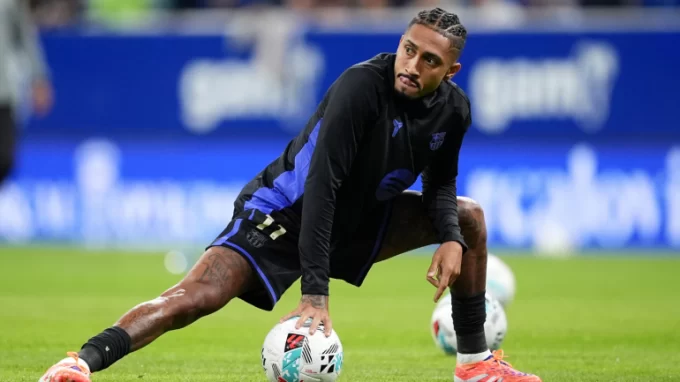
A silence spreads over Camp Nou that no roar can drown out—two...
 Chris Marks2 Mins read
William Saliba: Arsenal’s Silent Architect or Its Greatest Gamble?
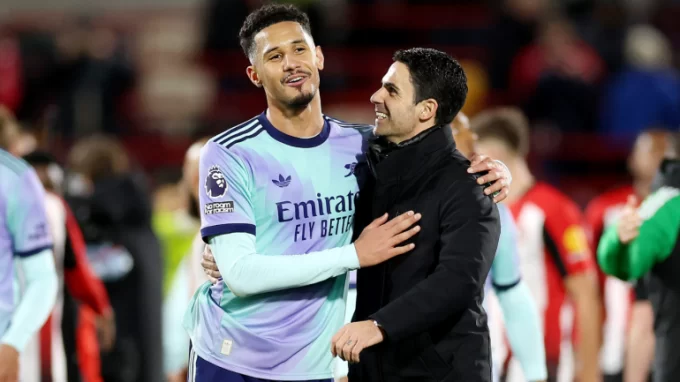
The air inside the Emirates shifts with unspoken tension—William Saliba, once a...
Joseph Bennett2 Mins read
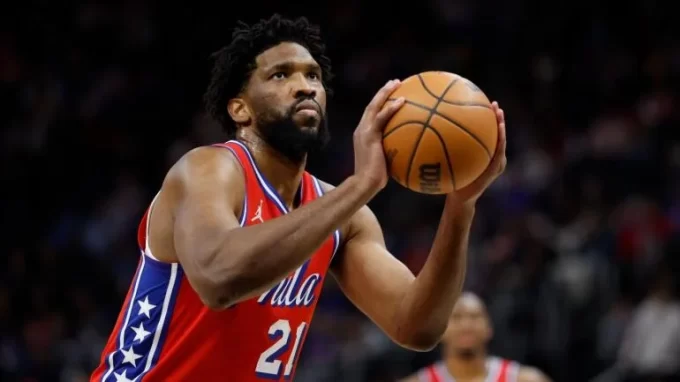
Joel Embiid’s Quiet Confidence: Is the 76ers’ Giant Ready to Rewrite His Story?
Joel Embiid is rarely one to make noise without purpose, and now,...
 Kirsten Collins1 Mins read
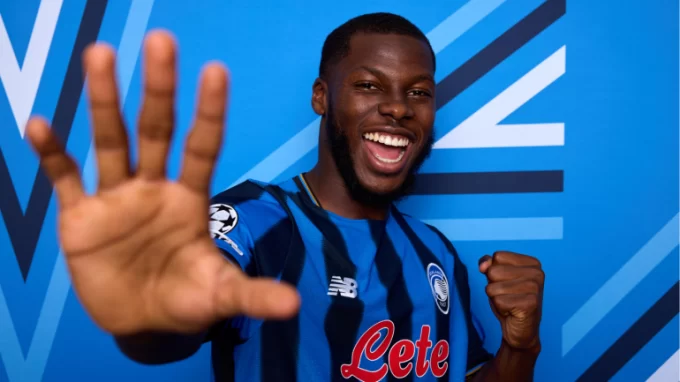
Juventus, Atalanta, and Arsenal’s Quiet Revolution: What’s Really Shaping This Week in Football?
The roar of Serie A stadiums masks a subtle shift, one that...
Kirsten Collins2 Mins read





Leave a comment