

Quincy Jones’s Quiet Prediction: Nick Cannon’s Growing Family Secrets
Quincy Jones foresaw Nick Cannon’s appetite for fatherhood long before the headlines—a subtle insight into legacy, desire, and the intricate dance between love and identity. What does this say about the man behind the many children?
 Joseph BennettJuly 15, 20252 Mins read15
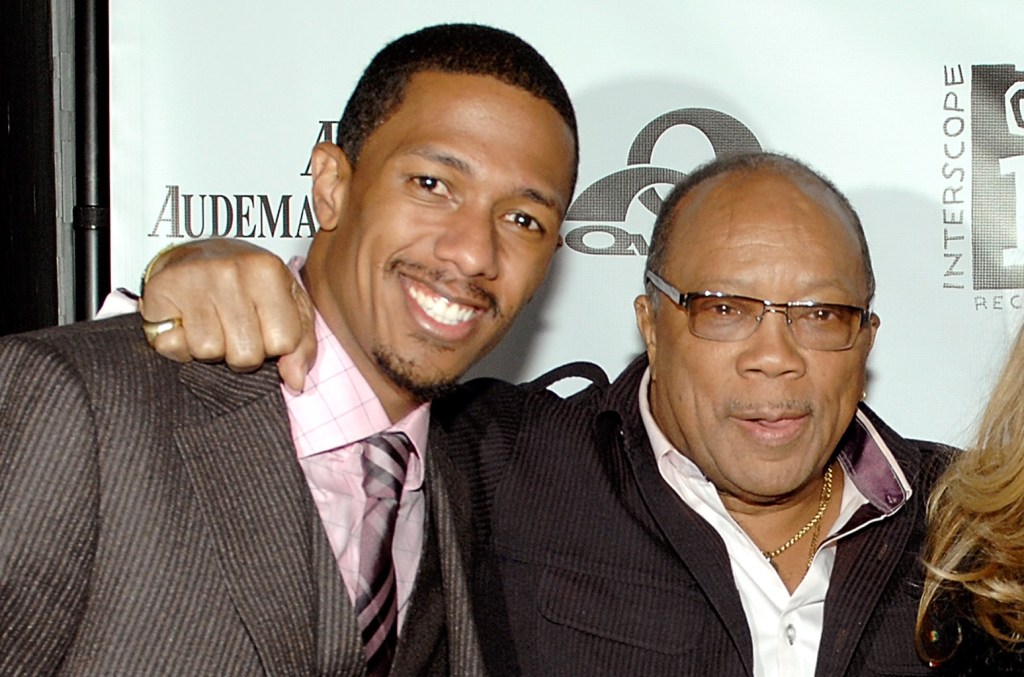
There’s a moment tucked away in a quiet conversation where Quincy Jones, the legendary architect of music’s greatest chapters, looked past the surface and saw the inevitable. He knew Nick Cannon wouldn’t settle for the conventional, wouldn’t be content with the usual script after his years with Mariah Carey. It was not just intuition—it was a deep understanding of a man shaped by legacy, ambition, and an insatiable urge to create life as fiercely as art.
How often do we mistake the number of children for mere excess, missing the complex human story beneath? Nick Cannon’s expanding family is not a headline—it’s a statement, one that Quincy Jones predicted with the calm certainty of a man who’s witnessed the making and breaking of countless stars.
The Legacy Whisperer
Quincy Jones, a figure synonymous with vision and foresight, once remarked that family is the most profound creation an artist can cultivate. It’s no surprise he saw beyond Nick Cannon’s early fame and understood the larger narrative unfolding—a man who wouldn’t just father children but weave them into a tapestry of identity and legacy.
One close source noted, “Quincy always said Nick’s heart was bigger than the spotlight. The children are part of that heart—a living, breathing testament to a desire that defies the ordinary.” This perspective challenges the media’s reductive gaze on celebrity fathers, forcing us to reconsider what drives a man like Nick Cannon beyond public spectacle.
Between Fame and Fatherhood
The intersection of celebrity and parenthood is often messy, fraught with contradictions and judgments. But Nick Cannon’s story complicates these assumptions. He’s not merely accumulating children; he’s articulating a vision of family that resists neat categorization. The world watches, sometimes puzzled, sometimes critical—but what if this is his way of rewriting what it means to be a man, a father, and an artist in today’s culture?
The question lingers: is Nick Cannon’s growing brood a symbol of legacy, rebellion, or something else entirely? Quincy Jones’s foresight invites us to look deeper—beyond gossip and tabloids—to the quietly revolutionary idea that life itself, in all its complexity, is the ultimate creation.
And as the narrative unfolds, one can’t help but wonder—what does this family mean for the future, and how will it reshape the stories we tell about identity, success, and love?







Laufey’s Opening Night Show at LA’s Crypto.com Arena: Best Moments
Laufey opened a two-night stand at Crypto.com Arena in downtown Los Angeles...
 Chris Marks6 Mins read

Julie Adam Is Billboard Canada Women in Music’s 2025 Exec of the Year
Julie Adam is having a milestone year — and it’s getting even...
Chris Marks4 Mins read

Spinal Tap Tribute Album with Foo Fighters,Tool for Teen Cancer America
Spinal Tap may be a fake band, but its music is very...
Chris Marks2 Mins read

AxMxP Is K-Pop Rookie of the Month for September: Exclusive Photos
Ha Yoo Joon Image Credit: Chin Soyeon You debuted on Sept. 10....
Chris Marks2 Mins read





Leave a comment