

When the Shield Falters, Who Guards the Gate?
Alaric Jackson, once sidelined by dangerous blood clots, edges back into Rams camp—a restoration tinged with fragility and unspoken stakes. Beneath practice drills lies a story about the precarious dimensions of resilience and hope.
 Joseph BennettAugust 25, 20251 Mins read17
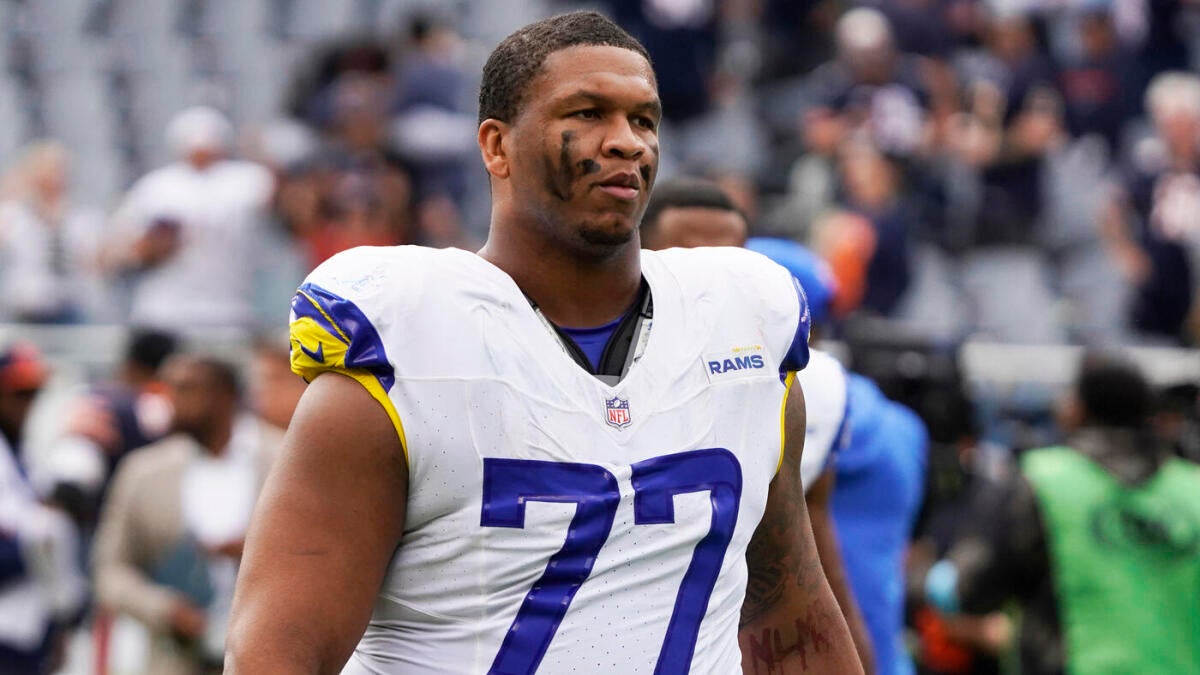
You see him finally on the field—limited drills, jog-throughs, eyes scanning storm clouds—but the moment is less triumph than taut expectation. Alaric Jackson, the Rams’ blindside guardian, is back from blood clots, yet every snap he takes is fragile testimony to both survival and uncertainty.
Coach Sean McVay lays it out plain: “He’s handled it like a total stud,” yet acknowledges the fragility: “That demands flexibility.” In those words, there’s both awe and caution, a silent tension that colors every stretch of turf he holds.
Where Strength Meets Fragility
Jackson’s return is more than a roster checkbox—it’s a cultural reverberation. A three-year, $57 million extension in February marked faith in his ascendancy. But blood clots—recurring since 2022—remind us that bodies, like legacies, do not obey contracts. The Rams signed veteran backups D.J. Humphries and David Quessenberry as life insurance, but there’s no replacement for the anchor that Alaric offers.
He will practice in full only next week if all holds—but ‘if’ is porous. In a league built on offensive lines built of steel, Jackson’s arrival is both reassurance and reminder: health is the truest warp and woof of power.
When the Field Hides the Fear
The story we don’t see is the morning after the last practice—does he feel different? Is the line stable if his leg betrays him again? His presence in Week 1 is possible. But the real question echoes beyond the scoreboard: when a warrior returns from a body’s betrayal, who holds the ground beneath his comeback?
Because sometimes the toughest plays are off the sheets—and even strength must prove itself again, under suns that won’t wait.



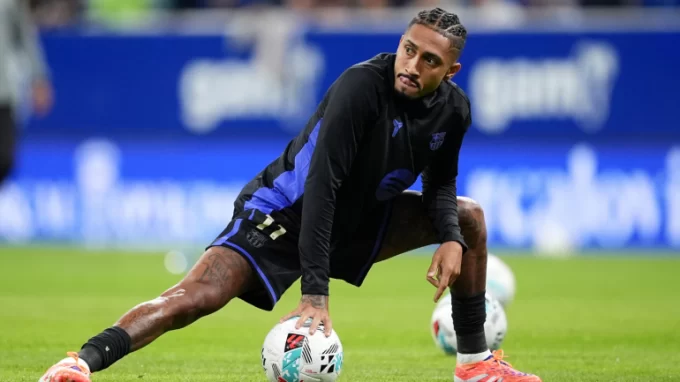
Barcelona’s Fragile Pursuit: When Injuries Threaten More Than Just a Season
A silence spreads over Camp Nou that no roar can drown out—two...
 Chris Marks2 Mins read
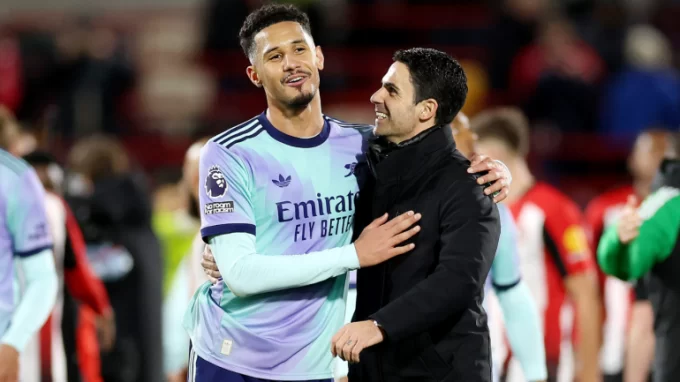
William Saliba: Arsenal’s Silent Architect or Its Greatest Gamble?
The air inside the Emirates shifts with unspoken tension—William Saliba, once a...
Joseph Bennett2 Mins read
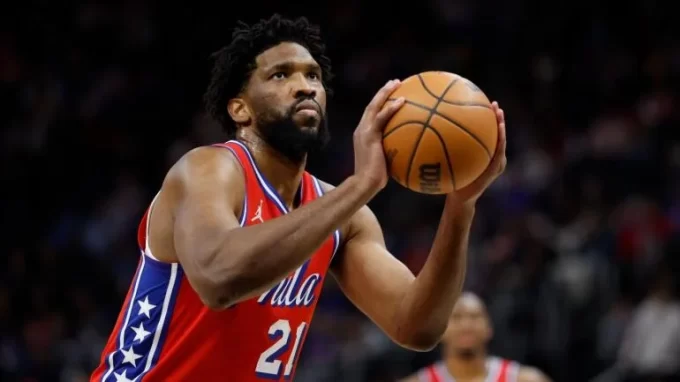
Joel Embiid’s Quiet Confidence: Is the 76ers’ Giant Ready to Rewrite His Story?
Joel Embiid is rarely one to make noise without purpose, and now,...
 Kirsten Collins1 Mins read
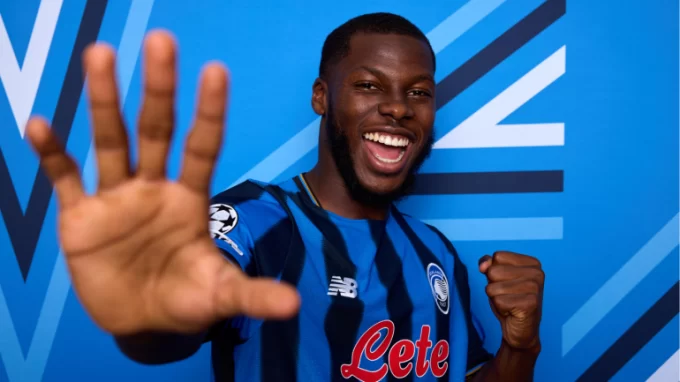
Juventus, Atalanta, and Arsenal’s Quiet Revolution: What’s Really Shaping This Week in Football?
The roar of Serie A stadiums masks a subtle shift, one that...
Kirsten Collins2 Mins read


Leave a comment