

The Fetishization of Fear: RFK Jr. and the Vaccine Fetuses Lie
In a swirl of pseudo-science and spectacle, RFK Jr. has conjured a new conspiracy—fetuses in vaccines. But what’s more dangerous: the theory itself, or the culture that keeps giving it a microphone?
 Kirsten CollinsMay 1, 20252 Mins read164
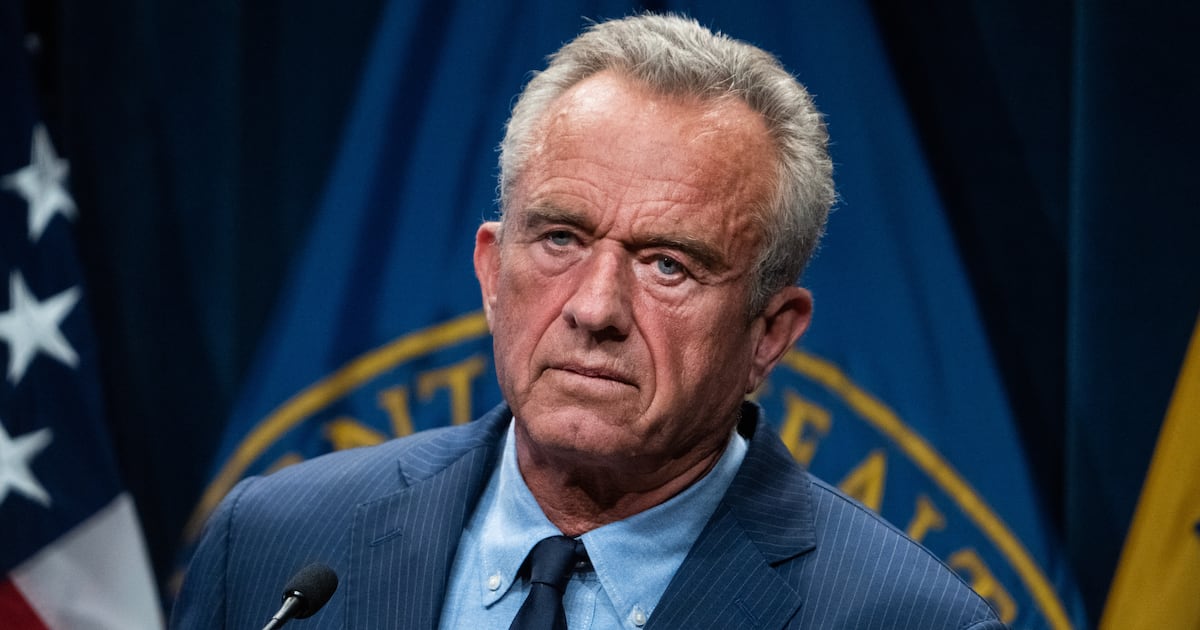
It begins, as these things always do, with a whisper dressed as a warning. A fringe idea floats to the surface, grotesque and outrageous: that fetal debris is hidden inside vaccines. This time, it’s not a shadowy Reddit thread or an anonymous account—it’s Robert F. Kennedy Jr., a man with a name soaked in American mythology, who is breathing new life into an old, debunked lie. The claim is not new, but the platform is louder. And that is where the danger metastasizes.
The narrative is almost cinematic in its audacity: the suggestion that pharmaceutical companies are injecting aborted fetuses into the arms of children. It is the kind of imagery designed to bypass logic and punch directly into the gut of moral panic. The claim has been thoroughly discredited, but that’s beside the point. In today’s political alchemy, truth is less useful than emotional torque. And RFK Jr. understands this better than most.
When Science Becomes a Stage Prop
The real tragedy isn’t that someone said it—it’s that millions are still listening. Kennedy’s delivery is calm, his cadence eerily confident. To those seeking an enemy, he provides one, dressed in lab coats and wielding syringes. “There are fetal cells in vaccines,” he insists. Not in a lab, not in nuanced scientific contexts, but in the vaccine itself, in your bloodstream, in your baby. It’s a narrative laced with religious overtones, moral horror, and a deep suspicion of authority.
What’s deeply unsettling is how easily this language is absorbed into mainstream discourse, echoed on podcasts, slipped into political debates, turned into memeable outrage. Conspiracies have always existed, but what has changed is their aesthetic. The polished production, the faux-expert interviews, the selective studies—all of it masks a singular goal: to destabilize trust.
As one medical ethicist put it, “You don’t need the lie to be bulletproof. You just need it to linger long enough to rot the foundation of truth.” And linger it does.
The Audience Is the Engine
Kennedy is not creating misinformation in a vacuum—he’s feeding an appetite. His supporters don’t require evidence. They require confirmation. The vaccine debate has never truly been about medicine; it’s about identity, power, fear, and control. To question the science is, for many, an act of rebellion. To believe in the grotesque is to feel righteous in one’s suspicion.
It’s the theater of the absurd cloaked as critical thinking. And in that theater, RFK Jr. has found his role—not as a challenger to Big Pharma, but as a symbol for a deeper cultural fracture: the rejection of expertise, the glamorization of victimhood, the fetishization of fear.
He does not need to win an election to win this battle. He only needs to remain in the conversation, contaminating it like a slow, silent leak.
So now we sit with the question: how many more lies can be said before the body politic begins to bleed truth entirely? In the end, it might not be the conspiracy itself that infects us—it might be our unwillingness to inoculate against it.
And if absurdity becomes acceptable, what’s the next lie we’ll be asked to swallow?






The Man Who Bled for Millions
He saved over 2.5 million babies, but no one ever recognized him...
Kirsten Collins2 Mins read
The Silence Before the Sneeze
A dead bird, limp on the edge of a sidewalk in Guangdong,...
Kirsten Collins2 Mins read
The Lie That Keeps Mutating
The seduction of scandal is ancient, but its latest host is disturbingly...
Kirsten Collins2 Mins read
The Red Spots We Chose to Ignore
The first red spot appeared behind the ear—a detail easily missed, easily...
Kirsten Collins2 Mins read




Leave a comment