

Lesbian Noir, B-Movie Reimagined: Ethan Coen’s Honey Don’t! Flips the Script
In Honey Don’t!, Ethan Coen and Tricia Cooke plunge neo-noir into the Bakersfield sun, crafting the second installment of a lesbian B‑movie trilogy that ferociously reclaims genre and identity—with Margaret Qualley at its fierce core.
 Krista FreelandAugust 22, 20251 Mins read29
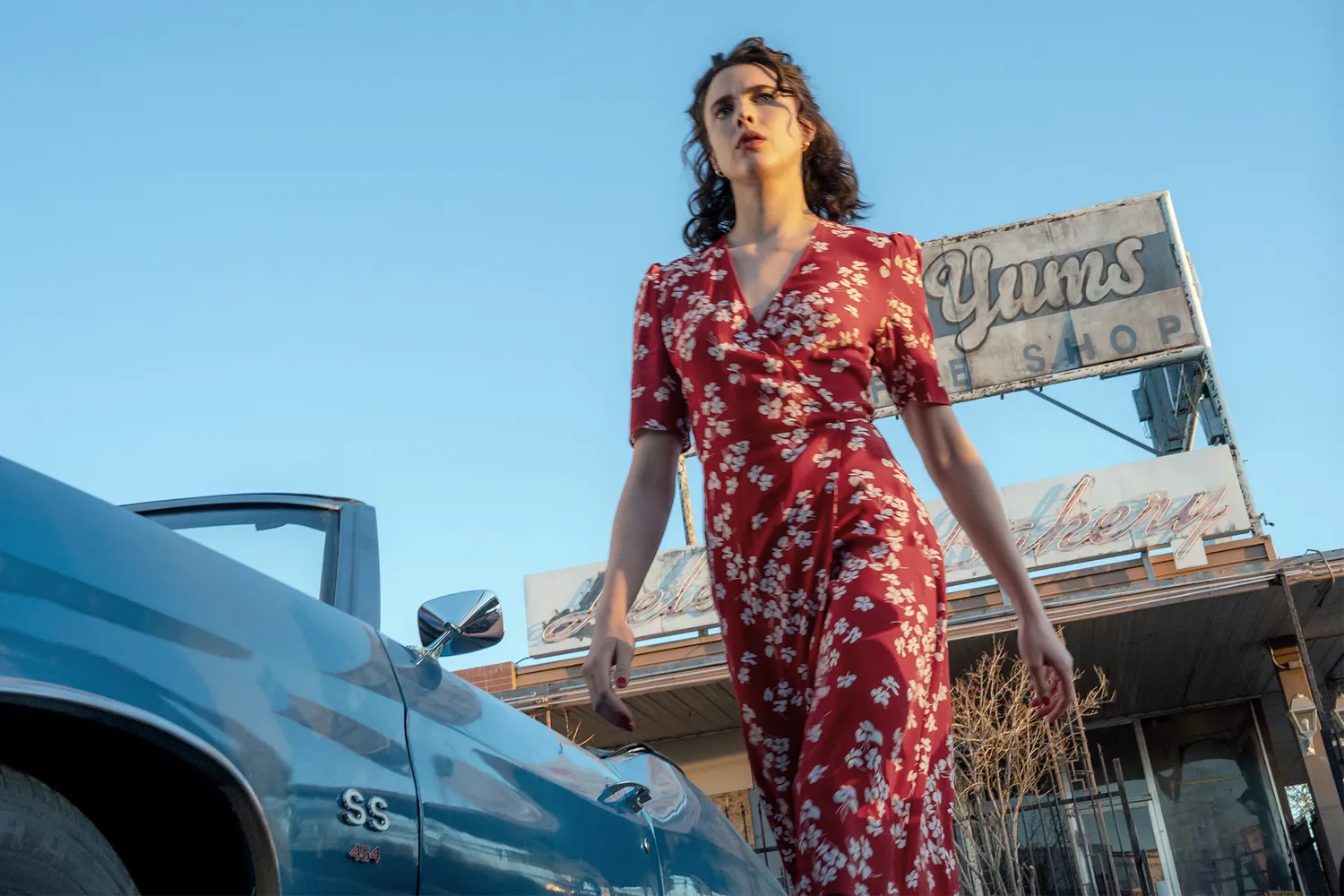
The screen doesn’t moan in shadow—it basks in Bakersfield’s glare, and that sunlit openness fractures our understanding of noir. Honey Don’t! doesn’t whisper its twist; it lights it on fire, demanding attention not just through crooked crime but the vivid assertion of queer presence. It’s less about solving a mystery and more about inhabiting one—with smudged ethics and unresolved desire.
This isn’t noir by night, but by heat. And it changes everything.
Sunlit Shadows
Honey O’Donahue, sleuth turned sunburnt private eye, navigates a world where crime feels more performative than clandestine. As Tricia Cooke puts it, they wanted a noir “in the glaring sun,” a subversion that flips the genre’s typical morality play into something brazenly queer. Aubrey Plaza’s MG Falcone isn’t a cliché—they’re the femme fatale who wields wit like a switchblade.
“The queerness isn’t sidelined—it’s central,” Cooke asserts. In their universe, lesbians don’t just occupy roles—they define them. The dusty streets of Bakersfield have never felt so charged.
Trilogy Unbound
What began as one absurd B‑movie has audaciously morphed into a trilogy, a rare exploration of gender and genre through a queer lens. Drive‑Away Dolls gave us road-tripping trouble, Honey Don’t! gives us unexplained cult murders, and the forthcoming Go, Beavers!—promising to follow a lesbian crew team down the river of life—intimates something entirely different.
“It was just a fun thing to write,” said Ethan, about the genesis. And yet, in embracing the trilogy, they do more than trailblaze—they rewrite cultural expectations.







Start the New Year by Investing in Yourself – Hollywood Life
Image Credit: European Wax Center The new year is all about fresh...
 Kirsten Collins2 Mins read

Where Is Liam Conejo Ramos Now? Updates on 5-Year-Old’s ICE Detainment – Hollywood Life
Image Credit: Getty Images Liam Conejo Ramos came home from preschool while...
Kirsten Collins2 Mins read
Who Is Harry Styles’ ‘Aperture’ About? Breakdown of the Lyrics – Hollywood Life
View gallery Image Credit: Getty Images We’ve doing doing all this late...
Kirsten Collins1 Mins read

When Are the Oscars 2026? Date of the Academy Awards – Hollywood Life
Image Credit: AFP via Getty Images The Oscars are officially on the...
Kirsten Collins1 Mins read




Leave a comment