

The League That Whispered While the Star Roared
When Bryce Harper called out Major League Baseball, Rob Manfred didn’t push back—he shrugged. But in baseball, silence is rarely just silence.
 Joseph BennettAugust 1, 20252 Mins read28
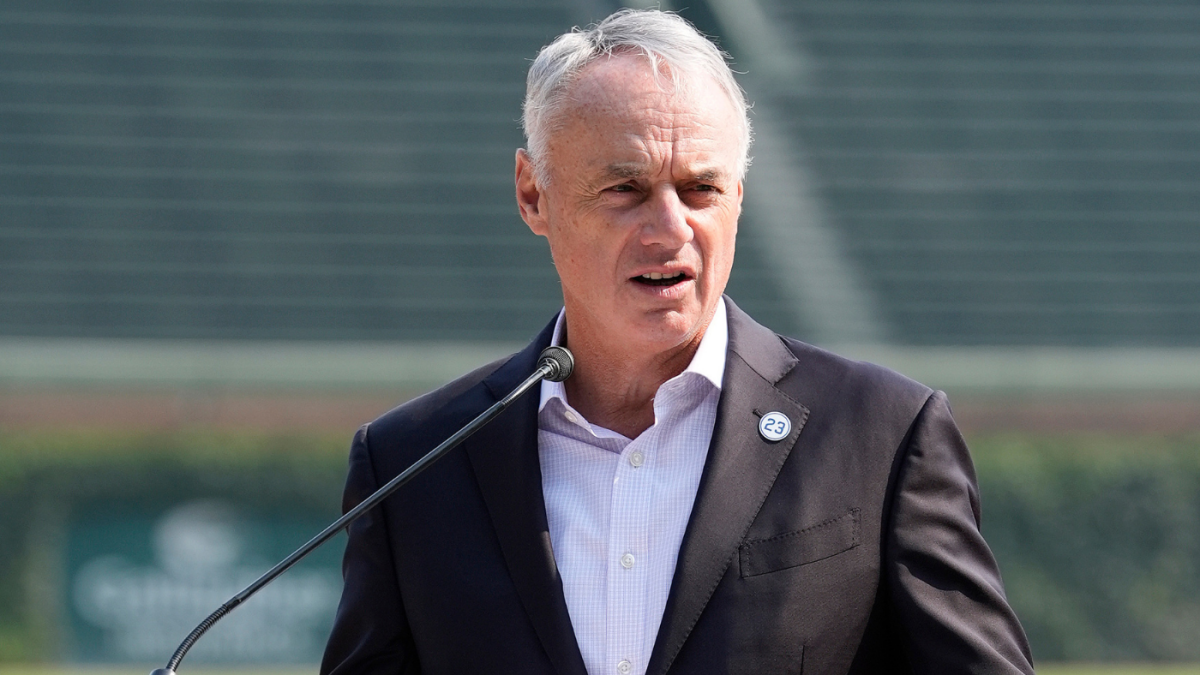
The most revealing statement in professional sports this week was the one that wasn’t made. After Bryce Harper, the Philadelphia Phillies’ star outfielder, openly criticized Major League Baseball for suspending a teammate, Commissioner Rob Manfred responded not with fire, not with force—but with what can only be described as bureaucratic indifference. “Not all that significant,” he called it.
And just like that, the moment slipped into the shadows. But did it? Or did baseball, America’s most self-mythologizing sport, just tip its hand?
Harper has never been shy with a bat or a quote. When he called the league “a joke” over the suspension of teammate Bryce Bohm, it wasn’t just a tantrum—it was a challenge. A public rebuke aimed directly at the polished front office glass. For Manfred, a commissioner who has weathered lockouts, scandals, and the slow erosion of fan trust, this could have been an opportunity to reassert leadership. Instead, he brushed it away like infield dust on a July afternoon.
The Power in a Shrug
It’s tempting to read Manfred’s reaction as restraint. After all, commissioners are not in the business of trading jabs with players mid-season. But tone matters. In a league where every bat flip is scrutinized, every post-game quote parsed, a commissioner’s deliberate disinterest signals something far more potent than neutrality—it signals hierarchy.
Manfred didn’t deny Harper’s accusation. He didn’t defend the league’s process. He simply minimized it, which in the politics of sports, is an elegant way of saying: This is beneath me. And maybe that’s what stings most. Not that Harper was wrong, but that his voice could be so casually discounted.
A former league executive once remarked, “Baseball doesn’t like confrontation—unless it’s on the mound.” That same aversion to messiness off the field has allowed the MLB to project a kind of cold corporate calm. But when your stars speak and you pretend not to hear them, what message are you really sending? That the league is stable—or that it’s disengaged?
When Stars Speak and the Sky Pretends Not to Listen
Harper isn’t just a player. He’s a franchise face, a fan magnet, a seven-time All-Star who wears his frustration like eye black—visibly and without apology. When someone like him speaks out, the league listens even if it pretends not to. That’s the delicate fiction of modern sports: control the image, absorb the noise, never flinch.
But there’s an old baseball truth, older than analytics or arbitration: silence is strategy. In Manfred’s case, it’s a strategy that reveals what the league values—not conflict, not candor, but containment. The idea that things can only get out of hand if you acknowledge there is a hand.
So the moment passes. No fines. No flare-ups. Just the echo of a star who dared to care a little too loudly, and a commissioner who dared to care a little too little.
And maybe that’s where the real drama lies. Not in Harper’s outburst. Not in the suspension. But in the unsettling quiet that followed—a quiet that now lingers like a seventh-inning fog over a game that isn’t quite finished.







Barcelona’s Fragile Pursuit: When Injuries Threaten More Than Just a Season
A silence spreads over Camp Nou that no roar can drown out—two...
 Chris Marks2 Mins read

William Saliba: Arsenal’s Silent Architect or Its Greatest Gamble?
The air inside the Emirates shifts with unspoken tension—William Saliba, once a...
Joseph Bennett2 Mins read
Joel Embiid’s Quiet Confidence: Is the 76ers’ Giant Ready to Rewrite His Story?
Joel Embiid is rarely one to make noise without purpose, and now,...
 Kirsten Collins1 Mins read
Juventus, Atalanta, and Arsenal’s Quiet Revolution: What’s Really Shaping This Week in Football?
The roar of Serie A stadiums masks a subtle shift, one that...
Kirsten Collins2 Mins read





Leave a comment