

Rustproof Promises: The Cracks in Trump’s Carmaking Comeback Plan
Donald Trump’s plan to revive American car manufacturing is loud, populist, and wrapped in nostalgia—but beneath the chrome lies a roadmap littered with contradictions and political potholes.
 Krista FreelandMarch 31, 20252 Mins read35
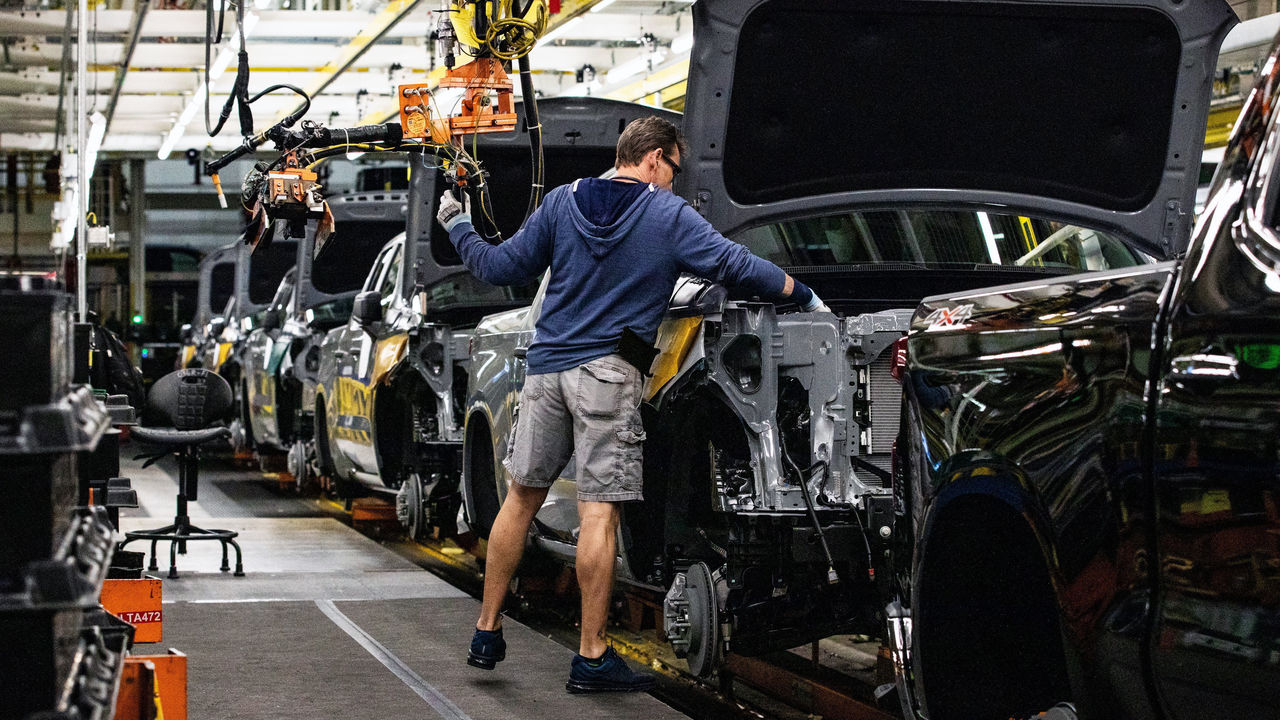
It sounds good in speeches: the roar of American engines, the glory of Detroit, the promise that every car parked in a U.S. driveway will be stamped “Made in America.” But behind the campaign trail catchphrases, Donald Trump’s latest plan for resurrecting American car manufacturing feels more like a nostalgic detour than a coherent route forward.
Tariffs. Penalties. Preference for combustion engines. It’s all there—wrapped in populist gold trim, echoing an era when the Big Three were unchallenged kings. But the car industry of 2025 doesn’t run on sentiment. It runs on software, semiconductors, and supply chains that stretch from Michigan to Malaysia.
A Plan with the Hood Up and No Engine Inside
Trump has proposed steep tariffs on foreign-made vehicles, including those built by American companies abroad. The logic? Force manufacturing back home, bring back jobs, and punish the competition. The problem? Modern auto production isn’t national—it’s global.
From batteries to dashboards, today’s cars are patchworks of international collaboration. Punishing imports risks sparking retaliatory trade measures, inflating car prices, and disrupting already fragile supply chains. It’s not about building American cars anymore—it’s about assembling global components smarter, faster, and more cleanly.
“He’s pitching a 1960s solution to a 2030s problem,” said one auto industry analyst. “And the world has moved on.”
Fueling a Fantasy, Not a Factory
Then there’s the push against electric vehicles (EVs)—or more precisely, the performative resistance. Trump’s plan criticizes government EV mandates and green subsidies, positioning them as elitist intrusions on consumer choice. But EVs aren’t just environmental policy—they’re the future of the auto market, with or without Washington’s help.
Global automakers—from Toyota to Tesla—are deep into electrification. Even legacy American brands like Ford and GM are shifting billions toward battery technology. Trump’s plan, by contrast, places bets on gas-powered loyalty and manufacturing nostalgia. It’s not an economic roadmap. It’s a cultural wager.
And beneath it all lies a political contradiction: can you simultaneously champion deregulation and tightly control where and how cars are built?
Trump’s car revival is less about transportation than transformation—his attempt to restore not just jobs, but a vanished vision of America. The trouble is, you can’t drive forward while staring in the rearview mirror.
So the question isn’t whether the plan will work.
It’s whether it was ever meant to.







How Much Will Trump’s Policies Really Cost Wall Street?
When Donald Trump first took office, his policies were sold as a...
 Kirsten Collins2 Mins read

Milken 2025: The Party of the Rich, Amid a World Falling Apart
The night was electric in a way that only a private, star-studded...
 Joseph Bennett3 Mins read

Buffett, Cook, and the Quiet War for America’s Soul
There was a moment, barely a second long, when Warren Buffett’s smile...
Joseph Bennett3 Mins read
The Deception Behind the Deal: How Bait-and-Switch Pricing Is Shaping Our Desires
It’s the perfect price—a promise of a deal that seems too good...
Joseph Bennett3 Mins read





Leave a comment