

Pop’s Most Charming Weapon Just Bit Back
Sabrina Carpenter’s Short n’ Sweet promised flirtation—but Mans Best Friend makes the first move, claws out, lipstick intact. This isn’t just a B-side album. It’s a sharp-toothed redefinition.
 Chris MarksAugust 1, 20252 Mins read16
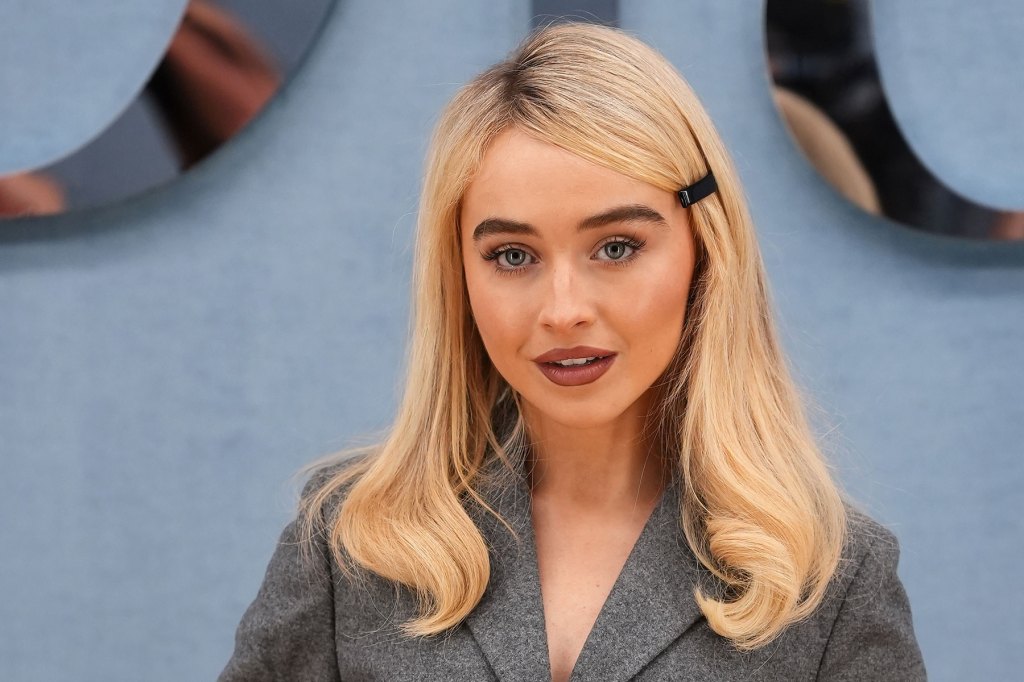
She opens with a bark—and by track three, you’re bleeding, smiling, and strangely grateful. Mans Best Friend, the surprise companion to Sabrina Carpenter’s shimmering Short n’ Sweet, isn’t just a sister album. It’s a wolf in sequined clothing, growling through the industry’s perfume-clouded façade. And while Espresso made her a global name, this record makes her something far more dangerous: a woman with narrative control.
Sabrina has always been underestimated—first as Disney detritus, then as Taylor Swift’s charming understudy, and now, as the pop girl who dared to write songs so light they floated into virality. But underneath the gloss is something smarter, older, and more strategic. “Don’t love me like a best friend,” she warns in the title track, voice half-laughing, half-lunging. The whole album feels like that—playful until you realize you’ve lost the game.
Sugar-Coated With a Body Count
Where Short n’ Sweet flirted, Mans Best Friend licks its lips. Tracks like “Lie to a Girl” and “Please Please Please (feat. Everyone I’ve Dated)” don’t just reference pop tropes—they gut them, taxidermy the remains, and hang them on velvet walls. This is Carpenter at her most reflexive, curating heartbreak like an Instagram carousel: bruised knees, blurry city lights, and a middle finger lit by candlelight.
It’s not satire—it’s sorcery. She’s mastered the triple-threat of modern pop: being in on the joke, playing the part, and daring you to believe she still means every word. And here, meaning is the biggest mystery. “I’m not trying to be relatable,” she said during a private pre-launch event, “I’m just making a scrapbook for the girl who comes after me.” That girl, whoever she is, might just thank her for the blueprint.
Fame, Fractured and Lip-Glossed
What makes Mans Best Friend so compelling isn’t just the music—it’s the mythology. Carpenter is crafting an era, not just a moment. It’s the kind of intentional career-building that recalls Swift, yes—but also early Madonna, late Britney, and even a dash of Lana’s sardonic self-awareness. She understands the cultural temperature better than her critics think, and she stirs it with a rhinestone nail.
But the question isn’t Can she do this?—it’s How far is she willing to go? There’s tension in every synth line, every clever couplet. Even in its softest moments, the album feels weaponized. Like a note left in your ex’s coat pocket. Like a kiss you regret, but only because you enjoyed it too much.
Sabrina Carpenter used to be famous for who she was dating. Now she’s famous for who she just might destroy next.
And perhaps that’s the most modern kind of love story.






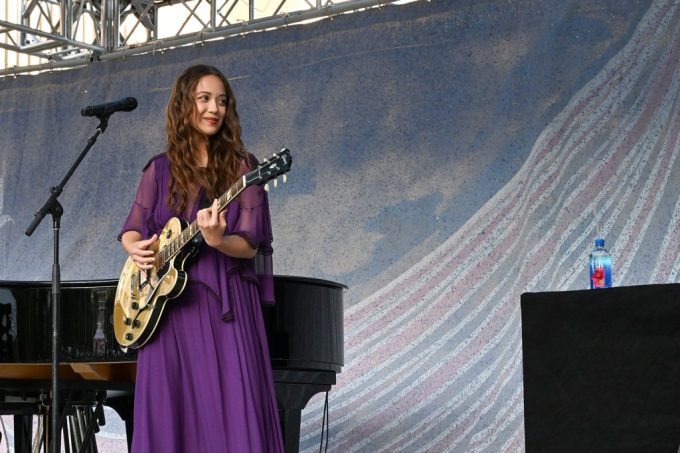
Laufey’s Opening Night Show at LA’s Crypto.com Arena: Best Moments
Laufey opened a two-night stand at Crypto.com Arena in downtown Los Angeles...
Chris Marks6 Mins read
Julie Adam Is Billboard Canada Women in Music’s 2025 Exec of the Year
Julie Adam is having a milestone year — and it’s getting even...
Chris Marks4 Mins read
Spinal Tap Tribute Album with Foo Fighters,Tool for Teen Cancer America
Spinal Tap may be a fake band, but its music is very...
Chris Marks2 Mins read
AxMxP Is K-Pop Rookie of the Month for September: Exclusive Photos
Ha Yoo Joon Image Credit: Chin Soyeon You debuted on Sept. 10....
Chris Marks2 Mins read





Leave a comment