

Cover Power: When Shai, Angel & Melo Become Icons On—and Off—The Court
Shai Gilgeous‑Alexander, Angel Reese, and Carmelo Anthony grace NBA 2K26’s covers—but beneath the fanfare lies a shift in narrative, legacy, and representation that asks: what stories are we choosing to elevate?
 Krista FreelandJuly 9, 20252 Mins read19
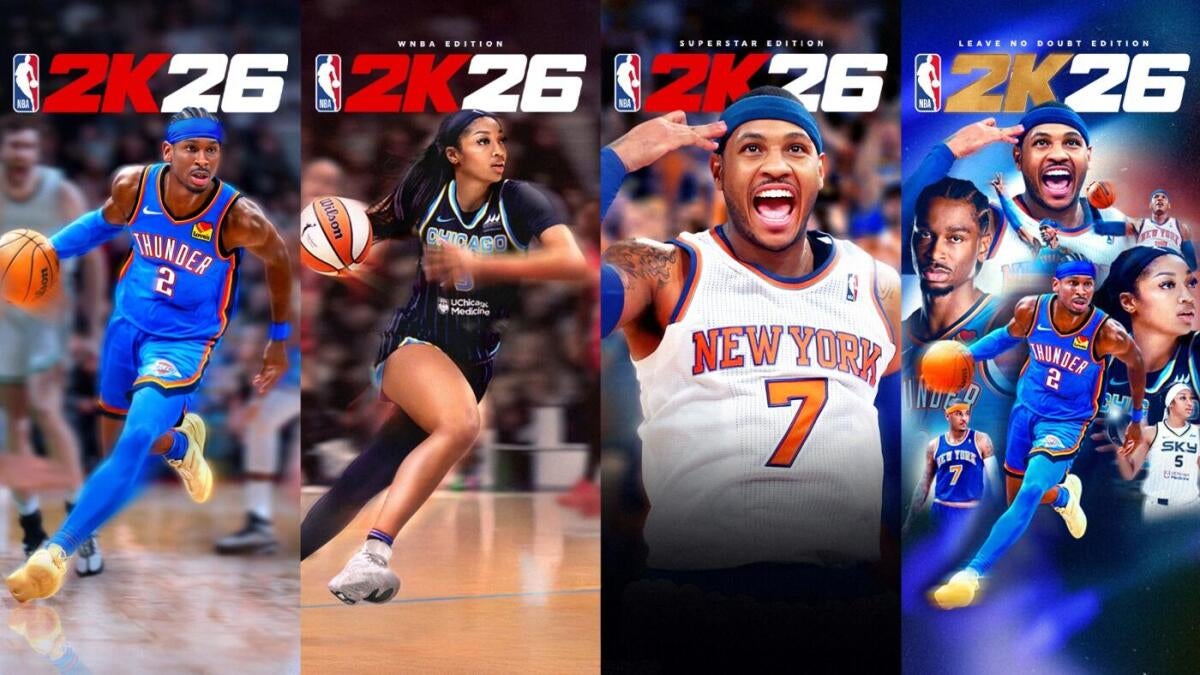
He stands there—Shai Gilgeous‑Alexander, trophy in one hand, game controller in the other—his MVP season now frozen in digital stone. Next to him: Angel Reese, debuting her signature shoe on a WNBA edition, and Carmelo Anthony, basking in Hall of Fame afterglow. Three cover stars, one moment—yet the tremor of meaning under their collective image speaks louder than the pixels.
This isn’t just a marketing move. It’s an unspoken manifesto: the game is evolving, roles are shifting, stories are expanding. But what’s the real selection criteria here—talent, legacy, cultural momentum—or something deeper?
Icons, but to Whom?
SGA’s inclusion feels almost inevitable—MVP, Finals MVP, champion, Canadian icon. Yet there’s nuance: “a long-term partnership,” 2K’s SVP notes, chosen not just for stats, but brand synergy. He’s not just the face of a season, but the face of a franchise reborn. Does that make him basketball’s next global standard bearer—or just its polished poster child?
Then there’s Reese: at 23, toggling between record-breaking rebound streaks and fashion-activism. “It’s about representation… showing young girls they can take up space unapologetically,” she said. Her cover presence demands that we rethink whose stories video games photosynthesize—and whether WNBA narratives are finally leaping into mainstream resonance.
And Melo—timeless, unapologetically self-styled—paints the cover with nostalgia and swagger. In an era fixated on the new, does the inclusion of a Hall of Famer hint at a yearning for narrative continuity? A lineage passed, not just played?
Three Cursors, One Cursor?
2K26 offers more than cover art—it delivers curated tunnel outfits, playlist stylistics, reproduction of ProPLAY movements. It’s an immersive testament to how personalities have to fit within digital identity as much as they do real-world courts.
The three stars share more than a cover—they each represent a node in the expanding web of basketball identity: the new era’s face (SGA), the disruptive rise of women’s basketball (Reese), and the bridge to the sport’s storied past (Anthony). The scene begs bigger questions: who gets this platform next? Where is the balance between performance, representation, and nostalgia?
When the game launches on September 5, the cover isn’t just an image—it’s a statement. Who will replay those opening moments with curiosity, not just button-mashing? Who will pause long enough to ask what this trio tells us about the past we revere, the present we celebrate, and the future we’re building?
Because in the end, every pixel here is a choice—and every choice is a story waiting to be told.




Barcelona’s Fragile Pursuit: When Injuries Threaten More Than Just a Season
A silence spreads over Camp Nou that no roar can drown out—two...
 Chris Marks2 Mins read
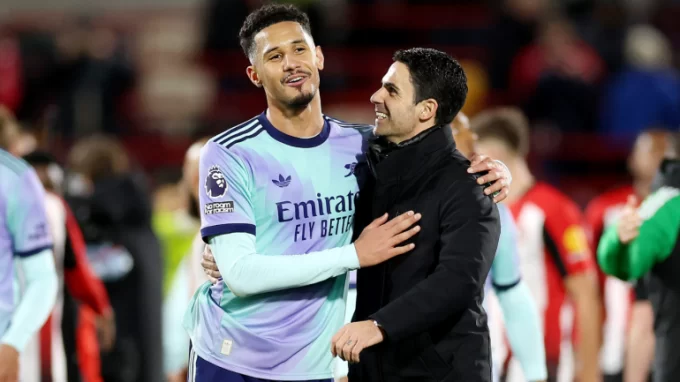
William Saliba: Arsenal’s Silent Architect or Its Greatest Gamble?
The air inside the Emirates shifts with unspoken tension—William Saliba, once a...
 Joseph Bennett2 Mins read
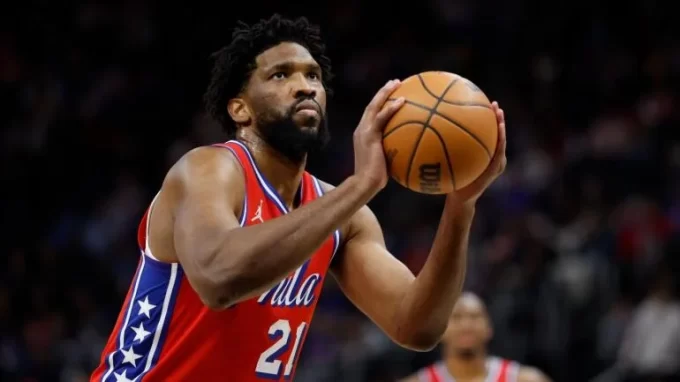
Joel Embiid’s Quiet Confidence: Is the 76ers’ Giant Ready to Rewrite His Story?
Joel Embiid is rarely one to make noise without purpose, and now,...
 Kirsten Collins1 Mins read
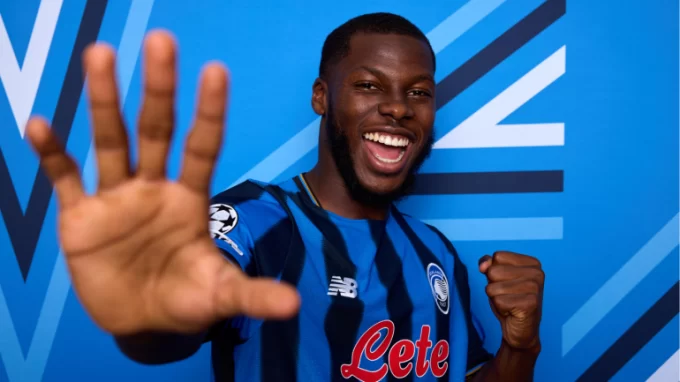
Juventus, Atalanta, and Arsenal’s Quiet Revolution: What’s Really Shaping This Week in Football?
The roar of Serie A stadiums masks a subtle shift, one that...
Kirsten Collins2 Mins read





Leave a comment