

“Shakespeare’s Greatest Love”: A Haunting Disruption of Genius, Obsession, and the Fragile Myth of the Bard
 Showline ReviewerMay 2, 20252 Mins read253

The Phantom Inside the Genius
The truth doesn’t always arrive in thunderclaps. Sometimes, it whispers from the margins of what we thought was settled. Shakespeare’s Greatest Love: A Disruption of Curios walks those margins with audacity and restraint—a novel that doesn’t ask for permission to rewrite the past, but instead opens a quiet trapdoor beneath it.
David Medina doesn’t simply tell a story. He disturbs a legacy. From the first page, the book dares to ask: what if love—not glory, not royalty, not the theatre—was the engine of Shakespeare’s inner life? The novel pulses with intellectual tension, each sentence shadowed by the knowledge that what we know of the Bard is mostly scaffolding, and what we don’t know may be the fire that lit his words.
Medina’s style is lyrical but laced with controlled chaos—elaborate in structure yet delicate in touch. He doesn’t overwrite Shakespeare, but rehaunts him. The pacing is meditative, not rushed, allowing readers to linger in the gothic hush of candlelit libraries, or lose themselves in ink-drenched sonnets that feel as revelatory as they are fictional. At its heart lies a love—fraught, forbidden, fiercely guarded—that forces the reader to question whether history is ever truly written by the victors, or simply edited by those with the best quills.
One line, simple yet seismic, lingers like perfume on vellum: “He loved with the urgency of someone who feared erasure.” It’s less a sentence than a cracked mirror, reflecting not just Shakespeare’s soul, but our own need to be remembered for who we truly are—not who they say we were.
By the time the final page arrives, there’s a sensation akin to walking out of a theater into a fogged London night—your heart unsettled, your certainty shaken, and your desire to revisit every play you thought you understood suddenly urgent. What if Juliet wasn’t fiction? What if love was always the subtext?
For Lovers of History’s Echoes and Fiction’s Rebellion
Shakespeare’s Greatest Love is not for the passive reader. It’s for those who find thrill in the tension between fact and fantasy, who savor the ache of unconfirmed truths and the poetic violence of a myth unraveling. If you loved Hamnet, devour Hilary Mantel, or felt the emotional complexity of Possession by A.S. Byatt, Medina’s novel will resonate.
This book is for readers who ache for something textured—who understand that some of the most daring truths are whispered through fiction. It offers not answers, but invitation: to rethink what genius looks like, and to wonder whose stories history erased in the name of greatness.

Review Overview
Summary
What if the Shakespeare you thought you knew was a curated illusion—his greatest love a secret act of defiance? Shakespeare’s Greatest Love: A Disruption of Curios reads like an academic séance—part literary exorcism, part forbidden confession.
- Story Grip8
- Character Connection9
- Writing Vibe9
- Freshness & Meaning10
- World & Mood9
- Heartstrings & Haunting8
- Overall Flow9







When “107 Days” Meets Outcry: Harris’s Book Tour Interrupted
The microphone crackled to life, and before Harris could finish her opening...
 Chris Marks1 Mins read
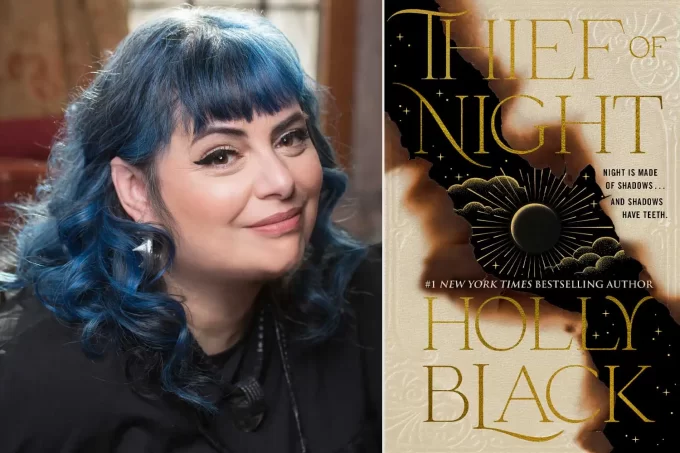
Whispers in the Shadows: Why Holly Black’s Sequel Is a Dark Invitation We Can’t Ignore
The night isn’t just dark—it’s ravenous, greedy, and it’s coming for you....
Chris Marks2 Mins read

Why Stephenie Meyer’s Regret About Edward Changes Everything You Thought You Knew
The moment Stephenie Meyer admitted she wouldn’t pick Edward Cullen today, a...
Chris Marks2 Mins read

When Fear, Fury & Feathers Collide: Cinema, Superheroes, and a Confessional Album
Open with tension—the kind that threads through a scream, a reveal, and...
Chris Marks2 Mins read





Leave a comment