

Bruised Egos, Unthrown Punches: What the Dodgers-Padres Tension Really Reveals
Shohei Ohtani and Fernando Tatis Jr. were both hit by pitches in a game that never quite erupted—but the silence said more than fists ever could.
 Joseph BennettJune 20, 20252 Mins read23
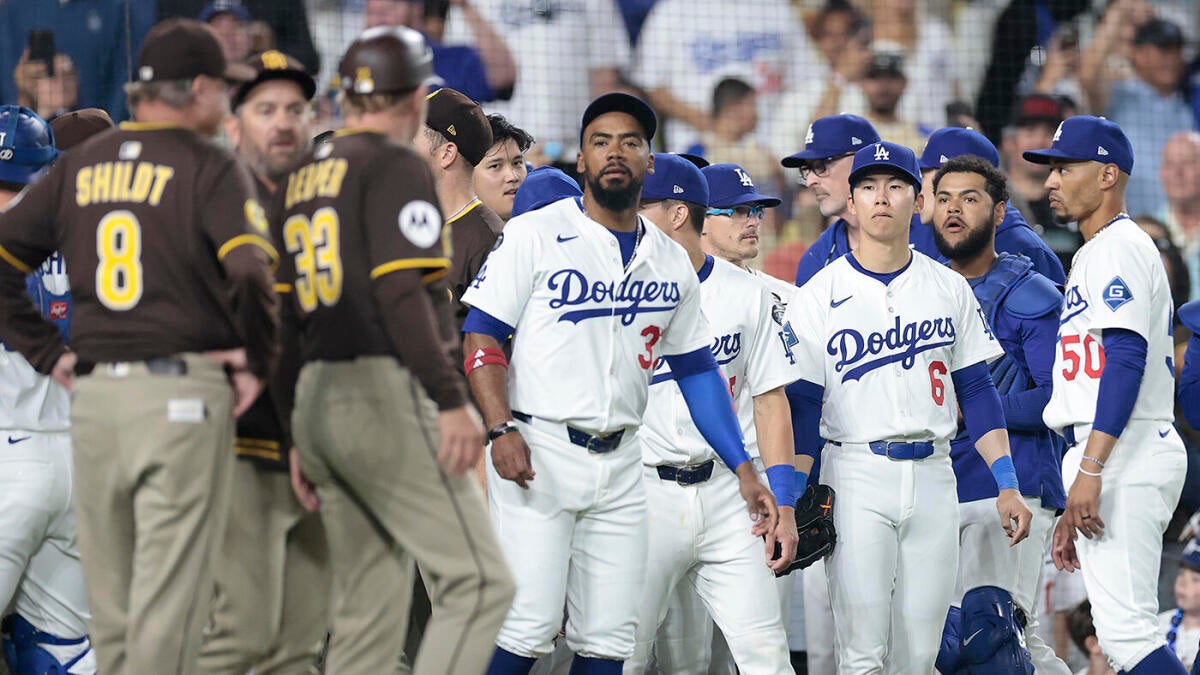
A 97-mph fastball doesn’t whisper when it hits flesh. But in a stadium wired for chaos, it was the silence after that contact—the crowd suspended, the benches twitching—that roared loudest. Shohei Ohtani took it on the hip. Minutes later, Fernando Tatis Jr. followed, sent to first base by a pitch that may or may not have carried intent. It’s easy to miss the poetry in a bruise, but in this Dodgers-Padres thriller, the story was never in the swing—it was in the restraint.
There was no brawl, no mass sprint from the dugouts, no gloves flung to dirt. But the game throbbed with something far older than the players themselves: a coded ritual of warning, retaliation, and pride. MLB’s unwritten rules—the league’s secret scripture—felt dangerously close to combustion. And yet, somehow, it didn’t. Why?
The Code Beneath the Surface
In the world of professional baseball, getting hit by a pitch is often not just a mistake. It’s theater. An accusation. A chess move masked as a wild throw. Ohtani and Tatis Jr.—two of the league’s most electrifying, globally watched stars—weren’t just targets, they were statements. The Dodgers and Padres didn’t fight, but they performed the dance of almost-fighting with devastating elegance.
“This is the kind of game that burns long after it ends,” said one anonymous player post-game. His voice, cool but calculated, hinted that the real tension isn’t over. Whether deliberate or not, the message sent on the mound echoed more sharply than any post-game quote. You don’t hit players like Ohtani or Tatis Jr. without waking ghosts in the dugout.
When Violence is the Thing Withheld
What do you do when the story writes itself, but the actors refuse to flip the script? The Dodgers-Padres showdown could have exploded. It wanted to. You could feel it in the clenched jaws, the narrowed eyes, the silence between pitches that was almost musical in its menace.
But this wasn’t cowardice. It was calculation. With standings tight and playoff energy already simmering, both teams knew the price of escalation. Fines, suspensions, narrative control—all hanging in the balance. And so they didn’t throw punches. They threw glances, subtext, and just enough heat to keep the other side unsettled. In this way, the game became something even more compelling than a brawl: a slow, psychological war waged with restraint.






Barcelona’s Fragile Pursuit: When Injuries Threaten More Than Just a Season
A silence spreads over Camp Nou that no roar can drown out—two...
 Chris Marks2 Mins read
William Saliba: Arsenal’s Silent Architect or Its Greatest Gamble?
The air inside the Emirates shifts with unspoken tension—William Saliba, once a...
Joseph Bennett2 Mins read
Joel Embiid’s Quiet Confidence: Is the 76ers’ Giant Ready to Rewrite His Story?
Joel Embiid is rarely one to make noise without purpose, and now,...
 Kirsten Collins1 Mins read
Juventus, Atalanta, and Arsenal’s Quiet Revolution: What’s Really Shaping This Week in Football?
The roar of Serie A stadiums masks a subtle shift, one that...
Kirsten Collins2 Mins read





Leave a comment