

“Sister Europe”: Nell Zink’s Chaotic, Clever Excavation of Art, Identity, and the Weird Tragedy of Being Almost Free
 Showline ReviewerApril 7, 20252 Mins read159
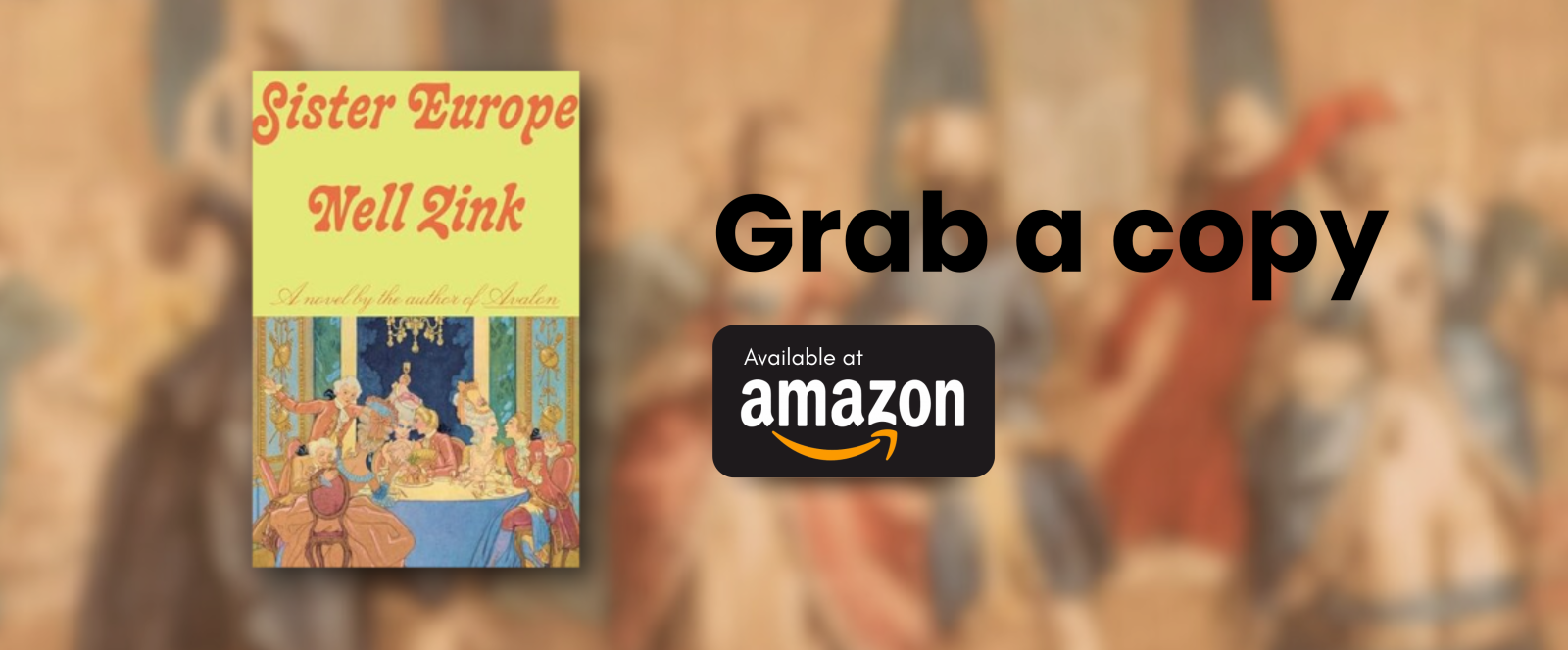
Exile with a Wink: The Beautiful Disorientation of Sister Europe
You don’t read Sister Europe so much as get yanked sideways into it—tossed into a tangle of languages, nations, selves. It’s a fever dream of a novel: dissonant, slippery, satirical, and then suddenly dead serious when you least expect it. Nell Zink isn’t interested in soothing the reader. She’s too busy poking at everything that makes identity, art, and geography such fragile constructs.
The novel unfolds through the drifting, glitchy lens of Beth, an American adrift in Europe, unraveling her personal grief and intellectual malaise across train stations, performance art collectives, cryptic love affairs, and political quagmires. The narrative refuses to behave. It lurches forward, circles back, slips into fragmented dialogue or inner monologue, challenging you to keep up. But in that refusal is the novel’s point: nothing here is linear. Not memory, not citizenship, not womanhood, and certainly not sanity.
Zink’s prose is both barbed and oddly mournful. One moment you’re laughing at an acidic line about German bureaucracy or avant-garde theater, and the next you’re sitting with the realization that this book is asking: what happens when the story of your life no longer fits the country, or the body, or the narrative you’ve been handed? “Maybe I’m not lost,” Beth murmurs at one point, “just increasingly hard to locate.” That’s the novel’s ethos in a sentence.
Themes of detachment—spatial, political, emotional—run deep. There’s something post-postmodern here, but more haunted than detached. The absurdism never hides the pain. Sisterhood, motherhood, artistic legacy, exile—all of it flickers just beneath the surface of the book’s wild wit. The result feels like a punk-rock nod to Mrs. Dalloway, written in bursts of static and elegy.
The setting—Berlin, mostly, but really “Europe” as an abstract dream—is rendered with a kind of amused disdain. Zink’s Europe is both myth and mess, a stage where American ideals go to die or mutate into something more interesting. It’s a place where nobody quite belongs but everyone is performing like they do. And at its core is a woman who is not looking to be found—she’s looking to find language for the ways she has come apart.
Who Should Read This
Sister Europe is for readers who live for voice, chaos, and questions. If you like your fiction offbeat, cerebral, and edged with bite, Zink delivers. Think Rachel Cusk meets Don DeLillo, with a dash of Miranda July’s surrealism. This is a novel for those who don’t need plot so much as pulse—who want to be unsettled, amused, provoked, and reminded that art, like identity, is sometimes only coherent when it isn’t.
Review Overview
Summary
In Sister Europe, Nell Zink crafts a wildly disjointed and exhilarating meditation on cultural confusion, personal exile, and the dreamlike disintegration of belonging—at once hilariously sharp and quietly melancholic.
- Story Grip6
- Character Connection7
- Writing Vibe10
- Freshness & Meaning9
- World & Mood8
- Heartstrings & Haunting8
- Overall Flow7








When “107 Days” Meets Outcry: Harris’s Book Tour Interrupted
The microphone crackled to life, and before Harris could finish her opening...
 Chris Marks1 Mins read
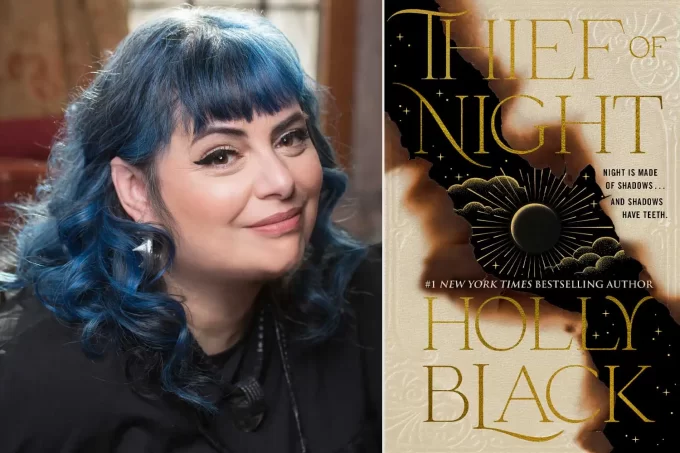
Whispers in the Shadows: Why Holly Black’s Sequel Is a Dark Invitation We Can’t Ignore
The night isn’t just dark—it’s ravenous, greedy, and it’s coming for you....
Chris Marks2 Mins read

Why Stephenie Meyer’s Regret About Edward Changes Everything You Thought You Knew
The moment Stephenie Meyer admitted she wouldn’t pick Edward Cullen today, a...
Chris Marks2 Mins read

When Fear, Fury & Feathers Collide: Cinema, Superheroes, and a Confessional Album
Open with tension—the kind that threads through a scream, a reveal, and...
Chris Marks2 Mins read





Leave a comment