

What Your Favorite Dugout Snack Reveals About You: The Hidden Language of Baseball
In the world of baseball, what you snack on between innings might just say more about you than you think. From sunflower seeds to gum, these seemingly trivial choices offer a deeper look into the psyche of players and fans alike. But what do these favorite dugout snacks really reveal about the players’ personalities and their hidden ambitions?
 Joseph BennettMay 13, 20253 Mins read158
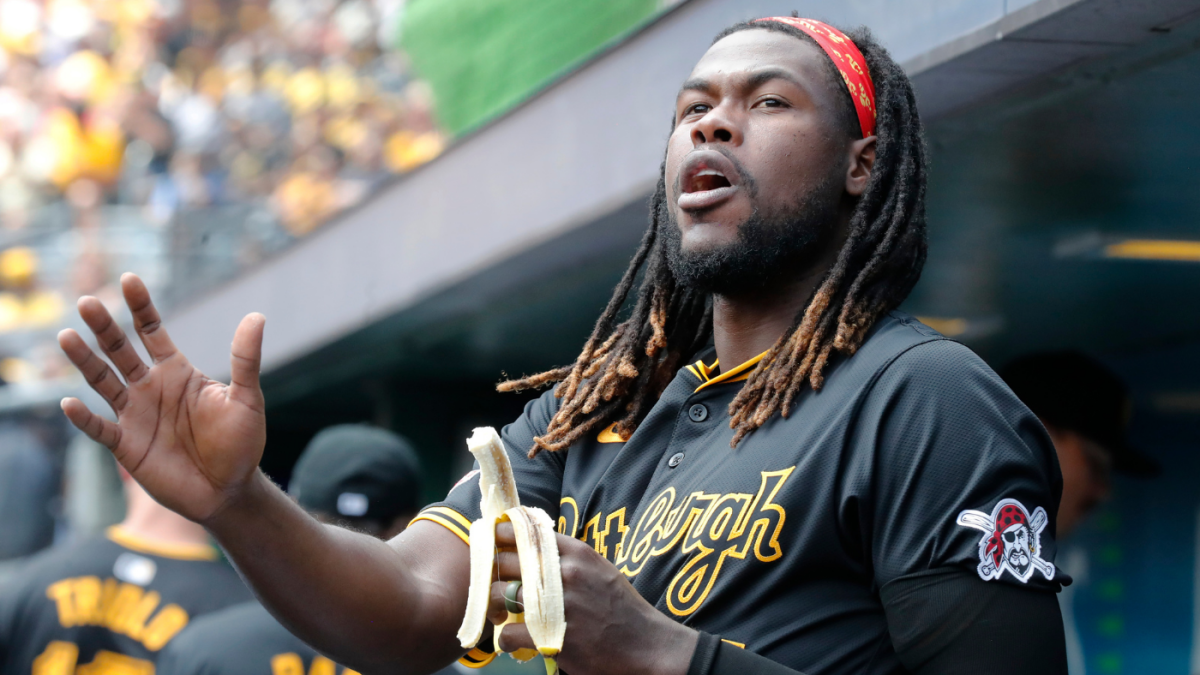
There is a peculiar kind of ritualism embedded in the simple act of snacking during a baseball game. Players, wrapped in their routines and superstitions, don’t just eat to pass the time—they reveal themselves, often unknowingly, through their choices. Whether it’s the crunch of sunflower seeds or the steady rhythm of gum popping, these snacks carry a weight far beyond their calories. They are the unsung symbols of a player’s psyche, their struggles, their victories, and yes, their eccentricities.
What is it about sunflower seeds that has players gravitating toward them, game after game? The ritual itself is part of a grand narrative: bite, spit, repeat. For a player, it’s not just about satisfying hunger—it’s about control, precision, and, perhaps, a strange form of deflection. Sunflower seeds, scattered across the dugout floor like tiny reflections of the scattered thoughts in a player’s mind, offer a sense of normalcy in an otherwise chaotic world. But could there be more to it than that? Are they hiding some deeper longing? A need for comfort in a place that often feels anything but?
The Gum Pop: Soundtrack of the Underestimated Genius
Now, consider the act of chewing gum. To an outsider, it’s nothing more than a habit—a simple action, a pop or two for distraction. But to those in the know, it’s an art form. The players who reach for that gum are often the ones who embrace a calm amidst the storm. They chew with purpose, not mindlessly, but with rhythm—popping in sync with the beat of the game. The gum is more than a distraction—it’s a method of mindfulness, a tiny ritual that allows them to detach from the highs and lows of the game. For those like Aaron Judge or Mike Trout, it’s the one thing they can control in an arena full of uncontrollable variables.
“I chew gum because it keeps me centered. It’s a focus thing. I don’t just chew, I think,” says an anonymous player, whose choice of gum has become as iconic as his swing. The gum, in this case, is the bridge between superstition and mental fortitude. But when does a gum-chewing habit shift from ritual to crutch?
Candy Bars and Hot Dogs: America’s Unlikely Mirrors
Yet, beyond the tactical snacks and the so-called “gamer foods,” there’s another level to this ritual. The seemingly inconsequential hot dog, often the unofficial mascot of baseball itself, speaks volumes about a player’s approach to the game. A quick bite, a rushed moment between innings, while the chaos of the field plays out in front of them—this is a snack for the player who’s not bogged down by the weight of the moment. They’re in it for the fun, the nostalgia, the connection to something bigger than the game itself.
For some, though, the hot dog is more than a quick refueling—it’s an embodiment of their relationship with pressure. A player who instinctively reaches for a hot dog is one who thrives under pressure, who manages to laugh through the chaos. Perhaps it’s a belief in the absurdity of it all: that, despite the enormous stakes of professional baseball, a hot dog can still taste just as good after a game-winning play. There’s a sense of defiance in it—embracing the chaos while indulging in the simplicity of it all. But could this easygoing snack choice also hint at a deeper desire for control in an uncontrollable world?
The Hidden Language of Baseball’s Dugout Table
In the dugout, snacks become more than a means to curb hunger—they become metaphors for the game itself. Sunflower seeds, gum, hot dogs, candy bars—they are not just foods, but small, fascinating markers of personality. They are the unsung storytellers of baseball’s deep culture, telling us who players are when the game’s not watching. A player’s snack of choice reveals a great deal: from his relationship with routine, to his coping mechanisms, to his ability to adapt in the face of chaos.
But here’s the lingering question: Do these snacks define the player, or does the player define the snack? Can something so trivial shape a career, or is it merely a reflection of a deeper, more complex psyche that only those closest to the game will ever truly understand?
In the end, as the crack of the bat rings out and the crowd roars, it’s not just about the play on the field—it’s about what happens behind the scenes, in the small moments that speak volumes. And maybe, just maybe, the way a player snacks between innings tells us far more than we ever thought possible.








Barcelona’s Fragile Pursuit: When Injuries Threaten More Than Just a Season
A silence spreads over Camp Nou that no roar can drown out—two...
 Chris Marks2 Mins read

William Saliba: Arsenal’s Silent Architect or Its Greatest Gamble?
The air inside the Emirates shifts with unspoken tension—William Saliba, once a...
Joseph Bennett2 Mins read
Joel Embiid’s Quiet Confidence: Is the 76ers’ Giant Ready to Rewrite His Story?
Joel Embiid is rarely one to make noise without purpose, and now,...
 Kirsten Collins1 Mins read

Juventus, Atalanta, and Arsenal’s Quiet Revolution: What’s Really Shaping This Week in Football?
The roar of Serie A stadiums masks a subtle shift, one that...
Kirsten Collins2 Mins read




Leave a comment