

“Sons and Daughters”: Chaim Grade’s Epic of Faith, Memory, and the Hidden Battle for the Soul of a Generation
 Showline ReviewerApril 7, 20252 Mins read71

Between the Sacred and the Broken: The Emotional Terrain of Sons and Daughters
A synagogue stands in the distance—once teeming with debate and reverence, now quiet, its echoes filled with ghosts. Sons and Daughters is a novel that lives in that silence. It’s a sweeping, gorgeously aching meditation on what happens to a people, and a faith, after survival. Chaim Grade, one of the 20th century’s most haunting literary voices, doesn’t just tell a story—he interrogates a soul.
The novel moves slowly, like someone walking through ruins. But with each step, Grade lifts a stone, turns it over, and shows us what remains. The story unfolds among those who endured Nazi Europe and returned to a fractured postwar Lithuania—where the ruins are not just physical, but spiritual. Grade’s central question is not just how people rebuild, but whether belief can survive in a world where the sacred was desecrated. This is a book about that tension: between memory and reinvention, between piety and the pull of secular hope.
Grade’s prose, translated from the Yiddish with immense sensitivity, is at once dense and intimate. He constructs scenes like ethical arguments—layered, emotionally fraught, steeped in quiet fury. There’s a philosophical weight to every sentence, but also tenderness. One of the most unforgettable moments in the book comes when a young character wonders aloud, “How do you forgive a world that made martyrs out of mothers?” It’s not a question anyone answers, but it’s the pulse beneath every page.
Characters here aren’t shaped for drama—they’re sculpted from moral conflict. Rabbis, teachers, sons of learned men who no longer pray—each one caught between the pull of history and the urgency of change. Their dialogues aren’t just conversations; they’re battlegrounds where ideology, grief, and love wrestle for dominance. The setting—gritty streets and sacred spaces both ravaged and revered—feels imbued with ghosts, with memory not as nostalgia but as burden.
Symbolism hums quietly: shoes left behind, books untouched, prayers half-recited. The novel doesn’t move with plot so much as with pressure. Every chapter adds weight. Every decision feels like the product of centuries. And by the end, when the title’s meaning fully reveals itself, the sense of loss and hope braided together is breathtaking.
Who Should Read This
Sons and Daughters is for readers who find solace in the complexity of big questions—those who want to read literature that doesn’t just entertain, but confronts. It’s a book for lovers of authors like Isaac Bashevis Singer, Amos Oz, or Marilynne Robinson—for those who ache for moral texture, for deep cultural excavation, for characters grappling with the soul of their ancestry. If you’re drawn to fiction that preserves the sacred even while interrogating it, that lingers in grief without losing its humanity, this is a novel you will not forget.

Review Overview
Summary
In Sons and Daughters, Chaim Grade captures the aching tension between tradition and transformation, portraying a postwar Jewish world still haunted by the weight of its past and the impossible choices that define its future.
- Story Grip7
- Character Connection9
- Writing Vibe10
- Freshness & Meaning9
- World & Mood10
- Heartstrings & Haunting9
- Overall Flow8
- Chaim Grade novel analysis
- Jewish historical fiction classic
- literature on tradition and modernity
- Lithuanian Jewish literature
- novels about spiritual conflict
- post-Holocaust Jewish fiction
- religious identity in fiction
- Sons and Daughters book themes
- Sons and Daughters Chaim Grade review
- Yiddish fiction in translation







When “107 Days” Meets Outcry: Harris’s Book Tour Interrupted
The microphone crackled to life, and before Harris could finish her opening...
 Chris Marks1 Mins read
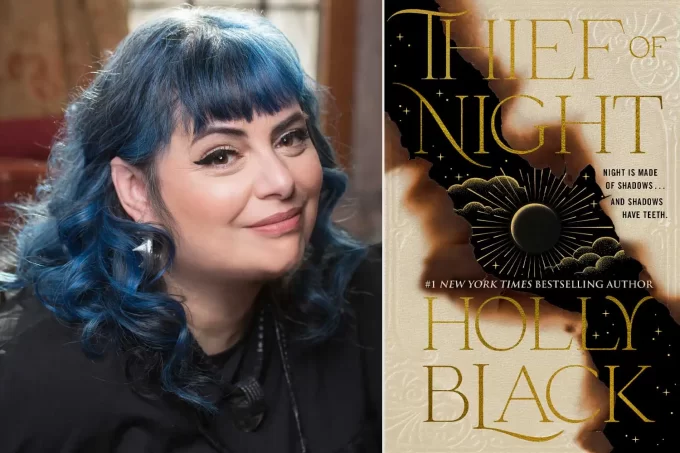
Whispers in the Shadows: Why Holly Black’s Sequel Is a Dark Invitation We Can’t Ignore
The night isn’t just dark—it’s ravenous, greedy, and it’s coming for you....
Chris Marks2 Mins read

Why Stephenie Meyer’s Regret About Edward Changes Everything You Thought You Knew
The moment Stephenie Meyer admitted she wouldn’t pick Edward Cullen today, a...
Chris Marks2 Mins read

When Fear, Fury & Feathers Collide: Cinema, Superheroes, and a Confessional Album
Open with tension—the kind that threads through a scream, a reveal, and...
Chris Marks2 Mins read





Leave a comment