

When the Whistle Bleeds: The Unseen Cost of Officiating in the NHL Playoffs
In a chilling moment during Game 7 of the Stanley Cup Playoffs, veteran referee Chris Rooney was struck in the face by a high stick, leaving fans and players alike questioning the safety of those who enforce the game.
 Kirsten CollinsMay 20, 20251 Mins read26
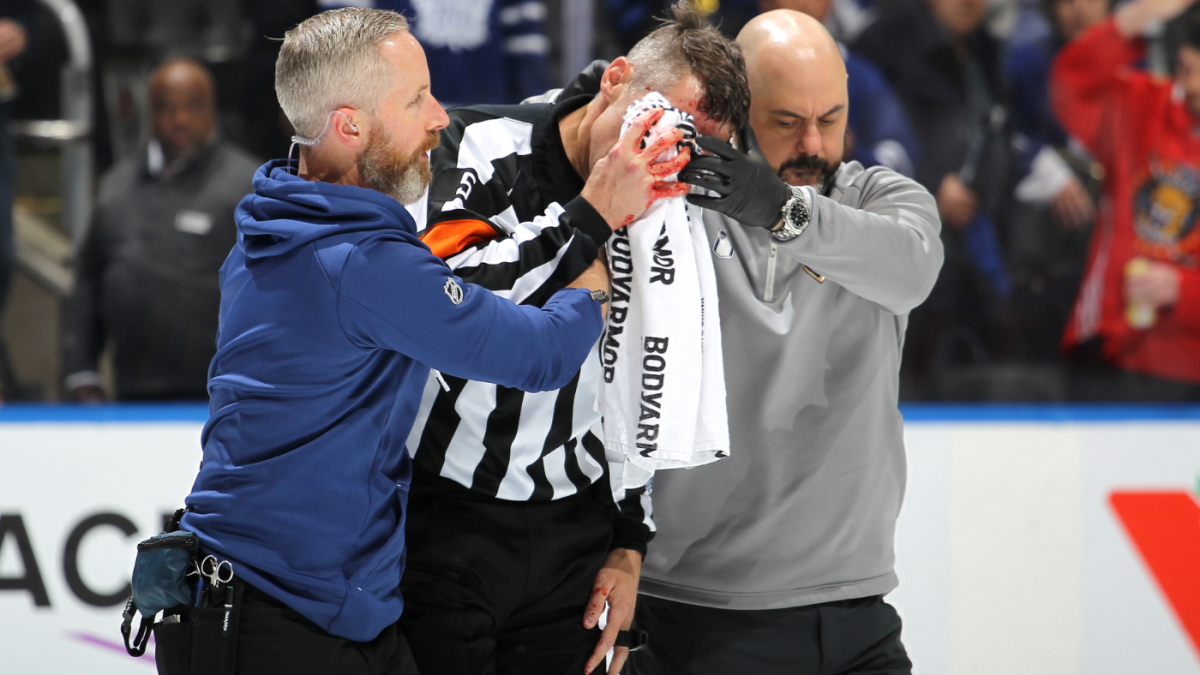
The ice was stained crimson, not by the players’ blades, but by the very enforcers of the game. In the high-stakes Game 7 between the Toronto Maple Leafs and the Florida Panthers, an unexpected casualty emerged—not a player, but veteran referee Chris Rooney. A high stick from Panthers defenseman Niko Mikkola struck Rooney in the face, sending him crashing to the ice in a pool of his own blood. The game paused, not for a power play, but for the man who ensures the rules are followed.
Rooney, a seasoned official with nearly 1,500 NHL games under his belt, was carted off the ice, his face a canvas of crimson. Yet, the incident sparked more than concern for his well-being—it ignited a conversation about the unseen dangers faced by those who officiate the game. While players don armor to protect themselves, referees don only stripes and a whistle. Their vulnerability, often overlooked, was laid bare in that moment.
A Call for Change
The NHL, known for its swift action on player safety, now finds itself at a crossroads regarding its officials. The league’s response to Rooney’s injury will set a precedent for how it values the safety of those who uphold its rules. Will this be a catalyst for change, or a fleeting moment of concern? The answer may determine the future of officiating in the NHL.
The Thin Line Between Order and Chaos
In the grand theater of the Stanley Cup Playoffs, referees are the unseen actors, their roles crucial yet often uncelebrated. Rooney’s injury serves as a stark reminder that the line between order and chaos is perilously thin. As the playoffs continue, the question lingers: how much longer can the men in stripes continue to risk it all for the game they love?





Barcelona’s Fragile Pursuit: When Injuries Threaten More Than Just a Season
A silence spreads over Camp Nou that no roar can drown out—two...
 Chris Marks2 Mins read
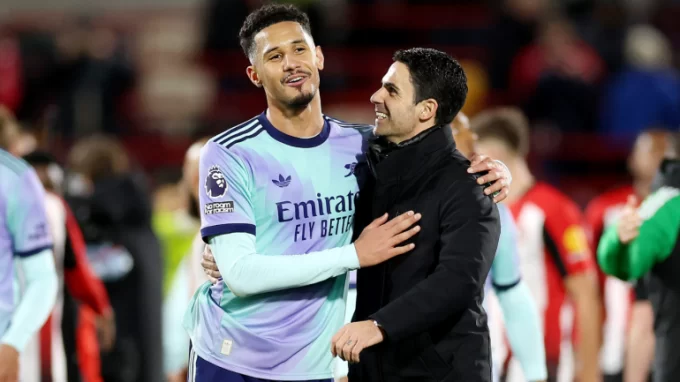
William Saliba: Arsenal’s Silent Architect or Its Greatest Gamble?
The air inside the Emirates shifts with unspoken tension—William Saliba, once a...
 Joseph Bennett2 Mins read
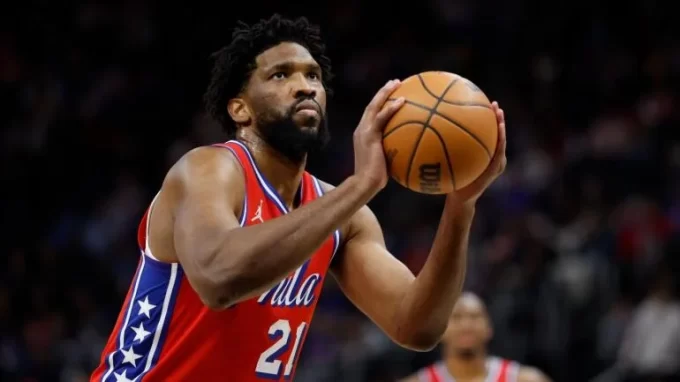
Joel Embiid’s Quiet Confidence: Is the 76ers’ Giant Ready to Rewrite His Story?
Joel Embiid is rarely one to make noise without purpose, and now,...
Kirsten Collins1 Mins read
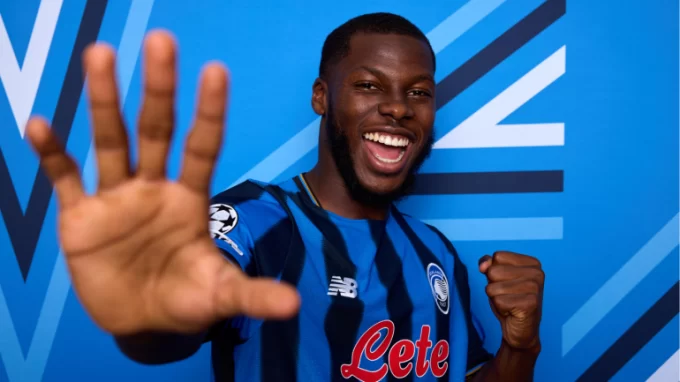
Juventus, Atalanta, and Arsenal’s Quiet Revolution: What’s Really Shaping This Week in Football?
The roar of Serie A stadiums masks a subtle shift, one that...
Kirsten Collins2 Mins read





Leave a comment