

Tears Courtside: When Bad Bunny Met His Idol Adam Sandler
A starstruck singer and a comedy legend lock eyes at a Lakers game—and an emotional tidal wave follows that meeting far beyond Hollywood lights.
 Krista FreelandJuly 24, 20252 Mins read34
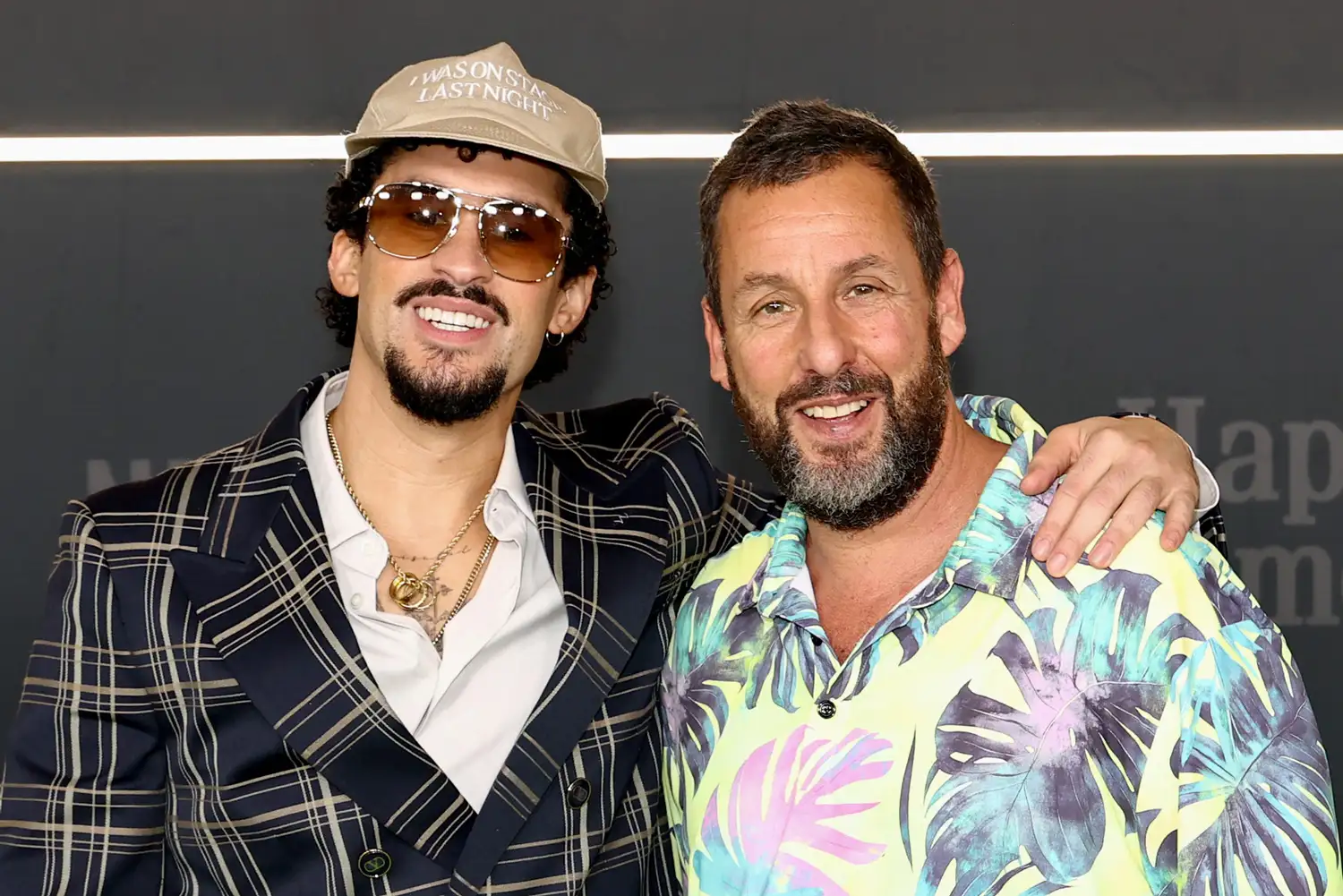
He stood courtside, a stadium of stars around him—yet his world shrank to one shared glance with Adam Sandler, and Bad Bunny lost it.
That moment—at a Lakers game, eyes locked across the court—became a small rupture, a crack through which raw admiration spilt. “When he made eye contact with me… I cried,” he later confessed on Late Night with Seth Meyers. And he tried to mask it: “I can’t cry at courtside… He knows who I am!” Yet, there it was: the tears, unshielded, a gesture of respect rendered visceral.
Already, a friendship had begun—not through scripts or agents, but text messages. Sandler remembered: “His daughter recognized him, and then we locked eyes… I gave you some love from across the court.” That simple recognition—Sandler noticing Bad Bunny—shifted everything.
Stars, Vulnerability, and Unexpected Bonds
The public expected a cameo in Happy Gilmore 2; they got emotional depth. Bad Bunny, cast as Oscar, arrives on set buoyed by admiration and nerves, yet delivers scenes that made Sandler declare: “Bad Bunny is ridiculous… he kills it. He’s funnier than me.” It’s high praise from a comedy veteran.
In Rolling Stone, Bad Bunny shared the intimacy behind the nickname in his phone: “Adam Sandler is my tío. He’s super nice.” That familial echo seems earned—text threads, shared laughs, and now digital voiceovers in Sandler’s phonebook.
Emotion, Identity, and Art in Collision
What does it mean when an artist finally meets their hero and dissolves in tears? For Bad Bunny, it’s more than fandom—it marks a milestone in his public identity. He’s stepping into acting roles, exploring drama and comedy alike, but this moment crystallizes his transformation. “I had been to many Lakers games… but never Adam Sandler,” he admitted.
Even Sandler seems surprised by his own reaction: “I didn’t think he’d cry courtside,” he said, laughing—but that laughter belies recognition, too. Both men inhabit worlds where showmanship masks vulnerability, and yet here they are, mutual fans and collaborators.
This isn’t a neat slice of pop culture—it’s a reflection on admiration, emotional risk, and what happens when you meet the person you wrote about in your dreams.
What if all celebrity encounters carried this weight? What if every hero meets their fan, and the fan meets their hero—and both leave changed? Just imagine where the credits roll…
Sources: EW, The Independent, Yardbarker/BANG Showbiz, People, Rolling Stone
Further reading on the chemistry and reception of Happy Gilmore 2





Who Is the Shooter at ODU? Old Dominion University Shooting Updates – Hollywood Life
Image Credit: LightRocket via Getty Images Old Dominion University (ODU) in Virginia...
 Kirsten Collins1 Mins read
Meet His 5 Children, Including New Baby Named Ozzy – Hollywood Life
Image Credit: Larry Busacca Jack Osbourne is now a father of five!...
Kirsten Collins2 Mins read

How Much Money the Fighter Makes – Hollywood Life
Image Credit: Zuffa LLC via Getty Images Ronda Rousey is making her...
Kirsten Collins2 Mins read

What Happened, Was it Hacked & More – Hollywood Life
Image Credit: Moment Editorial/Getty Images Stryker, a Michigan-based medical device production company,...
Kirsten Collins1 Mins read





Leave a comment