

The Hate Behind the Baseline: What Iga Swiatek Faced in Miami
It wasn’t her serve that cracked—it was the silence. Iga Swiatek was targeted with threats and hate speech from the crowd. And we all heard it. The question is: why didn’t we speak?
 Joseph BennettMarch 26, 20251 Mins read31
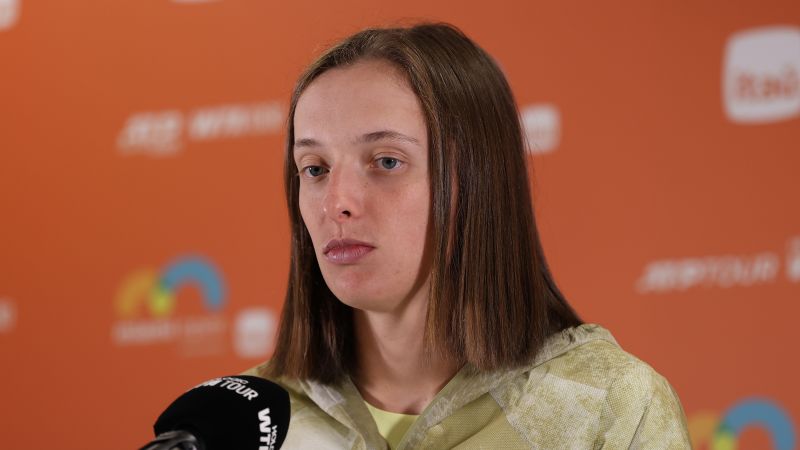
She stood still, as if frozen mid-breath, her racquet clutched a little tighter, her eyes suddenly distant. Iga Swiatek, five-time Grand Slam champion, wasn’t reacting to a brutal rally or a controversial call. She was reacting to something more insidious—something hurled not across the net, but from the stands.
The noise was unmistakable. But this wasn’t the usual chorus of misplaced passion. This was targeted. Personal. Aimed not at her performance, but her personhood. Hate speech. Threats. Live. Audible. Echoing through a match that should have been about tennis—and became about something uglier.
When Applause Turns Poison
We celebrate the crowd as the soul of sport. But what happens when that soul rots? In Miami, one fan—or perhaps more—transformed the role of spectator into aggressor. And Swiatek, ever composed, kept playing. Because what else was she expected to do? Athletes are taught to “block it out,” to “stay focused.” But how do you stay focused when someone in the front row is screaming abuse laced with violence?
This wasn’t passion. This was possession. The grotesque illusion that athletes owe their peace of mind to the paying public. Swiatek later admitted, “It was disturbing. It got in my head.” That sentence should ring louder than any scoreboard.
She is the current face of women’s tennis. If she isn’t safe, who is?
The Sport Watches—Then Shrugs
Tennis has a history of letting its stars absorb trauma in silence. From Serena to Osaka, the pattern repeats: women—often women of color—expected to endure abuse as part of the spectacle. Swiatek is white, European, and revered. And still, she became a target.
This isn’t about rivalry. It’s about responsibility. Stadiums aren’t courtrooms, but they cannot become arenas for unchecked hostility. The Miami Open issued statements. Vague ones. But statements don’t heal. Action does. Protection does. And what we didn’t see—swift intervention, immediate ejection, clear condemnation—is as loud as the threats themselves.
The hate didn’t win the match. But it definitely got a seat.
So we ask: If the world’s No. 1 isn’t protected, who gets to feel safe?







“De Minaur’s Confession: The One Shot He Covets from Alcaraz”
In the world of tennis, where every stroke is a testament to...
 Chris Marks1 Mins read
Alcaraz’s Night Sessions: Spotlight or Strategy?
The Philippe Chatrier court gleams under the Parisian lights, its retractable roof...
Joseph Bennett1 Mins read
“Caroline Garcia’s Hell Unveiled: A Love Story of Triumph and Turmoil”
In the glimmering world of professional tennis, where every serve and volley...
 Krista Freeland1 Mins read

Djokovic’s 21-0 Enigma: Is Roland Garros His Personal Labyrinth?
The Philippe Chatrier court stands silent, yet Novak Djokovic’s presence reverberates through...
Krista Freeland1 Mins read





Leave a comment