

“The Portable Feminist Reader”: Roxane Gay’s Electric Chorus of Feminist Voices Across Time, Struggle, and Solidarity
 Showline ReviewerApril 7, 20252 Mins read158
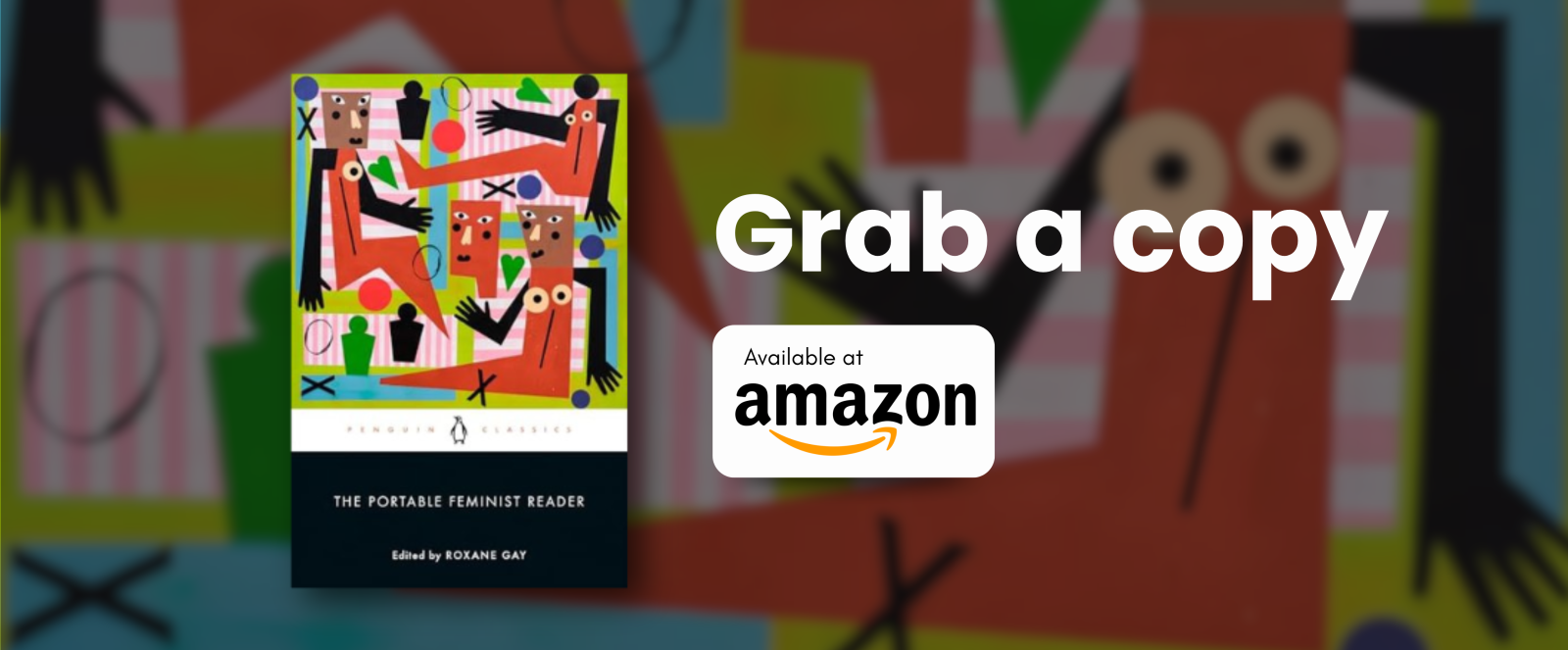
Reading as Resistance: The Collective Force of The Portable Feminist Reader
Crack the spine and the room fills with voices—some urgent, some weary, some defiant. In The Portable Feminist Reader, Roxane Gay doesn’t just present a collection—she constructs a living conversation. This is not a museum of feminism’s past; it is a beating, breathing archive of resistance, contradiction, vision, and raw need.
Gay curates with intention and fire. The book is chronological, yes, but it’s also emotional. It pulses. We move from early texts that wrestle with suffrage and womanhood defined by whiteness, into Black feminism, queer theory, trans voices, Indigenous perspectives, and global frameworks. Each piece speaks to and through the others, building momentum, but also friction. The result isn’t a smooth ride—it’s a series of sharp turns, pauses, and gut-punches. “A good feminist reader should make you a little uncomfortable,” Gay writes in her introduction, and this collection does just that—not because it alienates, but because it dares you to reckon with discomfort as growth.
The emotional undertow of this book lies in its scope. There is beauty here—Audre Lorde’s luminous rage, Judith Butler’s mind-bending inquiry, bell hooks’ piercing tenderness—but there is also grief. Frustration. The recurring ache of watching movements fracture, stall, or forget those they promised to uplift. Yet what unites these works is their insistence on hope—not blind optimism, but hope as a form of stubborn, deliberate action.
The structure amplifies this. Instead of clustering by “wave” or identity label, Gay lets the texts lean into and against one another. The juxtaposition of, say, Sojourner Truth and Rebecca Solnit is not about contrast—it’s about call and response. Reading these essays feels like stepping into a room full of people arguing, affirming, correcting, and refusing to be quiet. It’s symphonic. Messy. Necessary.
There’s a weight to it, but it’s not heavy for heaviness’s sake. It reminds you that feminism is not an identity—it’s a verb. A tension. A constant renegotiation of freedom and care. When one contributor writes, “We speak not because we are allowed to, but because we must,” it echoes across the collection like a rallying cry, underscoring Gay’s curatorial vision: feminism as survival, as art, as revolution.
Who Should Read This
The Portable Feminist Reader is for readers who want to feel history not as a set of dates or declarations, but as a force pressing against their chest. It’s a must-read for anyone who wants to understand feminism in all its complexity—intersectional, global, unfinished. Ideal for longtime scholars and total newcomers alike, this anthology is as much a map as it is a mirror. It doesn’t tell you what feminism is. It asks who gets to decide—and insists you listen before answering.
Review Overview
Summary
In The Portable Feminist Reader, Roxane Gay curates a searing, wide-ranging collection that doesn’t just trace the history of feminism—it ignites it in your hands, forcing readers to confront both how far we’ve come and how far we haven’t.
- Story Grip7
- Character Connection8
- Writing Vibe10
- Freshness & Meaning10
- World & Mood9
- Heartstrings & Haunting9
- Overall Flow9







When “107 Days” Meets Outcry: Harris’s Book Tour Interrupted
The microphone crackled to life, and before Harris could finish her opening...
 Chris Marks1 Mins read
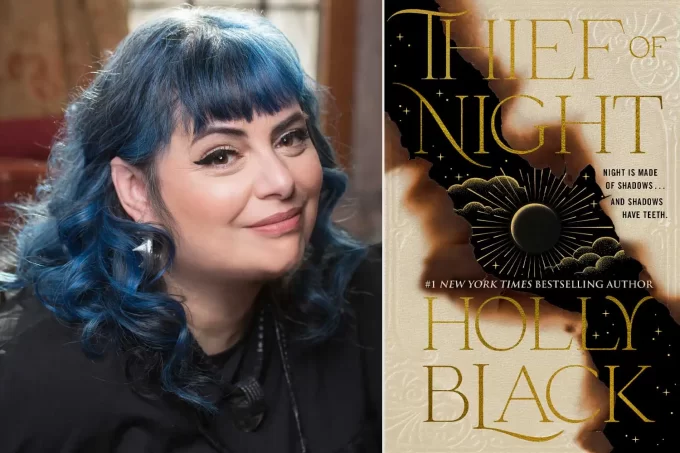
Whispers in the Shadows: Why Holly Black’s Sequel Is a Dark Invitation We Can’t Ignore
The night isn’t just dark—it’s ravenous, greedy, and it’s coming for you....
Chris Marks2 Mins read

Why Stephenie Meyer’s Regret About Edward Changes Everything You Thought You Knew
The moment Stephenie Meyer admitted she wouldn’t pick Edward Cullen today, a...
Chris Marks2 Mins read

When Fear, Fury & Feathers Collide: Cinema, Superheroes, and a Confessional Album
Open with tension—the kind that threads through a scream, a reveal, and...
Chris Marks2 Mins read





Leave a comment