

The Shock Doctrine Returns: How Milei Engineered Argentina’s Way Back into the IMF’s Good Graces
With chainsaws, metaphors, and market manipulation, President Javier Milei has done what many thought impossible: made Argentina eligible—again—for an IMF bailout. But at what cost?
 Krista FreelandApril 3, 20252 Mins read99
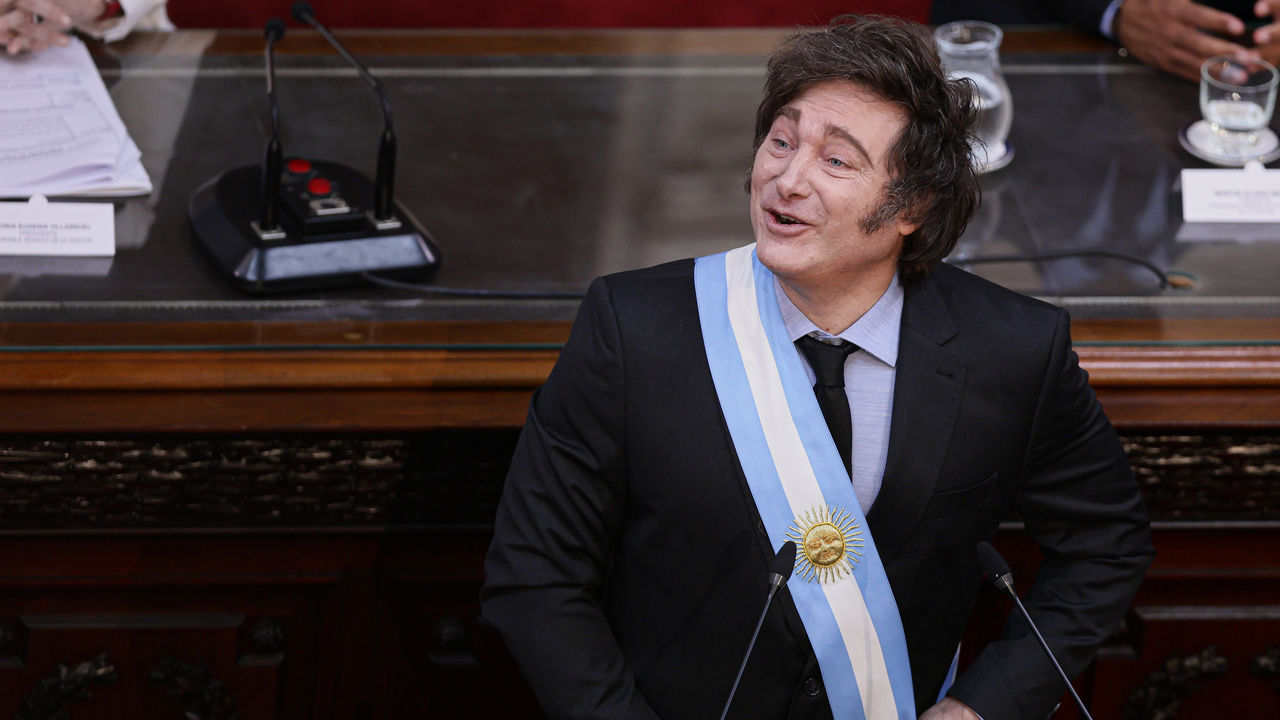
A nation held together by borrowed time and borrowed money has just done the unthinkable: made the International Monetary Fund want to help it again. Argentina—long considered a cautionary tale in debt diplomacy—has reentered the IMF’s arms. But this time, not with tears, but with a smirk. And behind that smirk is Javier Milei.
He’s been called many things: libertarian firebrand, anarcho-capitalist, economic madman, savior. But above all, Milei is a tactician. His economic playbook may look like chaos from the outside, but it’s calibrated. And it has one audience in mind: global capital.
The Art of Destruction-as-Performance
Armed with rhetoric as sharp as a scalpel and budget cuts as brutal as a guillotine, Milei slashed public spending, deregulated sectors, and embraced dollarization like a gospel. His signature move—carrying a literal chainsaw to campaign rallies—wasn’t just symbolism. It was foreshadowing.
Milei knew the IMF didn’t want promises—it wanted blood. Fiscal blood. Institutional blood. And that’s exactly what he offered. He gutted subsidies, shrank ministries, and turned economic pain into political theater. The markets responded, tentatively at first. Then with grudging admiration.
“He’s crazy—but he’s our kind of crazy,” said one international investor, half-joking. But behind the gallows humor was a stark truth: for the first time in years, someone in Buenos Aires was speaking the language of Wall Street fluently—even if it sounded like shouting.
A Bailout by Design, Not Desperation
Unlike past administrations that approached the IMF as desperate borrowers, Milei approached like a seller. He crafted a crisis so visible, so volatile, that assistance became not just desirable—but logical. Argentina’s inflation rate, once careening past 200%, began to slow. Currency stabilization began to look feasible. Reforms—harsh, immediate, unpopular—were showing teeth.
But beneath the progress lies a deeper paradox: Did Milei fix the system, or simply burn enough of it down to make it look like something new?
There’s no denying his reforms are painful. Public employees, pensioners, and the urban poor have felt it most. Protests echo through the plazas. But that’s not what the IMF sees. It sees spreadsheets moving in the right direction. Deficits narrowing. Targets met. And a leader willing to absorb the fury.
Milei didn’t stumble into this bailout—he architected it. Not as a rescue, but as validation. As proof that shock therapy still sells.






How Much Will Trump’s Policies Really Cost Wall Street?
When Donald Trump first took office, his policies were sold as a...
 Kirsten Collins2 Mins read

Milken 2025: The Party of the Rich, Amid a World Falling Apart
The night was electric in a way that only a private, star-studded...
 Joseph Bennett3 Mins read

Buffett, Cook, and the Quiet War for America’s Soul
There was a moment, barely a second long, when Warren Buffett’s smile...
Joseph Bennett3 Mins read
The Deception Behind the Deal: How Bait-and-Switch Pricing Is Shaping Our Desires
It’s the perfect price—a promise of a deal that seems too good...
Joseph Bennett3 Mins read





Leave a comment