

“I Saw Nothing”: Bob Odenkirk’s Near-Death Texts Reveal a Comedy of the Beyond
In candid exchanges with Marc Maron, Bob Odenkirk’s reflections on his 2021 heart attack unveil more than humor—they challenge our assumptions about mortality, memory, and what lies (or doesn’t) beyond.
 Joseph BennettJuly 17, 20251 Mins read14
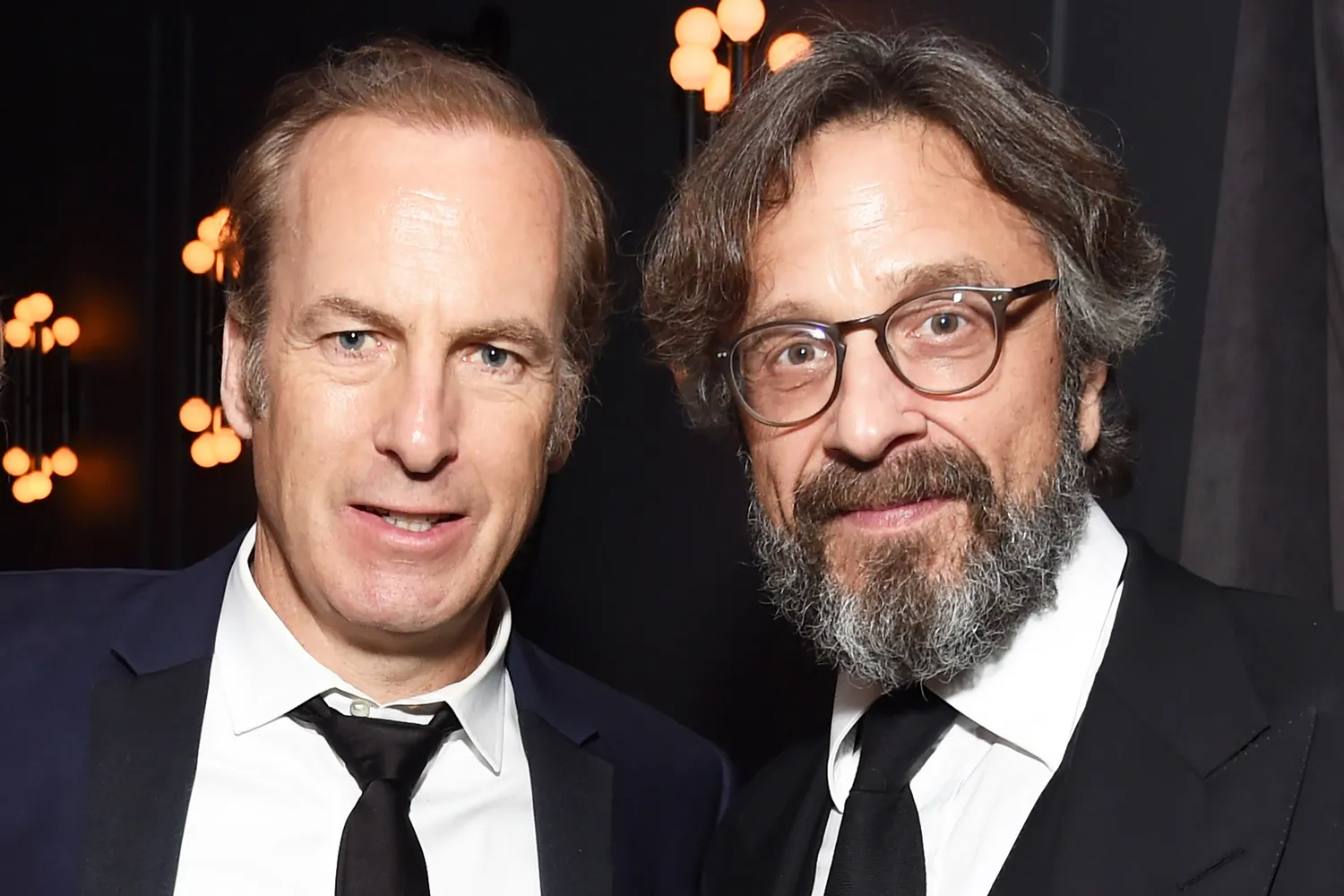
He flatlined—and texted Marc Maron about seeing absolutely nothing. In a revelation equal parts shocking and absurdly funny, Bob Odenkirk, survivor of a near-fatal event on Better Call Saul, confided there was no flash of light, no vision of peace—just silence.
In a conversation on Conan O’Brien Needs a Friend, Maron recalls Odenkirk describing that void: “I saw exactly no light when I was dead. The whole heaven thing is a hoax. Follow the money.” Suddenly, the myth of transcendence crashes into the comedian’s punchline-driven worldview—and with it, our own comforting beliefs tremble.
When Death Meets the Punchline
This isn’t gallows humor—it’s reckoning. Death, stripped of celestial illusions, meets Odenkirk’s grounded wit. He credits the Albuquerque crew, the emergency surgery—and delivers the one-liner that undermines centuries of afterlife lore. But is he joking, or is this skepticism a radical act of honesty?
The dialogue doesn’t end with comedic timing. Odenkirk reveals he lost over a week of memory following the heart incident—an erasure not unlike death itself. As he says, “It’s a weird thing to have lost basically about a week and a half. Clean, just clean nothing.” What do we fear more—the unknown after life, or losing a chunk of ourselves before we get there?
The Silence We Fear Most
Odenkirk’s experience draws a blank canvas where myths once painted color. He emerges from silence not softened or spiritualized, but sharp and defiant. “The whole heaven thing is a hoax,” he insists—and in that provocation lies the heavy truth: maybe that’s what scares us most, the possibility that once we’re gone, it’s just gone.
Bob Odenkirk survived so we could hear his verdict: nothing after everything. In that confession, comedy becomes confession, humor becomes profound. And the question remains—if heaven is a hoax, what replaces it in our hearts?








When Mercy Meets Tragedy: The Widow Who Forgave Her Husband’s Killer
The air thickens when forgiveness enters a room meant for grief. Imagine...
 Chris Marks1 Mins read

When Fear Became a Lifeline: Pete Davidson’s Reckoning in Rehab
There’s a silence that follows a mother’s voice when she confesses her...
Joseph Bennett1 Mins read

Pete Davidson’s mom told him in rehab worst fear was learning he died
Pete Davidson is opening up about the heartbreaking moment he had with...
Chris Marks2 Mins read

Katie Couric’s Unexpected Spin on Sydney Sweeney’s American Eagle Ad: What’s Really Being Said?
Katie Couric stepping into a scene dominated by Gen Z glamour feels...
 Krista Freeland2 Mins read




Leave a comment