

The Villain They Couldn’t Afford
Carrie Coon turned down a return to the Marvel Cinematic Universe after a reported pay dispute—and in doing so, she may have revealed the real power dynamics behind the mask.
 Kirsten CollinsApril 11, 20252 Mins read37
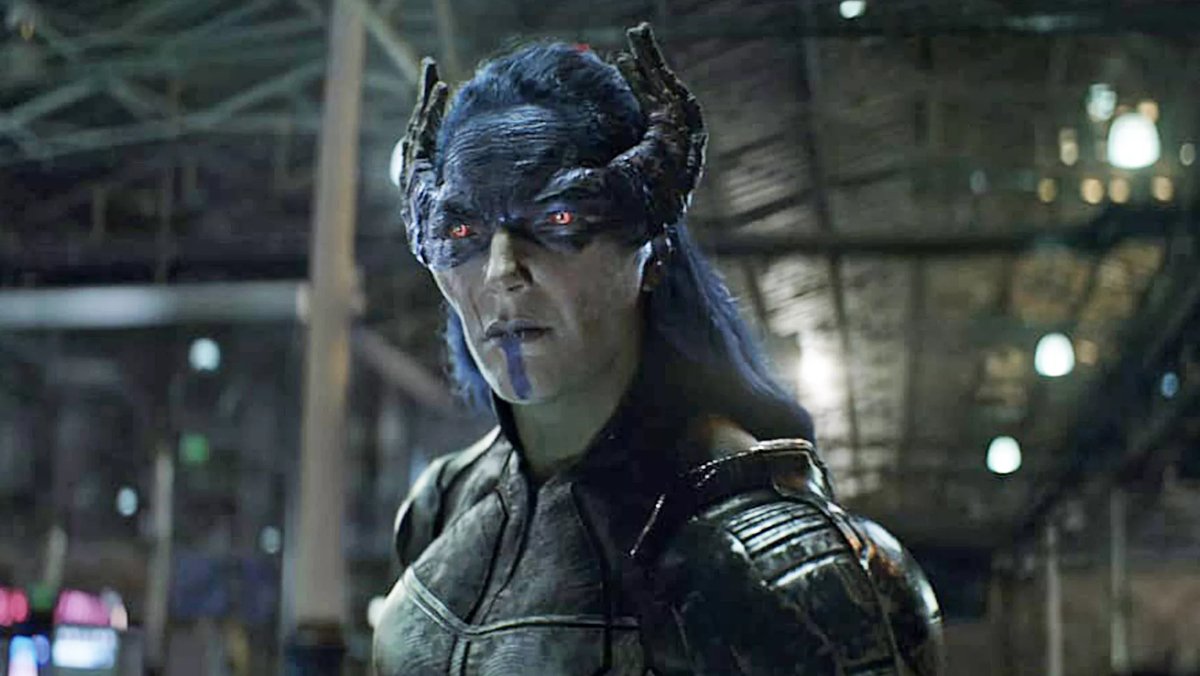
It’s easy to miss her in the final cut. Cloaked in CGI and thrown into the cosmic chaos of Avengers: Endgame, Carrie Coon’s Proxima Midnight could’ve been anyone. But she wasn’t. She was Coon—stage-hardened, critically crowned, and never one to be swallowed whole by spectacle. So when Marvel came knocking again, this time for a rumored return, her answer was precise and pointed: no.
Not because of scheduling. Not because of story. Because they wouldn’t pay her more.
And in Hollywood, where silence is often the price of access, Coon’s refusal rings louder than any franchise roar. Her decision wasn’t just a personal stance—it was a glitch in the Marvel Matrix, a crack in the glossy, green-screened empire. And if a villain isn’t worth her rate, who else is quietly being told they’re disposable beneath the dazzle?
Behind the Mask, a Ledger
Marvel has built an empire by disguising power as entertainment. It peddles the myth of scale: bigger stakes, infinite universes, unstoppable threats. But off-camera, the math is far more grounded. Budgets balloon for visual effects and tentpole cameos, while actors like Coon—brilliant, bankable, and outside the algorithm of mainstream stardom—are offered little more than legacy exposure.
It’s the same shell game we’ve seen before. Paychecks shrink the smaller your name reads on the poster, and women—especially those voicing villains, swathed in pixels—are among the easiest to underpay. Coon’s Proxima was integral, yes, but she was never marketed that way. You saw her face less than five seconds total. And Marvel knew that. Which is why, when the time came, they assumed she’d take the check they slid across the table.
But Coon didn’t blink. She slid it right back.
Elegance in Refusal
Her response didn’t need a Twitter thread. It didn’t need PR spin or insider leaks. Just a report—quiet, firm, and devastating in its implication: even billion-dollar franchises still calculate worth in old, brittle ways.
Coon, whose career spans from The Leftovers to The Gilded Age, doesn’t need Marvel. But Marvel, clearly, thought they didn’t need her either. That’s where the story turns from casting to commentary. Because when someone like Carrie Coon says no, it’s not just about her. It’s a spotlight on everyone who said yes, not because they wanted to—but because they couldn’t afford not to.







Pianist Omar Harfouch Brings Celebrated Figures Together for a Night of Cultural Exchange – Hollywood Life
Image Credit: Omar Harfouch On February 20, 2026, pianist and cultural figure...
Kirsten Collins2 Mins read
Who Is Ivana Lisette Ortiz? About the Rihanna Home Shooting Suspect – Hollywood Life
Image Credit: WWD via Getty Images The suspect in the March 8,...
Kirsten Collins1 Mins read
How Much Money Does She Have Now? – Hollywood Life
Image Credit: WWD via Getty Images Rihanna may be known as one...
Kirsten Collins2 Mins read
Stars Who Slammed ‘Love Story: JFK Jr. & Carolyn Bessette’: Statements – Hollywood Life
Image Credit: Getty Images FX’s Love Story: John F. Kennedy Jr. and...
Kirsten Collins2 Mins read





Leave a comment