

A Golf Ball, a Rock Legend, and the Art of Political Performance
A fake video of Donald Trump hitting Bruce Springsteen with a golf ball is circulating—but this isn’t about humor. It’s about spectacle, strategy, and something far more deliberate.
 Joseph BennettMay 21, 20252 Mins read22
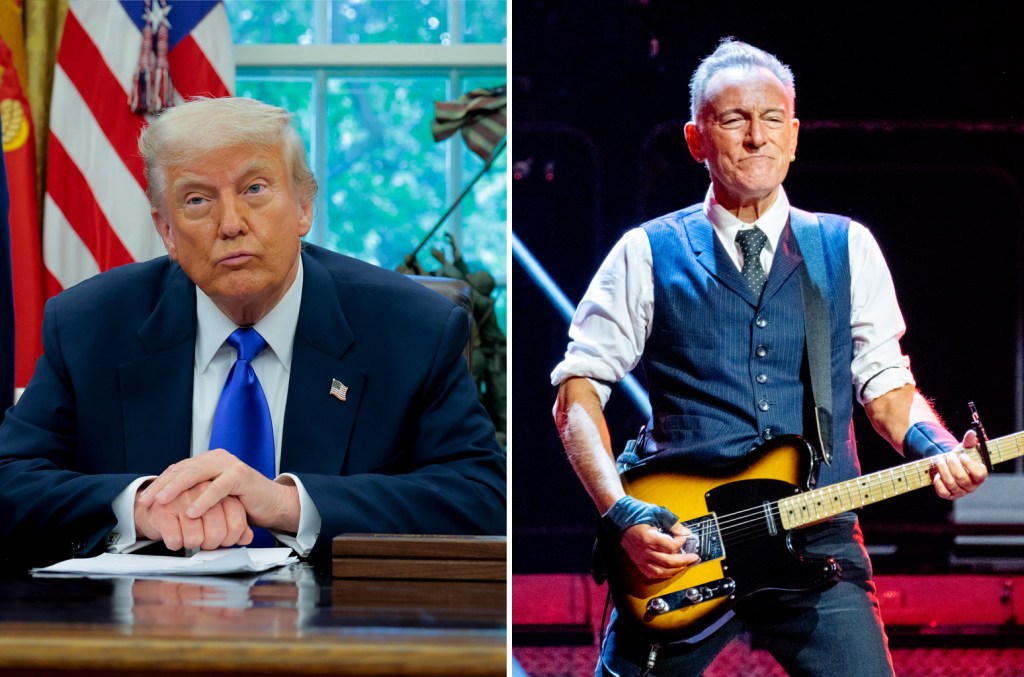
The ball arcs through the air like something out of slapstick purgatory, pixelated and improbable, and lands squarely on Bruce Springsteen’s head. The crowd, online, laughs—or recoils. But make no mistake: this isn’t just a meme. It’s a message.
A fake video of Donald Trump hitting “The Boss” with a golf ball—shared with smirking nonchalance—has now become one of the week’s most bizarre spectacles. But behind the apparent absurdity lies a deeper current. This isn’t about physical comedy. It’s about control. Control of narrative, of cultural icons, of reality itself. And the target isn’t just Bruce Springsteen—it’s the idea of resistance.
Springsteen, long a symbol of working-class integrity and anti-establishment authenticity, has increasingly come to embody something politically inconvenient to Trump’s camp: moral clarity. So when a doctored video turns him into the punchline of a golf swing, what is it really striking? Maybe the very notion that truth, art, and dissent still matter.
The Theater of the Absurd Has a Script
At first glance, the video reads like another chaotic artifact from the Trump meme factory—absurd, performative, tailored for viral chaos. But repetition creates resonance. These kinds of clips aren’t accidents; they’re dramaturgy. They weaponize humor while simultaneously eroding our perception of seriousness. After all, what better way to diminish a cultural critic like Springsteen than by turning him into a joke?
The internet loves to laugh, but laughter here conceals intent. “It’s just a meme” is the modern way of shrugging off strategy—an alibi for provocation. But memes, when wielded by those with power and followers in the millions, become tools. The fake video doesn’t just mock Springsteen—it rewrites him, turns him from a defiant artist into an unwitting participant in someone else’s script.
And it’s no accident that it’s Springsteen. His voice, his ethos, his very image stands in contrast to the America Trump promises. Where Springsteen speaks of unions, struggle, and soul, Trump’s stagecraft is built on domination, mockery, and swagger. The golf ball wasn’t a gag—it was a metaphor for who gets to define reality.
When Satire Becomes Sabotage
There is a strange intimacy in choosing Springsteen as the butt of the joke. It suggests that art still matters enough to be mocked. That songs can still strike nerves. But it also reveals the fragility of the political ego—the inability to ignore a voice as powerful as Springsteen’s without trying to cartoon it out of relevance.
The most haunting thing about the video isn’t its falseness—it’s how quickly falseness is normalized. The more we watch, the less we care whether it’s real. Truth becomes entertainment, and entertainment becomes propaganda. We become complicit, not just in watching, but in forgetting what it means to care about facts.
And maybe that’s the final victory of the meme machine: not to persuade, but to exhaust. To bury sincerity beneath so many layers of irony that outrage turns to apathy. The video ends, the screen goes dark, and we scroll on—numb, laughing, or just looking for the next thing to feel.
Somewhere in that darkness, you can almost hear a guitar strum. The echo of a voice that refuses to be silenced, even when digitally knocked to the ground. The question is, will we still be listening—or are we too far gone in the noise to recognize the sound of resistance?





Laufey’s Opening Night Show at LA’s Crypto.com Arena: Best Moments
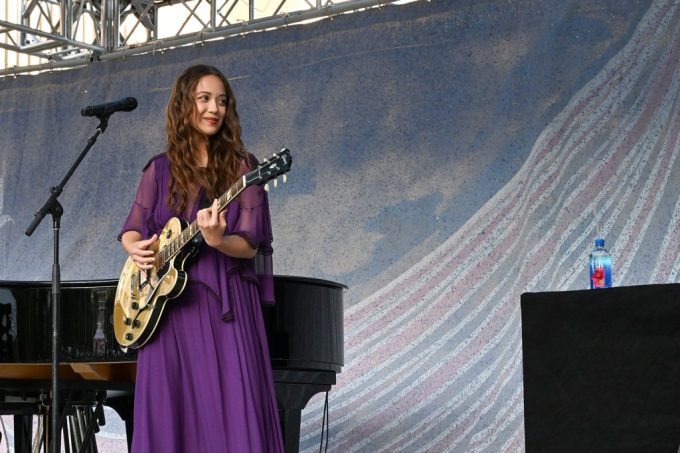
Laufey opened a two-night stand at Crypto.com Arena in downtown Los Angeles...
 Chris Marks6 Mins read

Julie Adam Is Billboard Canada Women in Music’s 2025 Exec of the Year
Julie Adam is having a milestone year — and it’s getting even...
Chris Marks4 Mins read
Spinal Tap Tribute Album with Foo Fighters,Tool for Teen Cancer America
Spinal Tap may be a fake band, but its music is very...
Chris Marks2 Mins read
AxMxP Is K-Pop Rookie of the Month for September: Exclusive Photos
Ha Yoo Joon Image Credit: Chin Soyeon You debuted on Sept. 10....
Chris Marks2 Mins read





Leave a comment