

The Man Who Bled for Millions
James Harrison gave blood for over 60 years—but what he really offered was something far more elusive: a glimpse of quiet heroism in a world allergic to subtlety.
 Kirsten CollinsAugust 1, 20252 Mins read26
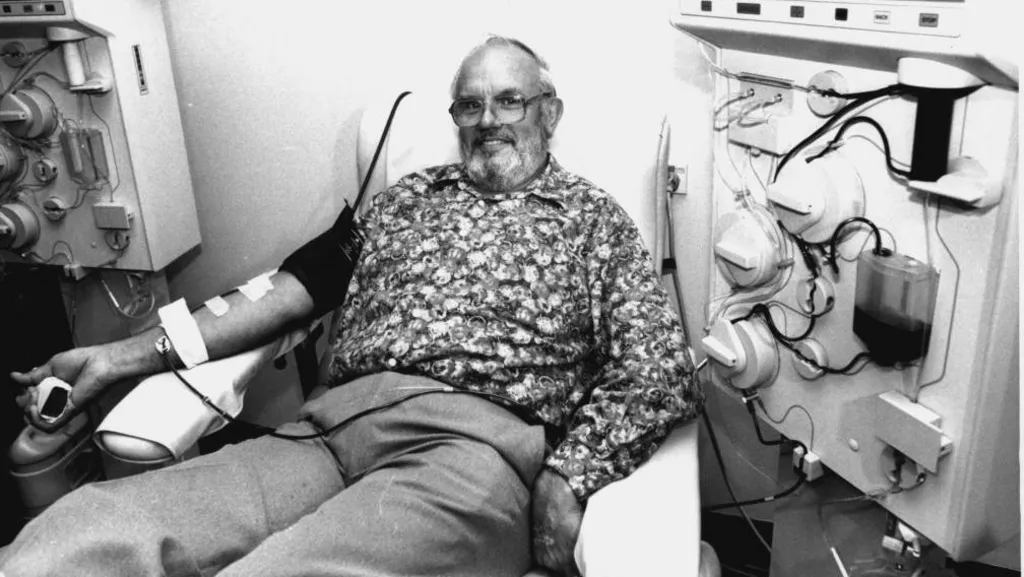
He saved over 2.5 million babies, but no one ever recognized him on the street. That’s not humility. That’s erasure. James Harrison, the man they called the “Man with the Golden Arm,” passed away this year—and with him went a different kind of celebrity. One that doesn’t beg, sell, or stream.
His blood carried a rare antibody that prevented deadly complications from Rhesus disease—a silent killer in the womb. For more than six decades, Harrison gave blood every few weeks, long past the age most people even donate thoughts. But there was no big farewell, no televised goodbyes. He was not viral. He was not a brand. He was just consistent. And in 2025, consistency might be the rarest thing of all.
The Currency of Silence
Australia once passed a law forbidding people over the age of 81 from donating blood. When Harrison hit the limit in 2018, he was forced to stop. There was no scandal, no protest. Just a man quietly told he had done enough. But had he?
“James didn’t like fuss,” one nurse said, “but he always wore a suit to donate. He said it was his job.” There’s a kind of poetry in that—a man dressed for the occasion of giving life to strangers, as if every bag of plasma deserved a bowtie.
We live in a world that chases legacy like it’s a product launch. Yet Harrison’s contribution existed almost entirely off-screen. No autobiography. No merch. No docuseries. Just needles, bags, and a stunning absence of ego. It’s almost offensive—this refusal to dramatize one’s own impact. But maybe that’s the point. Maybe real heroism isn’t cinematic. Maybe it’s bureaucratic.
The Body Remembers
There’s something unnerving about the idea that someone’s literal blood can become public infrastructure. That your veins might one day be government-adjacent. That a single person’s biology could reroute medical history. It sounds dystopian. It also sounds miraculous.
What do we do with people like James Harrison, whose very cells became policy? We can’t award them Grammys. We can’t put them on TikTok. They don’t fit our cultural software. So we mythologize them after the fact—once they’re gone. We pretend we understood the scale of their contribution, when the truth is we never quite knew what to do with them while they were alive.
So yes, he gave blood. But what he really gave was a blueprint for a quieter kind of immortality. One that doesn’t ask for attention, only permission to help.
And perhaps, when the spotlight turns off and the reels stop spinning, we’ll ask ourselves: What if the most heroic life is the one we almost didn’t notice?







The Silence Before the Sneeze
A dead bird, limp on the edge of a sidewalk in Guangdong,...
Kirsten Collins2 Mins read
The Fetishization of Fear: RFK Jr. and the Vaccine Fetuses Lie
It begins, as these things always do, with a whisper dressed as...
Kirsten Collins2 Mins read
The Lie That Keeps Mutating
The seduction of scandal is ancient, but its latest host is disturbingly...
Kirsten Collins2 Mins read

The Red Spots We Chose to Ignore
The first red spot appeared behind the ear—a detail easily missed, easily...
Kirsten Collins2 Mins read





Leave a comment