

A Quarterback Under the Spotlight: Why Williams’ Workload Raises More Questions Than Answers
A young QB should’ve been resting—but instead he’s drowning in drills, and that’s exactly why.
 Chris MarksAugust 13, 20252 Mins read16
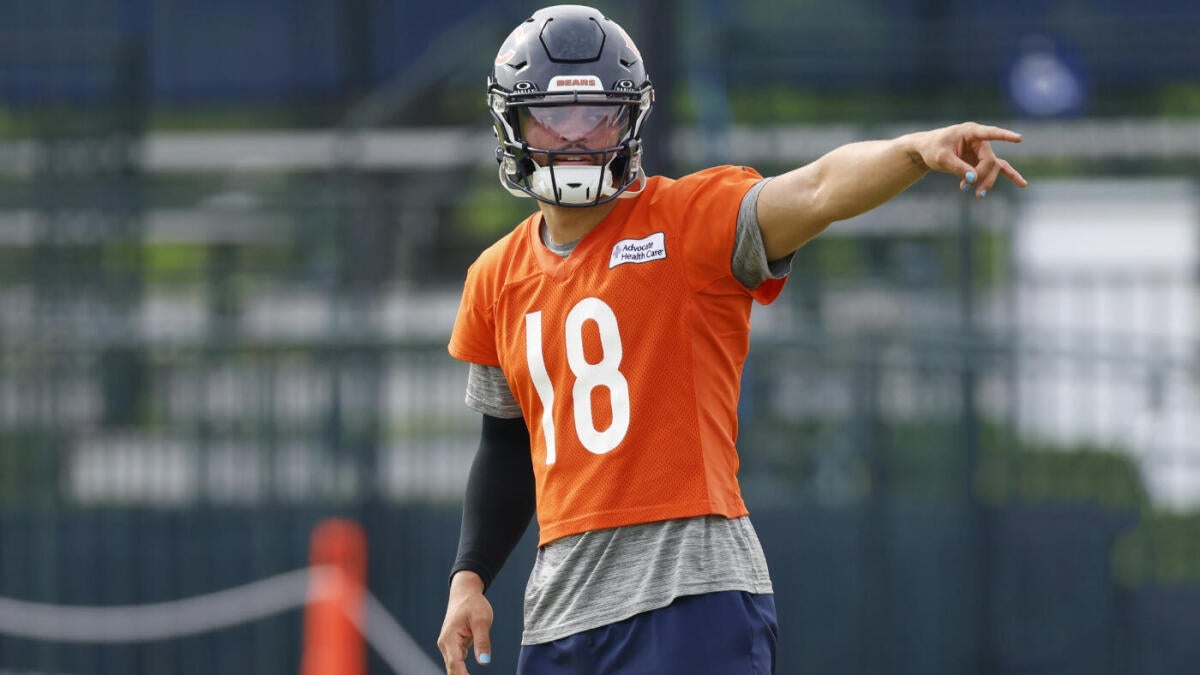
He didn’t walk onto the field—he stormed six decades of football convention, rep by painstaking rep, in what felt like a ballroom of secrets.
In the sweltering heat before the official preseason opener, coach Ben Johnson didn’t send Caleb Williams into the arena. Instead, he kept him on the sideline and unleashed what will likely be remembered as one of the most elaborate improvisations in quarterback prep. Sixty‑plus scripted reps that were almost cinematic: Williams calling the play, stepping into a fake huddle with only one teammate running a route, snapping into pre‑snap cadence, executing every shift, motion, and rhythm as if the stands were packed and pressure was live — only there were no defenders, yet the weight felt enormous.
Silence followed. A storm followed.
His phones buzzed with assignments—playbook discipline, under‑center repetition, footwork drills, presnap procedure mastery. “If you can’t give up an hour or 30 minutes to go over your playbook, you probably shouldn’t be in this position,” Williams confessed, echoing the underbelly of Johnson’s regimen.
Then, a brutal weekend clip surfaced: Williams missing routine throws from just ten yards, interceptions in simple drills—an image at once surreal and heartbreaking.
In the Quiet of the Grind
There’s something deliciously ominous about the way Johnson and Williams communicate—late-night calls about footwork, Johnson showing up unexpectedly, quizzing him on formations before he even unlocked the meeting room.
“You need to be able to see the game as a play caller through the lens of the quarterback,” Johnson said, and underneath it lies a challenge as elegant as it is unforgiving.
Williams takes notes like they’re gospel. He’s a sponge, Case Keenum whispered, absorbing wisdom with a humility that belies his superstar pedigree.
Is 70 % Just a Number—or a Challenge?
In a league where most QBs of the last two seasons couldn’t breach a 70 % completion rate, Johnson is asking Williams to not just hit that threshold—but to own it, day in and day out.
It’s bold. It’s almost reckless. But there’s purpose in overload—pressure in practice to forge clarity in performance. Johnson’s “wake‑up” periods, where defenders rain hits on offense, are not mistakes but stress tests. How Williams deals with them now may determine how he plays when the real bullets fly.
Ending:
So he stands there, under the floodlights of practice, not playing—but ever playing. Not just learning—but being rebuilt. The method is quiet, relentless, and strange. And as you read this, you’re wondering: Is this the making of an elite or the undoing of potential? The echo lingers—what happens when the lights go on, and the script has ended?






Barcelona’s Fragile Pursuit: When Injuries Threaten More Than Just a Season
A silence spreads over Camp Nou that no roar can drown out—two...
Chris Marks2 Mins read
William Saliba: Arsenal’s Silent Architect or Its Greatest Gamble?
The air inside the Emirates shifts with unspoken tension—William Saliba, once a...
 Joseph Bennett2 Mins read
Joel Embiid’s Quiet Confidence: Is the 76ers’ Giant Ready to Rewrite His Story?
Joel Embiid is rarely one to make noise without purpose, and now,...
 Kirsten Collins1 Mins read

Juventus, Atalanta, and Arsenal’s Quiet Revolution: What’s Really Shaping This Week in Football?
The roar of Serie A stadiums masks a subtle shift, one that...
Kirsten Collins2 Mins read





Leave a comment