

Whose Game Is It, Anyway?
Shedeur Sanders isn’t just starting the Browns' preseason opener—he’s dismantling an entire playbook of NFL politics. The question now isn’t if he’s ready. It’s why the league isn’t.
 Joseph BennettAugust 6, 20252 Mins read17
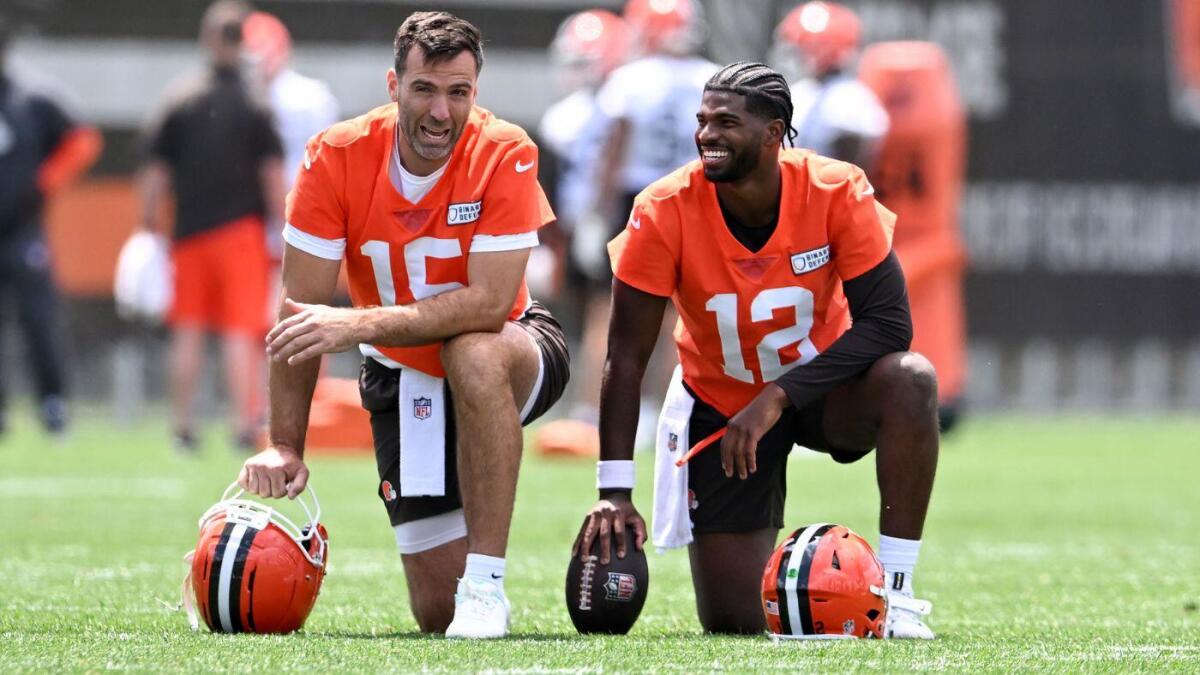
He’s not even five minutes into warmups, and the cameras are already trembling. Not from the Cleveland breeze, but from the seismic shift walking onto the field in compression tights and legacy. Shedeur Sanders—son of Deion, flame of Colorado, anomaly of the NCAA—is not just starting the Browns’ preseason opener. He’s opening a new chapter in how we mythologize quarterbacks, especially when they don’t ask for permission.
There’s a reason the air feels different. The NFL has always been more theatre than sport, more myth than meritocracy. But when a rookie shows up with swagger, strategy, and a surname that carries weight across state lines, the audience doesn’t know whether to cheer or challenge. Joe Flacco, the seasoned veteran with a Super Bowl ring, watches from the sideline. Myles Garrett, the team’s defensive force, nods approval but also hedges. The spotlight isn’t just on Shedeur’s arm—it’s on whether the league is ready for a quarterback who didn’t climb the ranks so much as carve his own.
Legacy Is a Loaded Gun
To the skeptics, Shedeur is hype incarnate. To the believers, he’s the prototype of a new football era—one that understands branding is as much a skillset as throwing deep. He’s been media-trained, camera-loved, and Twitter-fed long before most rookies get mic’d up. But this isn’t about flash. Watch him for more than one drive, and you’ll see it: footwork like choreography, composure like ritual.
Still, the elephant isn’t on the field—it’s on every mic’d-up segment, every sideline whisper. He’s not just a rookie. He’s Deion’s son. And that’s either a crown or a curse, depending on where you stand. “He’s got it,” said Garrett in a recent locker room moment that wasn’t supposed to make headlines, “but having it and holding it? That’s different.” The quote lands like prophecy. What is “it”? In this league, it’s rarely just talent.
Football as Dynasty, Not Democracy
The Browns aren’t a team known for ease or order. They are mythmakers and rebuilders, forever caught in some exquisite purgatory of potential. So why start Shedeur now? Maybe the coaches see what the league doesn’t: that his debut is less about readiness and more about rewriting ritual. We’re watching the playbook bend in real time, page by sacred page.
But make no mistake—this isn’t charity. This is calculus. Because starting a rookie quarterback this early doesn’t just disrupt locker room politics; it questions the very culture that prizes “earning it” over disrupting it. What if Shedeur already has the playbook memorized—not just the literal one, but the invisible one? The one filled with codes, glances, unspoken rites that have kept the quarterback club an exclusive fraternity of familiarity.
There’s something uncanny about watching a game unfold when the stakes aren’t just touchdowns, but symbols. Shedeur walks onto the field carrying more than a football. He carries narrative, bloodline, ambition dressed like birthright. But maybe this is what the NFL fears most—not failure, but someone who doesn’t need to fail first to deserve the spotlight.
So, the real question is whispered, not shouted: When someone inherits the game and still earns it—what does that make the rest of us?






Barcelona’s Fragile Pursuit: When Injuries Threaten More Than Just a Season
A silence spreads over Camp Nou that no roar can drown out—two...
 Chris Marks2 Mins read
William Saliba: Arsenal’s Silent Architect or Its Greatest Gamble?
The air inside the Emirates shifts with unspoken tension—William Saliba, once a...
Joseph Bennett2 Mins read
Joel Embiid’s Quiet Confidence: Is the 76ers’ Giant Ready to Rewrite His Story?
Joel Embiid is rarely one to make noise without purpose, and now,...
 Kirsten Collins1 Mins read
Juventus, Atalanta, and Arsenal’s Quiet Revolution: What’s Really Shaping This Week in Football?
The roar of Serie A stadiums masks a subtle shift, one that...
Kirsten Collins2 Mins read





Leave a comment