

Why We Can’t Let Go of Our Favorite Stories—Even When They’re Impossible
What is it about certain tales that, despite their flaws and absurdities, continue to haunt us? This isn't just nostalgia—it's something deeper. We are drawn to what we can't explain, and perhaps, that's the real story.
 Chris MarksMay 7, 20252 Mins read33

There’s something strangely magnetic about stories we can’t quite let go of—tales that are flawed, fragmented, even outright nonsensical. And yet, we return to them over and over again, as if each re-reading or re-watching holds the key to something we haven’t yet unlocked. It isn’t nostalgia alone; it’s as if we’re drawn to something more primal, something hidden beneath the layers of characters and plot twists. But what is it that truly binds us to these impossible tales? And why do we refuse to abandon them, even when logic begs us to move on?
The Story We Don’t Want to End
Think about it: Why do we hold on to books, movies, or shows that have long outlived their cultural relevance? Sure, there are those stories that grow old in the mind, but there are others that cling with a ferocity—no matter how much they falter under scrutiny. The compelling pull isn’t in their perfection; it’s in their persistence. These stories don’t simply entertain—they haunt. And that’s exactly why we can’t let go. There’s a curious comfort in their unresolved threads and contradictions. Perhaps we’re not addicted to the characters or even the plot, but to the feeling they provoke. Something inexplicable and dangerous sits quietly within them, daring us to confront it.
The Paradox of Obsession
There’s a paradox here that deserves a deeper look: We love these stories because we know they are flawed. Every plot hole, every plot twist that doesn’t quite land, adds to the mystery. What’s more human than embracing the imperfect? It speaks to a deep part of us that craves complexity and ambiguity. A perfect narrative might satisfy for a time, but it will never keep you up at night the way an unresolved, inexplicable plotline can. The friction between what the story promises and what it ultimately delivers is where the magic lingers, long after the credits roll or the last page turns.
“There are stories you never quite finish,” a writer once said. It’s this unfinished business that calls us back—not because we seek resolution, but because the allure of the unknown is too tempting to resist.
Why We Seek Out the Impossible
The deeper question, though, isn’t just why we’re drawn to these stories. It’s why we create them in the first place. We live in a time where the desire for clarity and answers dominates. We worship certainty, and yet we gravitate toward the chaotic. The impossible is a form of rebellion, a challenge to the sanitized versions of reality we’re offered daily. Stories like these refuse to fit into a neat package, yet in their very defiance, they unlock something profound. To embrace the impossible is to acknowledge our own imperfections, our own unresolved stories. Perhaps we are not drawn to the tale, but to the silent question it leaves hanging.
In the end, the stories we can’t escape are not simply stories—they’re mirrors. They show us the parts of ourselves we refuse to confront. The stories don’t need to make sense. They just need to feel real enough to pull us in.
We’ll never truly know why we hold onto them, but maybe that’s the point.








When “107 Days” Meets Outcry: Harris’s Book Tour Interrupted
The microphone crackled to life, and before Harris could finish her opening...
Chris Marks1 Mins read
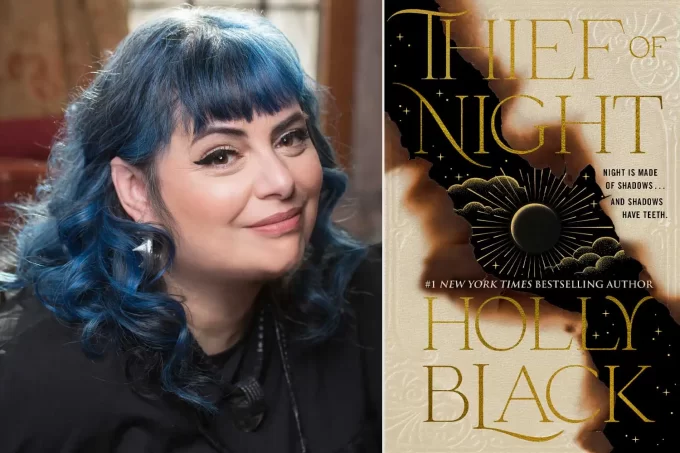
Whispers in the Shadows: Why Holly Black’s Sequel Is a Dark Invitation We Can’t Ignore
The night isn’t just dark—it’s ravenous, greedy, and it’s coming for you....
Chris Marks2 Mins read

Why Stephenie Meyer’s Regret About Edward Changes Everything You Thought You Knew
The moment Stephenie Meyer admitted she wouldn’t pick Edward Cullen today, a...
Chris Marks2 Mins read

When Fear, Fury & Feathers Collide: Cinema, Superheroes, and a Confessional Album
Open with tension—the kind that threads through a scream, a reveal, and...
Chris Marks2 Mins read





Leave a comment