

The Spotlight Doesn’t Blink—Even When You Do
After a playoff series that left more questions than points, Austin Reaves is learning the brutal arithmetic of NBA fame. It’s not about how you play—it’s about how you disappear.
 Joseph BennettMay 1, 20252 Mins read112
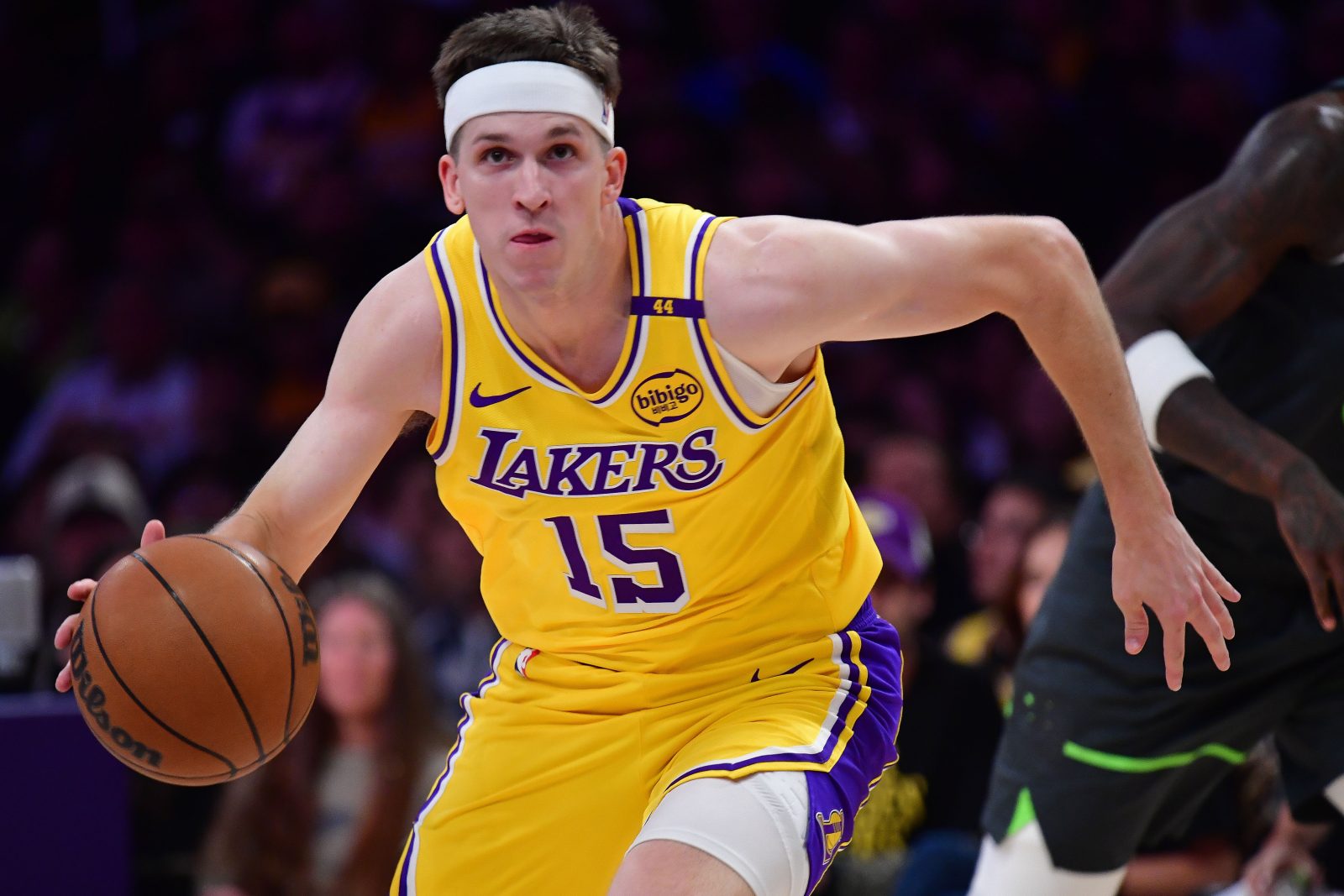
He walked onto the court a rising star, but left as a symbol of everything fans fear in their heroes—fallibility, fatigue, and the unglamorous truth that greatness is not a given, but a gamble. Austin Reaves, once hailed as the Lakers’ quiet weapon, now stands in the center of a firestorm no stat line can redeem.
You could feel the air shift—online and off—after Game 5. Not because of what he did, but because of what he didn’t do. And in sports, that silence is louder than a buzzer. There were missed shots, yes. But more haunting was the absence of presence. Reaves looked like a ghost in purple and gold: there, but fading. He had become, almost overnight, an allegory for the perils of ascension in a city where every point is a headline and every stumble, a referendum.
Fame Eats First, Even if You’re Starving
The criticism arrived not like a wave, but a blade: precise, cutting, and largely from those who had once lionized him. Fans scrolled through reels of empty possessions. Analysts questioned his role, his resilience, his right to the hype. He became a trending topic not for what he said, but for how little he seemed to say with the ball in his hands.
And yet, isn’t this what we do? Build myths from men, only to panic when the myth doesn’t hold? “I take responsibility,” Reaves offered, measured and unreadable. But responsibility isn’t what the crowd wants—it wants repentance, a revival, maybe even blood. Los Angeles demands spectacle, not subtlety. And Reaves—clean-cut, undramatic, almost too human—has never been one for the circus.
But maybe that’s the point. Maybe Reaves is not broken. Maybe we’re just unwilling to accept players who remind us the game is not scripted.
When the Hero Doesn’t Save the Scene
There’s something deeply disorienting about watching someone shrink under the light they once thrived in. It’s not that Reaves played badly—it’s that he played invisibly. And invisibility, in Hollywood, is the one sin that doesn’t get a redemption arc. We can forgive arrogance. We can forgive failure. But to disappear when we need a headline?
That’s not just disappointing—it’s boring. And boring is unforgivable.
What does it say about us that we are more enraged by quiet failure than dramatic collapse? That we want our players either on fire or in flames—but never smoldering in the middle?
Reaves still has the talent, the frame, the chance. But he may have lost something harder to regain: the illusion of inevitability. That sense that when he touches the ball, magic could happen. That flicker is gone for now.
And the most haunting question remains: what happens to a man who was never built for the noise, when the silence starts sounding like judgment?







Barcelona’s Fragile Pursuit: When Injuries Threaten More Than Just a Season
A silence spreads over Camp Nou that no roar can drown out—two...
 Chris Marks2 Mins read
William Saliba: Arsenal’s Silent Architect or Its Greatest Gamble?
The air inside the Emirates shifts with unspoken tension—William Saliba, once a...
Joseph Bennett2 Mins read
Joel Embiid’s Quiet Confidence: Is the 76ers’ Giant Ready to Rewrite His Story?
Joel Embiid is rarely one to make noise without purpose, and now,...
 Kirsten Collins1 Mins read
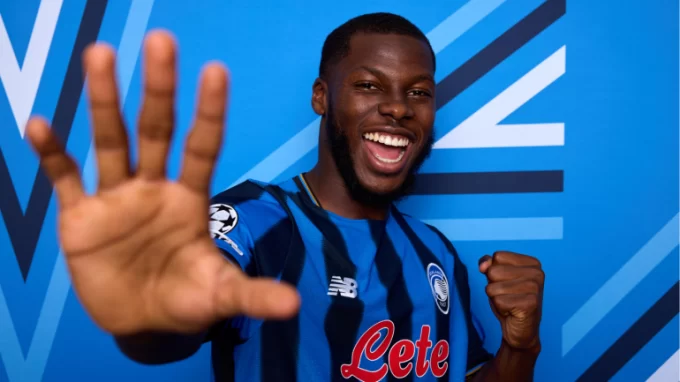
Juventus, Atalanta, and Arsenal’s Quiet Revolution: What’s Really Shaping This Week in Football?
The roar of Serie A stadiums masks a subtle shift, one that...
Kirsten Collins2 Mins read





Leave a comment