

The Cool Before the Storm: A$AP Rocky, Denzel, and the Art of Not Flinching
A$AP Rocky says he wasn’t nervous acting opposite Denzel Washington in Spike Lee’s new film. But what kind of artist walks into fire—and calls it home?
 Krista FreelandMay 5, 20252 Mins read26
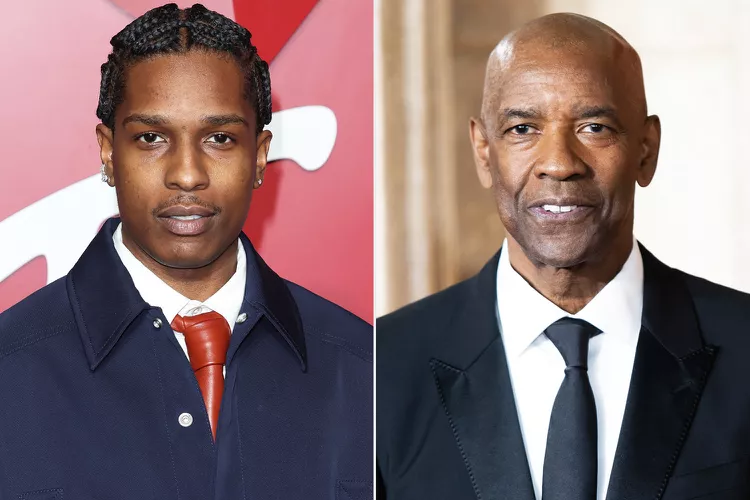
He didn’t blink. That’s what stayed with me, long after the photos, the press lines, and the filtered trailers. A$AP Rocky, cloaked in his usual blend of Harlem high fashion and pharaonic self-assurance, didn’t so much act alongside Denzel Washington as he entered the lion’s den barefoot—and grinned. “I was born for this,” he told People, and whether that line was premeditated or prophetic, the real performance might be the one he’s pulling on all of us.
Because here’s the thing: No one stands in the same room as Denzel Washington—Spike Lee circling, camera rolling—and calls it comfortable, unless they’ve already learned how to weaponize their own myth. Rocky isn’t bluffing. He’s simply decided the myth is the man. And that—more than any scene he might film—is what Hollywood doesn’t know how to direct.
Act Like You Belong—Even When You Don’t
There’s something strangely modern about the rapper-turned-actor saga, particularly when the shift is not desperate but designed. Ice Cube became a dad, Queen Latifah an empire, and now Rocky—model, brand, and partner to the high priestess of pop herself—wants a seat at cinema’s most sacred table. But this isn’t just genre-hopping. It’s something more haunting, more performative. Rocky isn’t trying to be a serious actor. He’s testing whether seriousness itself still matters in a culture so obsessed with the optics of confidence.
Spike Lee, never one to cast lightly, clearly sees something combustible in Rocky’s calm. And Denzel—he of the biblical intensity and laser-cut gravitas—offers the perfect contrast. Watching them share a screen feels less like a passing of the torch and more like a dare: can charisma, raw and untrained, hold its own against the weight of legacy?
Rocky seems to think so. He isn’t mimicking anyone. He’s not channeling Pacino, or Washington, or even Tupac. He’s doing something arguably more dangerous: he’s doing himself. And in a world where artifice is often mistaken for artistry, that might be the most radical act of all.
The Cult of Untouchable Cool
But let’s not forget: cool is a dangerous drug, and Rocky has overdosed on it more than once—in fashion, in music, even in love. He walks a line between icon and illusion, knowing full well the camera doesn’t just record, it chooses. If the role demands vulnerability, can a man so deeply branded ever disappear into character?
That’s the paradox Spike Lee may be playing with. Casting Rocky isn’t just provocative—it’s meta. It’s a statement on where fame meets fiction. Can someone who has built his empire on aesthetic and ego now surrender to a script? Or are we watching a new genre altogether, where performance and person collapse into something uncategorizable?
It’s easy to call it arrogance. But maybe it’s prophecy. When Rocky says, “I was born for this,” he’s not just talking about the movie. He’s talking about the moment—our moment—when we no longer know if we’re witnessing talent or watching the simulation of it.
And that leaves us with a question far bigger than A$AP Rocky or even Denzel Washington:
When everyone is performing, who gets to be real?







Where Is Lawrence Jones on ‘Fox & Friends’? Health Update Amid Hiatus – Hollywood Life
Image Credit: Getty Images Fans of Lawrence Jones, a Fox & Friends...
 Kirsten Collins1 Mins read

Who Is Lexi Minetree? 5 Things to Know About the ‘Elle’ Series Actress – Hollywood Life
View gallery Image Credit: Getty Images for Hello Sunshine Lexi Minetree plays...
Kirsten Collins2 Mins read

Release Date, Cast & Updates on ‘Elle’ – Hollywood Life
View gallery Image Credit: Courtesy of Prime Video What, like producing a...
Kirsten Collins2 Mins read
Updates on Academy Award Nominations – Hollywood Life
Image Credit: Warner Bros. Pictures Awards season kicked off earlier this month,...
Kirsten Collins2 Mins read




Leave a comment