

Gauff’s Rome Desire: Was the Sabalenka Showdown Her Secret Weapon?
Coco Gauff had her eyes set on one opponent in Rome—Aryna Sabalenka. But what was behind the desire to face the Belarussian? Was it all about strategy, or was there something deeper brewing beneath the surface?
 Kirsten CollinsMay 15, 20252 Mins read48
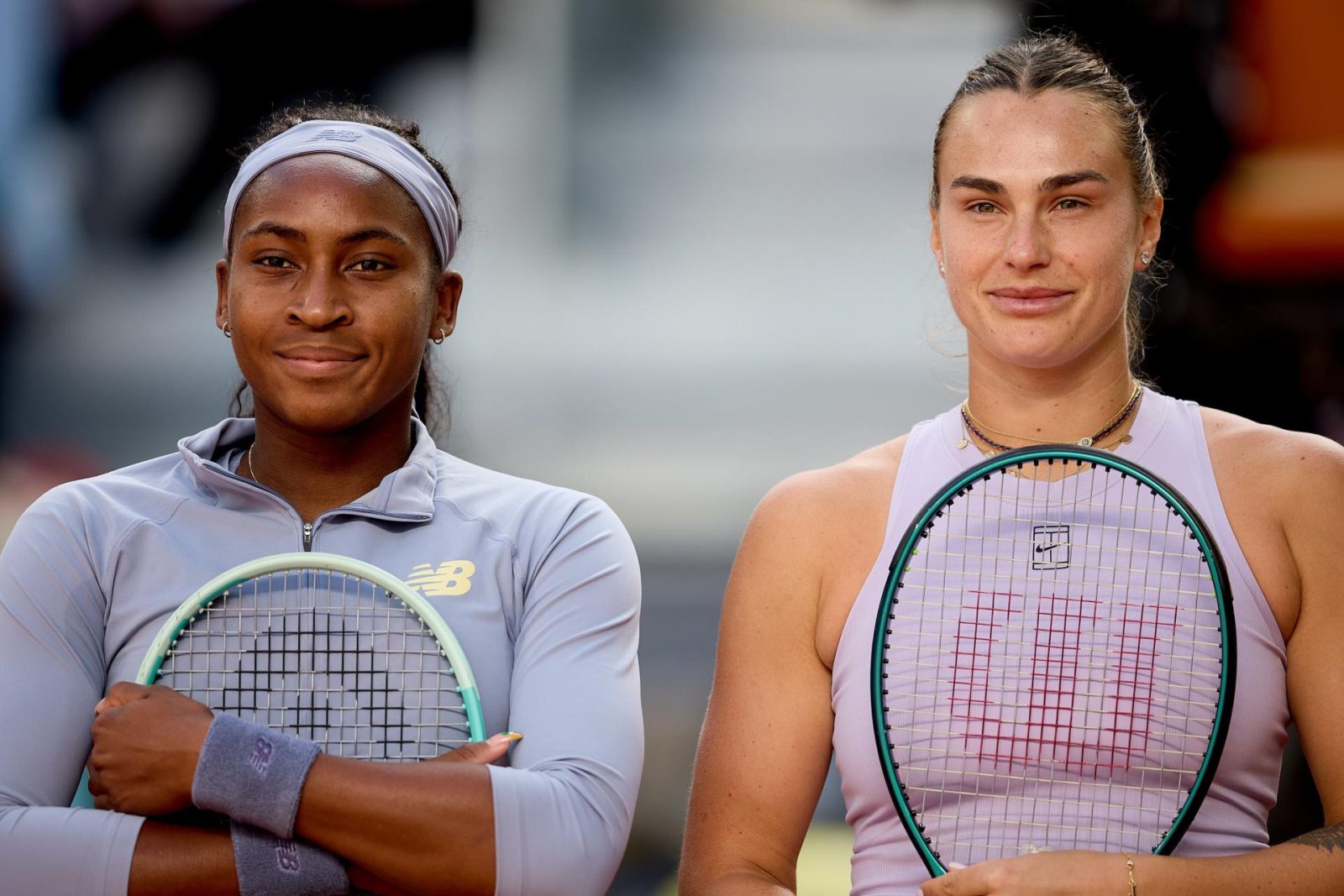
Coco Gauff has never been one to shy away from a challenge. So when she openly expressed her wish to face Aryna Sabalenka in Rome, it raised more questions than it answered. Was it a mere matter of competitive fire, or was there a deeper layer to her strategy, one that only those in the know could truly understand?
The 2025 Rome Open was supposed to be a showcase of Gauff’s evolution—an opportunity to demonstrate the mental fortitude and skill that had brought her into the ranks of tennis’ elite. But when asked about who she wanted to face in the latter stages of the tournament, she wasn’t aiming for the easiest opponent. Instead, Gauff set her sights on Sabalenka, the fierce, unpredictable powerhouse who had been on a roll. The desire to meet Sabalenka raised eyebrows. After all, why would Gauff—on the verge of cementing her place as one of the greats—seek out one of her most dangerous rivals?
A Calculated Game
It’s easy to assume that any top player, facing such a high-stakes situation, would opt for the less intimidating path. But Gauff’s words hinted at something more complex than just the thrill of competition. “I wanted to play her for one reason,” she said, her voice laced with a hint of a challenge. The reason wasn’t just to stake her claim as the top contender; it was about proving something to herself. The possibility of Sabalenka in Rome wasn’t just another match—it was a chance to confirm that Gauff had the mental and physical arsenal to stand toe-to-toe with one of the toughest players on the tour.
But that’s where the intrigue lies. Could it be that Gauff’s readiness to face Sabalenka was rooted in a desire to conquer not just a rival, but the psychological barriers that separate the good from the great in tennis?
The Power of the Unseen
Gauff’s mind isn’t just focused on hitting the ball over the net—her thoughts span strategy, her opponent’s vulnerabilities, and even the optics of her choices. By calling out Sabalenka, a name that looms large in women’s tennis, Gauff was making a subtle but powerful statement about her own trajectory. It’s the kind of mentality that separates champions from contenders: the audacity to embrace a challenge when others might shrink from it. Was she signaling that she was ready to not only beat Sabalenka, but to redefine how tennis’ top players face their fiercest battles?
“Sometimes, it’s not about winning a match—it’s about winning a mental war,” Gauff’s words seem to echo in the aftermath. In her eyes, Sabalenka was a symbol of the physical and psychological test she craved. A victory against Sabalenka wouldn’t just be a result—it would be a mental triumph.
Perhaps, in Gauff’s desire to face Sabalenka, there was something more than just the push for a title. It was the need to prove, first and foremost, to herself, that she could endure the highest level of intensity, the sharpest pressure, and emerge unscathed. Was this match, had it happened, supposed to mark a turning point in her career? Would it have shaped how the world viewed her mental resilience, her capacity to thrive in the chaos of tennis’ grandest stages?
We’ll never know. Gauff’s path took a different turn in Rome, and Sabalenka remained elusive. But the question lingers: was her desire for that showdown a masterstroke of foresight, or an open declaration of something far deeper—an inner war that the world of tennis has yet to truly witness? The question isn’t whether Gauff wants the win. It’s whether she’s ready to face herself in the process. And in that, perhaps, we’re all left waiting for the moment when she faces the storm that’s been brewing.






Barcelona’s Fragile Pursuit: When Injuries Threaten More Than Just a Season
A silence spreads over Camp Nou that no roar can drown out—two...
 Chris Marks2 Mins read
William Saliba: Arsenal’s Silent Architect or Its Greatest Gamble?
The air inside the Emirates shifts with unspoken tension—William Saliba, once a...
 Joseph Bennett2 Mins read
Joel Embiid’s Quiet Confidence: Is the 76ers’ Giant Ready to Rewrite His Story?
Joel Embiid is rarely one to make noise without purpose, and now,...
Kirsten Collins1 Mins read
Juventus, Atalanta, and Arsenal’s Quiet Revolution: What’s Really Shaping This Week in Football?
The roar of Serie A stadiums masks a subtle shift, one that...
Kirsten Collins2 Mins read





Leave a comment