

The Salary Cap Nobody Wants and the Superstar Who Said So
Bryce Harper allegedly told MLB Commissioner Rob Manfred to “get the f— out” rather than discuss a salary cap. But the outburst isn’t just defiance—it’s a window into a league at war with its own illusion of control.
 Kirsten CollinsJuly 28, 20252 Mins read80
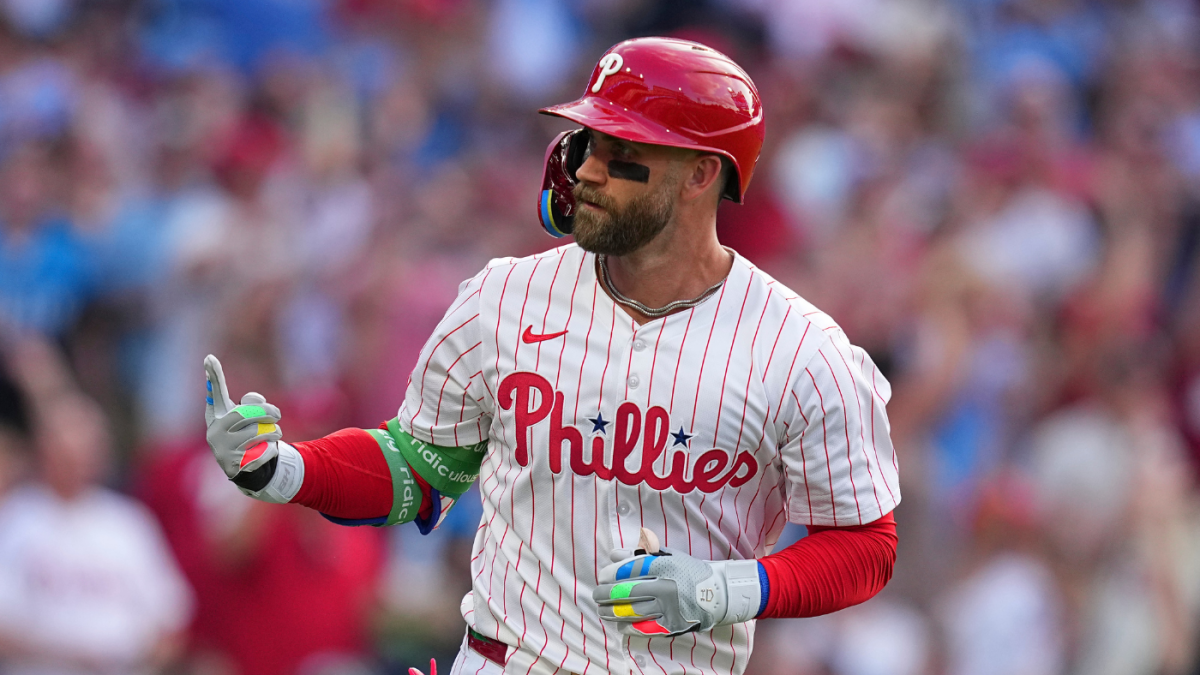
He didn’t say it behind closed doors. He didn’t whisper it over a phone call. Bryce Harper, MVP and symbol of baseball’s last great personality era, allegedly stared the commissioner of Major League Baseball in the face and said, quite simply: “Get the f— out.” Not during a tantrum. Not during contract talks. But at the mere mention of a salary cap.
The sentence ricocheted around the sport like a fastball off the handle—jagged, impossible to ignore. Yet behind the profanity was something far more unsettling for the league: clarity. Because Harper didn’t just dismiss Rob Manfred’s proposal—he exposed the futility of it. He drew a line in the infield dirt, and with it, reminded everyone that stars no longer need to beg for their power. They’ve already taken it.
Billion-Dollar Control Fantasies, Cracked by One Word
The timing of the confrontation is no accident. The league, increasingly obsessed with “parity,” has begun pushing whispers of financial limits under the guise of “competitive balance.” But Harper, who’s never been interested in balance—only brilliance—saw through the language. He saw it for what it was: austerity marketing.
It’s an odd moment for Major League Baseball. On one hand, it profits wildly from talent like Harper, who fills stadiums and headlines in equal measure. On the other, it flirts with systems designed to flatten those very players into fiscal strategy. A cap, no matter how softly spoken, is an effort to industrialize the unpredictable. To make stars fit.
“They want personality until it costs them,” a former NL executive once murmured to me over a bitter gin in midtown. “Then they want spreadsheets.” It’s always been the contradiction at baseball’s core: a sport obsessed with tradition yet terrified of chaos.
Why Salary Caps Smell Like Weakness, Not Order
Harper’s refusal to entertain the idea of a cap isn’t just about money—it’s about culture. A league that insists on caps doesn’t trust its own storylines. It doesn’t believe fans can love a game that doesn’t self-neuter for equality. It doesn’t understand that the magic of sport is not in the math—but in the madness.
Baseball, more than any other major league, is addicted to control. Every pitch is tracked. Every swing dissected. Every personality weighed for brand compatibility. But occasionally, someone swings out of turn—not at a pitch, but at the architecture itself. Harper’s comment wasn’t just locker room bravado. It was a declaration: you can’t regulate greatness. Not without consequence.
So now we wait. For Manfred’s inevitable response. For players to rally. For owners to spin. And for the league to decide whether it wants players like Harper—or just holograms in cleats.






Barcelona’s Fragile Pursuit: When Injuries Threaten More Than Just a Season
A silence spreads over Camp Nou that no roar can drown out—two...
 Chris Marks2 Mins read

William Saliba: Arsenal’s Silent Architect or Its Greatest Gamble?
The air inside the Emirates shifts with unspoken tension—William Saliba, once a...
 Joseph Bennett2 Mins read
Joel Embiid’s Quiet Confidence: Is the 76ers’ Giant Ready to Rewrite His Story?
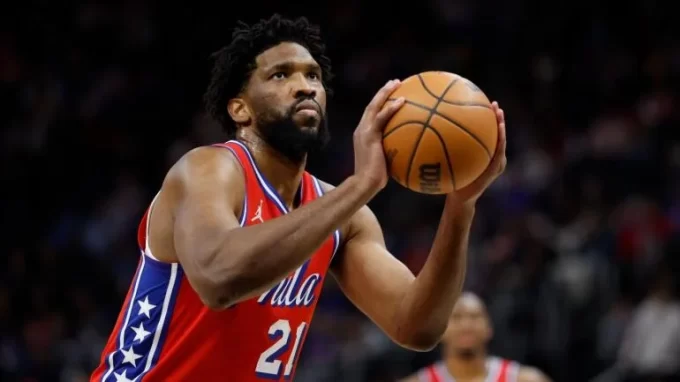
Joel Embiid is rarely one to make noise without purpose, and now,...
Kirsten Collins1 Mins read
Juventus, Atalanta, and Arsenal’s Quiet Revolution: What’s Really Shaping This Week in Football?
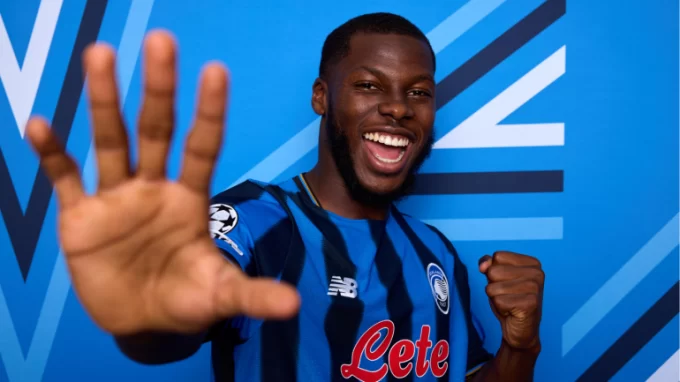
The roar of Serie A stadiums masks a subtle shift, one that...
Kirsten Collins2 Mins read





Leave a comment