

Nathan Fillion’s Green Lantern: The Superhero We Almost Saw—and Still Might
For over a decade, Nathan Fillion has flirted with the mantle of Green Lantern, weaving a story of what could have been—and what still lingers in the shadows of Hollywood’s superhero multiverse.
 Kirsten CollinsJuly 10, 20252 Mins read16
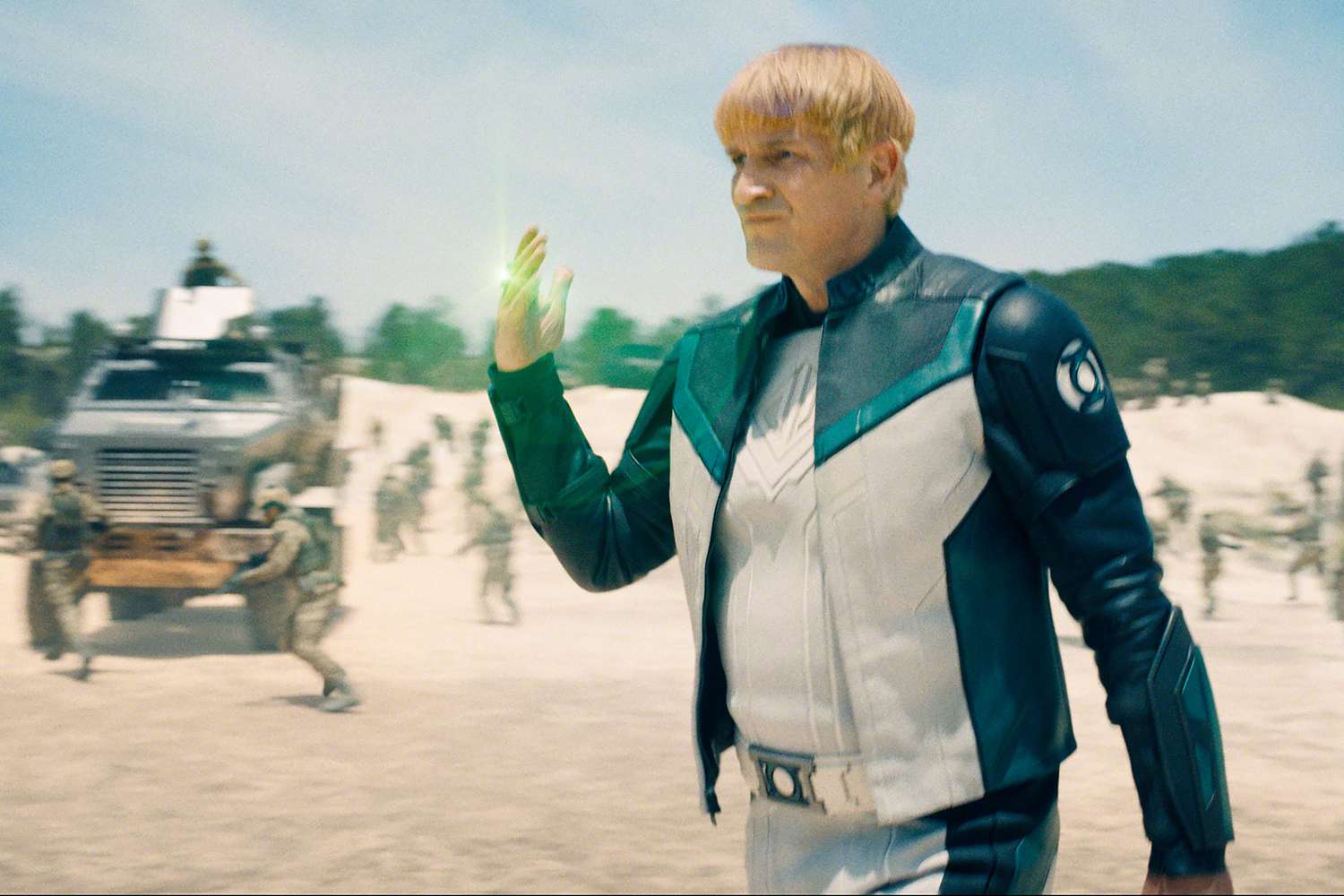
Warner Bros.
A phone call, a whisper, a universe almost born. Nathan Fillion, beloved for his effortless charm and charisma, has carried the weight of Green Lantern’s legacy longer than most fans realize. For more than ten years, the role has hovered tantalizingly near him—never fully his, yet never completely out of reach. What does it mean to embody a hero trapped in limbo, a symbol suspended between fandom hope and Hollywood’s elusive green light? The story of Fillion’s Green Lantern is less about what happened, more about what still might.
In his own words, “It’s been this strange dance with destiny.” A dance marked by near-casts, whispered promises, and a cinematic no-man’s land where superheroes often vanish before the camera rolls. The question hangs: why did the lantern never ignite in Fillion’s hands? And why does the role still resonate as a ghostly possibility, more alive in imagination than on screen?
When Hollywood’s Green Light Flickers
Hollywood loves superheroes—but it also loves hesitation. Fillion’s Green Lantern saga reveals a deeper truth about the industry’s fear of risk, the convoluted machinations behind big franchises, and the way studios sometimes snatch away potential before it fully breathes. The role was a perfect match on paper: Fillion’s blend of humor, heart, and heroism seemed tailor-made for the cosmic protector. Yet the green light never truly came. Was it a question of timing? Studio politics? Or was something more elusive at play—an invisible barrier between actor and role, a phantom chain of “what ifs” that can haunt careers?
This limbo reveals the fragility beneath Hollywood’s bravado, where a role can simultaneously define and confine an actor’s destiny. Fillion’s tale asks: are some superheroes destined to remain legends in waiting? And if so, what does that mean for the stories we never get to see?
The Lantern That Could Still Shine
Even now, Fillion’s association with Green Lantern isn’t just a footnote—it’s a cultural whisper, a reminder that some stories defy closure. As superhero universes expand and reboot with increasing frequency, the possibility of his lantern glowing on screen again feels like more than wishful thinking. “The character deserves a chance to evolve,” Fillion has said, hinting that the cosmic ring might yet find its rightful bearer.
His journey—marked by patience and subtle defiance—mirrors the very essence of Green Lantern: willpower, perseverance, and the courage to hope. It is a narrative layered with mystery and potential, challenging us to consider how Hollywood’s missed opportunities shape not just careers, but the mythology itself.
As we contemplate what might have been, we are left with a shimmering question: in the kaleidoscopic world of superheroes, is the greatest power sometimes the one never unleashed? Nathan Fillion’s Green Lantern is a beacon in the dark, a promise that some legends are simply waiting for the right moment to ignite.







Start the New Year by Investing in Yourself – Hollywood Life
Image Credit: European Wax Center The new year is all about fresh...
Kirsten Collins2 Mins read

Where Is Liam Conejo Ramos Now? Updates on 5-Year-Old’s ICE Detainment – Hollywood Life
Image Credit: Getty Images Liam Conejo Ramos came home from preschool while...
Kirsten Collins2 Mins read

AirTalk Wireless Offers Free Wireless Service to Underserved Folks, Online & Offline – Hollywood Life
Image Credit: Pexels California may be home to Silicon Valley, but many...
Kirsten Collins3 Mins read

Who Is Harry Styles’ ‘Aperture’ About? Breakdown of the Lyrics – Hollywood Life
View gallery Image Credit: Getty Images We’ve doing doing all this late...
Kirsten Collins1 Mins read




Leave a comment