

The Algorithm Wears a Uniform
Canada’s new Chief Scientist for National Defence isn’t just bringing data to the battlefield—she’s rewriting the script on what it means to defend a country in the age of digital warfare and synthetic futures.
 Kirsten CollinsJanuary 6, 20252 Mins read26

It begins not with a missile launch or a satellite feed—but with a question: what should the future of war look like? Julie Audet, the newly appointed Chief Scientist of National Defence, isn’t wearing body armor, but she might just be Canada’s most important strategist. Her battlefield is built on code, her weapons are questions, and her specialty? Complexity.
The appointment of a biomedical engineer with deep roots in digital transformation may seem like a quiet bureaucratic shift, but it signals something seismic: Canada isn’t just updating its defense systems—it’s reframing what defense is. Gone are the days when military innovation meant shinier tanks or louder bombs. Audet steps in with a different lens, one that sees soldiers as nodes, systems as ecosystems, and the enemy as sometimes… invisible. Disinformation, bio-threats, artificial intelligence—this is not science fiction. This is strategy.
Code, Flesh, and Chain of Command
In an era obsessed with speed, Audet brings a pause—an insistence on interdisciplinary nuance. She doesn’t just want new tools; she wants smarter thinking. As the former Associate Vice-Principal of Research at McGill, Audet spent years at the nexus of ethics, engineering, and innovation. Now, she’s tasked with helping the Department of National Defence think critically across domains. AI. Climate. Cyber. Space. And yes—human biology.
“There’s no single domain anymore,” one of her colleagues noted. “Everything touches everything. She gets that.” But the question remains—can that kind of vision survive the weight of tradition, hierarchy, and a military culture often allergic to uncertainty? And if it doesn’t, what kind of ghost will be left behind in our systems, coded in the logic of old wars?
The Science of Shadows
What makes Audet particularly magnetic is her discomfort with simple answers. Synthetic environments—those eerily lifelike simulations used to train and test military decisions—aren’t just about modeling reality. They’re about predicting behavior. And once you start predicting behavior, you start shaping it. What does it mean when a government can simulate not only war, but morality?
Audet doesn’t shy away from this. Instead, she leans into it. Her team is exploring tools that ask not just “Can we?” but “Should we?” In a field where ethics are often retrofitted, hers is a voice of anticipatory restraint. One that questions the allure of frictionless efficiency. One that dares to pause.
There’s something uncanny about a defense scientist whose greatest asset might be her ambiguity. In an institution built on clarity, she brings questions as sharp as any blade—and perhaps just as dangerous. What if the future isn’t about winning wars, but rewriting the reason we fight them in the first place?
- artificial intelligence defense policy
- background
- brings
- Canadian military innovation
- chief
- Defences
- defense science leadership
- digital
- digital transformation in defense
- DRDC Canada
- Julie Audet
- lens
- military modernization Canada
- multidisciplinary
- National
- national defence chief scientist
- role
- scientist
- synthetic environments military
- Transformation
- updated






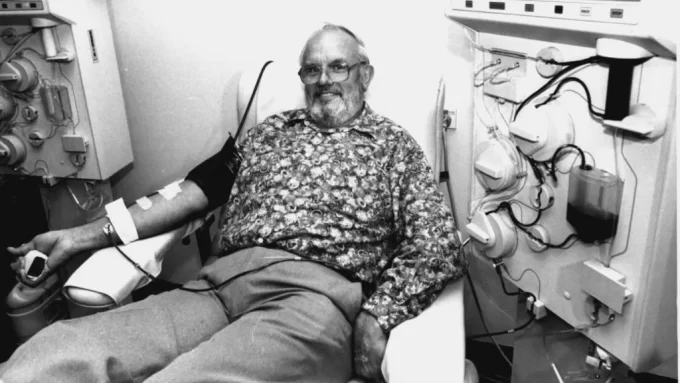
The Man Who Bled for Millions
He saved over 2.5 million babies, but no one ever recognized him...
Kirsten Collins2 Mins read

The Silence Before the Sneeze
A dead bird, limp on the edge of a sidewalk in Guangdong,...
Kirsten Collins2 Mins read

The Fetishization of Fear: RFK Jr. and the Vaccine Fetuses Lie
It begins, as these things always do, with a whisper dressed as...
Kirsten Collins2 Mins read

The Lie That Keeps Mutating
The seduction of scandal is ancient, but its latest host is disturbingly...
Kirsten Collins2 Mins read




Leave a comment