

The Story Was Always There: How Wendy Wentling Found Power in the Familiar
Wendy Wentling didn’t have to invent another world to write her book—she just had to look out the window. Her new work uncovers the extraordinary drama living quietly next door.
 Krista FreelandMarch 23, 20251 Mins read171

Sometimes the most incredible stories don’t need maps or backflips of imagination—they just need someone to notice. That’s exactly what Wendy Wentling has done in her latest book, where every chapter feels like it was plucked from the quiet heartbeat of a place you’ve already forgotten how to see.
The Kirkus feature notes that Wentling found inspiration not from travel or myth but from the gravel roads, silence, and skipped-over details of her own hometown. It’s a radical act of focus in a publishing industry still enamored with exoticism. And it raises a simple, subversive question: What happens when you treat ordinary lives with the gravity usually reserved for epics?
Writing Where You Live, Not What You Know
Wentling’s prose doesn’t shout. It lingers. It catches the edge of a screen door closing or the distance between two neighbors who used to be best friends. These aren’t characters chasing dreams—they’re surviving, observing, and revealing. In her own words, “I didn’t want to escape where I was from—I wanted to understand it.”
That sense of rootedness hums beneath the entire book, a kind of literary regionalism that doesn’t romanticize place, but neither does it pity it. What Wentling offers is attention: the art of listening deeply, writing slowly, and giving weight to what others skim past.
Where the Intimate Becomes Infinite
The stories Wentling tells are specific. But they’re not small. A farmer’s quiet grief, a waitress’s suspended ambition, a child’s growing awareness of absence—each moment is tethered to something larger, something cultural, historical, even mythic. Without ever preaching, Wentling reminds us that the American interior is full of unseen epicenters.
There’s a kind of moral clarity in Wentling’s approach—not because she offers answers, but because she respects the question. Her book doesn’t rush toward resolution. It pauses. It lets the ordinary shimmer. It makes you wonder what you’ve missed right outside your own front door.








When “107 Days” Meets Outcry: Harris’s Book Tour Interrupted
The microphone crackled to life, and before Harris could finish her opening...
 Chris Marks1 Mins read
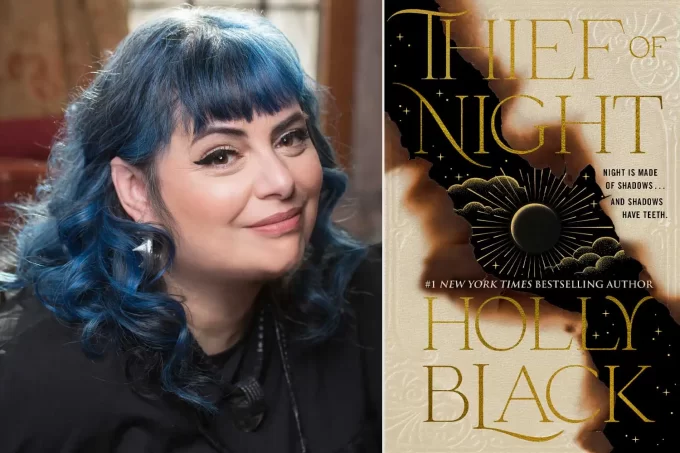
Whispers in the Shadows: Why Holly Black’s Sequel Is a Dark Invitation We Can’t Ignore
The night isn’t just dark—it’s ravenous, greedy, and it’s coming for you....
Chris Marks2 Mins read

Why Stephenie Meyer’s Regret About Edward Changes Everything You Thought You Knew
The moment Stephenie Meyer admitted she wouldn’t pick Edward Cullen today, a...
Chris Marks2 Mins read

When Fear, Fury & Feathers Collide: Cinema, Superheroes, and a Confessional Album
Open with tension—the kind that threads through a scream, a reveal, and...
Chris Marks2 Mins read





Leave a comment